Worst. Oscars. Ever: Why The Academy Loses In 2016, No Matter Who Wins
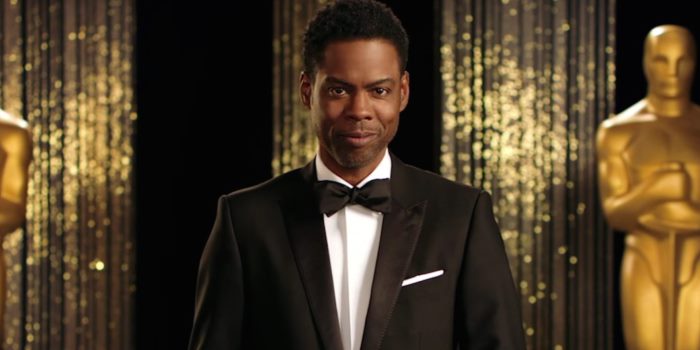
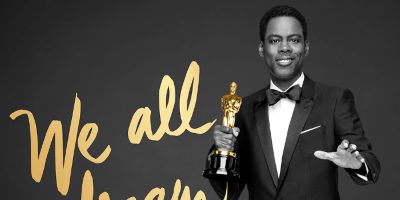
The Academy’s chickens are coming home to roost on Monday, where voters will be forced to confront their self-inflicted controversies at a Chris Rock-hosted Oscar ceremony.
If Best Picture goes to The Revenantnext week, it will only be the third or fourth most egregious thing to have happened this awards’ season.
After all, adding an overcooked, underwhelming movie to the annals of cinema history is no biggie. The list of 87 preceding Best Picture winners is already plenty tainted; I mean, they even gave that trinket to The Artist.
But, in this writer’s opinion, The Revenant is the weakest Best Picture nominee of an otherwise decent bunch in 2016. Though it might be a nail-biter to the final envelope’s opening, the path seems cleared for this bloody, bison-eating flick to take its reward.
This year, however, the questionable filmic taste of the Academy’s 6000-plus voters is not on trial. Rather, it’s their more nefarious and maybe unconscious prejudices that have stained their annual parade; the kind that has left both black and transgender artists out in the cold.
For the second consecutive year, an all-white batch of actors will contend for Oscars, while black-led works have settled for singular nods to their white participants (Sylvester Stallone in Creed; the screenwriters of Straight Outta Compton). Hence the hashtag, #OscarsSoWhite.
Just as upsettingly, the producers of this 88th ceremony neglected to invite Anohni (formerly of Antony and the Johnsons) to perform her Oscar-nominated song “Manta Ray”, alongside fellow nominees Lady Gaga, Sam Smith and The Weeknd. She is the only transgender performer ever to have been nominated for an Academy Award, and yet, her invite to perform never arrived.
Prior ceremonies may have been less inclusive, but in 2016, excuses fall on deaf ears. Theoretically, the Academy should be at its most enlightened. And yet, discrimination reigns supreme.
#OscarsSoWhite
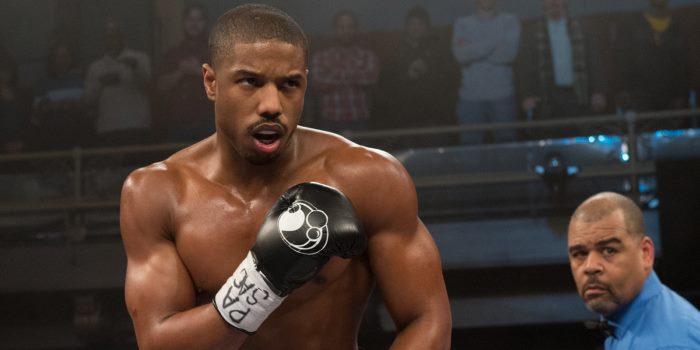
Michael B. Jordan in Creed.
It didn’t have to be this way. When Spike Lee was awarded his honourary Oscar in late 2015, it seemed to herald a new age in Academy history; one in which black filmmakers might get more recognition amongst the traditional lily-white contenders. (No black director has ever won the Best Director prize; only one has directed a Best Picture winner: Steve McQueen for 12 Years a Slave.)
His victory also reminded us of the fact that Spike Lee’s masterpiece Do the Right Thing was once overshadowed at the 1990 ceremony by, of all things, Driving Miss Daisy. Twenty-six years later, little has seemingly changed.
Following the unveiling of the nominees, Lee revealed he wouldn’t attend the ceremony, while Jada Pinkett Smith – who should have been nommed for Magic Mike XXL, and whose husband, Will Smith, was also left off ballots for Concussion – announced a boycott.
It wasn’t sour grapes. It was a stand, taken against an organisation that refused to change with the times.
Academy President Cheryl Boone Isaacs quickly announced a series of sweeping changes to make the voting membership more diverse, as well as invited numerous black presenters to hand out awards (which seems like a particularly cruel consolation). However, the damage has already been done. On Sunday night in Los Angeles (Monday, AEST), no viewer of the Oscars – or participant – should forget the names that aren’t being read out.
The Blame Game
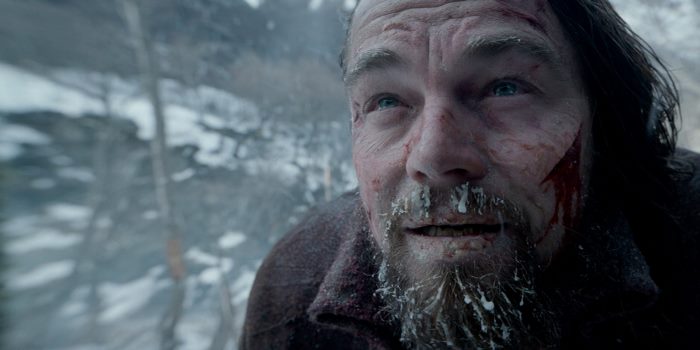
Leonardo DiCaprio in The Revenant.
Now, it’s not Leonardo DiCaprio’s fault he’s going to win an Oscar, though the underdog narrative being tied to this handsome millionaire supermodel-wrangler is the lamest one in the Academy Awards’ history.
I can’t even believe that the very ceremony in which an Oscar will be handed to Brie Larson - the endearing wrecking ball from United States of Tara - is the same one I’ll watch with simmering resentment.
But there is just too much to be angry about.
Over the years, the Academy has had more than enough opportunity to atone for their sins and adapt (as in last year, when #OscarsSoWhite was born).
Instead, they pass the buck, claiming that the diversity issue belongs to the film studios and simply isn't their fault - as if there is really any separation between the two. Ever wondered who’s voting for these Oscars? It's the producers, writers, directors, actors... the people who make up those giant, faceless institutions that are so easy to blame.
When the long-delayed rule changes (a too-late push for inclusion) were initially floated in January, some Academy members spoke out in protest. Like Bill Mumy, the little kid from the 1950s TV show Lost in Space, who penned an open letter in protest, calling the boycotters “whiners”. It only embarrassed the Academy further, revealing to the world that the kid from Lost in Space votes on the film industry’s highest accolade.
And let’s not forget that Best Actor nominee Matt Damon had his own complaints against diversity recently.
No one’s calling these Academy members racist – simply, out of touch, or, more generously, not reflective of the modern cinema scene and its audiences. (Membership remains top secret, but a recent study revealed that 94 per cent of voters are white and 77 per cent are male. The median age? 62.)
Where were the white members’ letters of protest, against their own Academy, when black performers and filmmakers were once again left wanting? Where are the open letters when project after project - like Gods of Egypt, fittingly arriving in cinemas this Oscar weekend – emerges with a whitewashed cast?
No one is owed an Oscar; not Michael B. Jordan and Tessa Thompson (Creed); not Jason Mitchell and O’Shea Jackson Jr. (Straight Outta Compton); not Idris Elba (Beasts of No Nation); and not Mya Taylor and Kitana Kiki Rodriguez (the stars of Tangerine and the first transgender women for whom Oscar campaigns were launched).
But talent is owed opportunity, and if the Academy Awards are something like the film industry’s State of the Union, #OscarsSoWhite reveals a startling lack of opportunity in Hollywood for performers who do not precisely resemble Jennifer Lawrence and Bradley Cooper.
What's Left To Like?
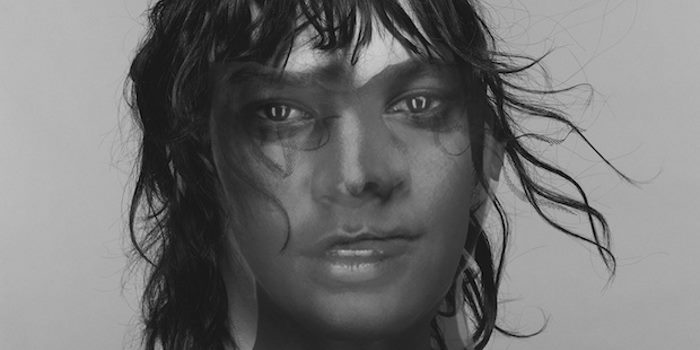
Oscar nominee Anohni.
On Monday, there will still be much to root for. Firstly, there are four women screenwriters nominated, which is itself an impressive step towards inclusion. Secondly, host Chris Rock will - fingers crossed - shame the Academy with great ferocity, outdoing his comparatively-benign 2005 stint. Thirdly, Cheryl Boone Isaac’s inevitable address to the crowd will hopefully acknowledge all the Academy’s missteps.
Finally, we will get to see some fine movies and fantastic talents recognised; movies that deserved to be seen by big audiences, with important messages to impart (Spotlight, The Big Shortand Anomalisaamong them). Box office hits such as Inside Outand Mad Max: Fury Roaddeserve their recognition too. Maybe Anohni will even become the first ever transgender Oscar victor.
However, don’t be distracted by the Academy’s nonsensical tagline for the 88th Academy Awards: “We all dream in gold.” (Huh?)
Consider this excerpt, from Anohni’s Pitchfork essay, in which she announced her own boycott of the ceremony.
“I want to be clear — I know that I wasn’t excluded from the performance directly because I am transgendered,” she writes.
“[It] is not one isolated event, but a series of events that occur over years to create a system that has sought to undermine me, at first as a feminine child, and later as an androgynous transwoman.
“It is a system of social oppression and diminished opportunities for transpeople that has been employed by capitalism in the U.S. to crush our dreams and our collective spirit.”
There’s only one thing this year’s Oscars will be remembered for: how so many dreams remain dashed in Hollywood, and beyond.





Great agenda for an article! Equality, Acceptance, Diversity, Inclusiveness = No Fear Be the change you want to see
What is going on
What?
what