How Will the 2019 Federal Election Affect Young People?
The federal election is this weekend. Let's break down what that means for young people.
On Saturday 18 May, voters will determine who's in charge of Australia over the next few years via a federal election.
But, what does that even mean?
We summarised the whole Australian political system in one article to help you brush up on your knowledge.
If that's TL;DR let us explain in a few sentences what's happening this year at least.
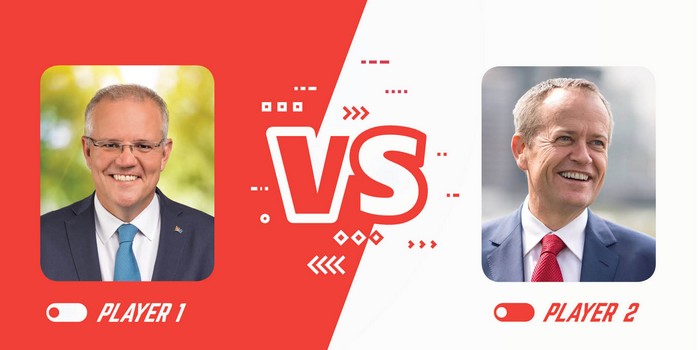
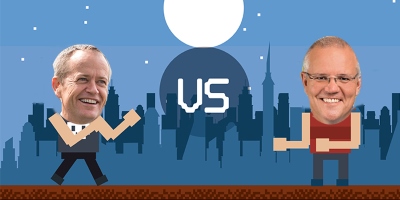
In one corner of the wrestling ring is the defending champion (AKA the Prime Minister) Scott Morrison and his Liberal-National Party coalition. In the other corner (AKA The Opposition) is Bill Shorten and his Labor Party. Outside of the ring, waiting to tag in, are the minor parties who are desperate to enter but probably won't.
And the audience? That's us, Australia's voting public.
Is this analogy still making sense?
Okay, maybe let's move on.
In the lead up to an election, major parties make promises about what they're going to do if they get elected to lead the country. This is the part that really matters because after the election, it could mean paying more (or less) for education, more (or less) tax, or worse, stressing over more government inaction on climate change.
While some parties have similar policies in certain aspects, they do tend to vary wildly in others, so it's important to understand what you're voting for when you hit the polling booth.
To help you navigate what's going to affect you post-election, we've rounded up and summarised the policies of the two major parties as well as the major minor party, The Greens.
Education
Liberals: The Liberal Party is promising to give non-government schools (private and religious) a top-up of $4.6 billion over 10 years. This is on top of the $23.5 billion already committed to non-government schools. They'll also promise a $585 million skills package aimed at creating 80,000 new apprenticeships as well as offering cash payments to new apprentices.
Labor: Labor is promising to ditch the current (see above) school funding scheme that sees public schools under-funded. They pledge to offer public schools $14 billion over the next 10 years. They're also promising a $1 billion package for TAFE and vocational education. That'll mean creating more fee-free places and upgraded facilities as well as apprenticeship subsidies.
The Greens: The Greens pledge to spend $20.5 billion over the next ten years on public school funding. They're also promising to make TAFE and university undergraduate courses free.
Environment
Liberals: Obviously, the big bad of the 21st Century is climate change, so how does the Liberal Party stack up in their plans to tackle it? They've never been the strongest party on climate change action (some might argue, the worst) but they will be looking at reducing food and packaging waste by half by 2030. The Morrison Government plans to extend the Snowy Hydro scheme (renewable energy) to lessen the need for dirty energy (non-renewables like coal). But while they plan to introduce some renewable energies, the party also plans to build another coal plant in NSW (a "very small" one) and look into building another one in North Queensland.
Labor: Labor intends to reduce Australia's pollution output to 45 per cent of 2005's levels by 2030 and reach zero per cent by 2050. They're hoping to do this by increasing the country's supply of electricity from renewable energy sources to 50 per cent by 2030. They also plan on increasing the sales of electric vehicles to 50 per cent of all new purchases by 2030.
The Greens: The Greens have the most drastic plans, which makes sense given their party was created in the name of environmentalism. They want 100 per cent renewable energy sources and the shutdown of all coal mines by 2030. They also want to tax fossil fuel cars more and reduce import taxes on electric cars, ideally making them more affordable.
Penalty Rates
Liberals: A few years back, the Fair Work Commission decided to recommend cutting penalty rates. Since then, retail, hospitality and pharmacy workers have been paid lessened rates for work on weekends and during public holidays. The Liberals intend to maintain this if re-elected. They do plan to create a right for casual workers to request permanent full-time or part-time work.
Labor: Labor has been quite vocal about the aforementioned penalty rate cuts and has promised to reverse them if elected into government.
The Greens: The Greens also plan to reverse the penalty rate cuts and want to bring in a minimum wage of around 60 per cent of the adult median wage ($65,572 per year for full-timers, according to ABS in 2017). That equals around a little more than $39,300 per year. Australia's current minimum wage is set at just under $38,000 per year (on a 38-hour work week).
Tax Rates
Liberals: The Liberal Party is planning to make a few changes to the tax rate. They want to raise the 19 per cent tax bracket from $41,000 to $45,000 by July 2022 (so you start paying 19 per cent on each cent you earn over $45,000 rather than each cent over $41,000) and eventually, in 2024, have everyone earning between $40,000 and $200,000 paying 30 per cent of their wage in taxes. (Check out the current tax brackets here.)
Labor: Labor plans to cut tax for people learning less than $48,000 but they're also against the Liberal Party's plan of giving $40k and $200k earners the same tax rate, which gives higher income earners the bulk of the savings.
The Greens: The Greens, like Labor and Liberal, agree with cutting taxes for low-income earners but they also oppose the Liberal Party's plan to flatten the tax bracket.
Of course, there are many more policies and promises out there that will affect the course of young peoples' lives, so the important things to remember before you rock up to the polling booth is:
1. Your vote actually counts—don't donkey vote!
2. Do your best to make an informed decision.
3. Enjoy your democracy sausage straight after!
Read More:
Header Image: iStock.com/IkonStudio & Facebook (Bill Shorten MP, Scott Morrison)
Topics
Ref: e2319d7d-591e-4c74-8a80-aa4c00624bb1
Comments & Feedback
Share your opinion
Emoji cheatsheet Formatting Comment guidelines