Please Explain: How Politics Works in Australia
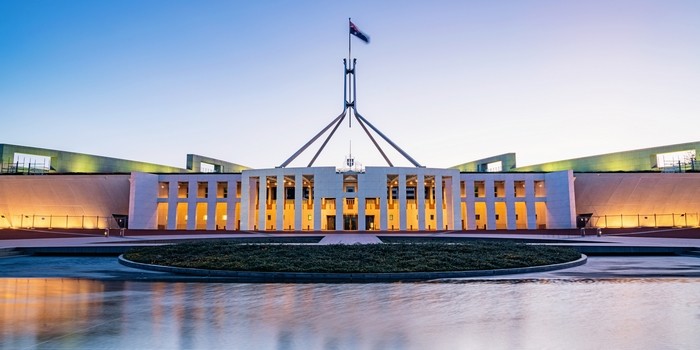
The summary of Australian politics you never wanted, but always needed.
If you're one of the many thousands (maybe millions) of people who scroll past any mentions of Australian politics (or #AusPol) because it's just too overwhelming to really get into, we hear you.
Unless you're on top of every political development and you know people who are happy to discuss and unpack it with you, #AusPol can be tough and confusing to keep up with.
From citizenship scandals to breaking news about hung parliaments, there's always something new to grasp, unpack and analyse.
So, we're here to help you understand the basics! But before we get into the nitty-gritty of politics Down Under, we'll have to first take a look at the United Kingdom (UK) and their own political system...

The Westminster system.
Politics in the UK runs on the Westminster system, which has existed in some form or another for close to 800 years.
In this system, there are two political houses: the House of Commons (made up of hundreds of elected officials) and the House of Lords (hundreds of appointed officials, previously rich lords and aristocrats). These form what is known as a parliament.
The officials of both houses are known as Members of Parliament (MP) and the head of the ruling government is called the Prime Minister (PM). MPs introduce proposed laws in the House of Commons, which are then debated and voted on. If successful, the House of Lords scrutinises over the laws, challenges ideas and processes, and then, if no glaring issues arise, they become recognised laws of the country.
While Australia adopted some of these essential ideas, they discarded others in favour of the United States' (US) approach. Let us explain further...
Australia's Houses.
Unlike the UK's Westminster system, Australia has two houses that are both made up of elected officials. There is the House of Representatives (AKA the 'lower' or the green-coloured house), which contains 150 seats based on electorates around the country. Whichever party has the majority of the seats in this house is usually the ruling government.
We say usually because an elected government can sometimes lose seats in by-elections. Governments can also be formed by joining with independent and minor party MPs when they don't have a majority in the lower house.
Overall, the house exists to introduce, debate and vote on proposed laws. If successful, these proposed laws are sent to the Senate (AKA the 'upper' or red-coloured house) where they are discussed further and voted on again. This is closer to the US system (which also has a Senate) rather than Westminster's House of Lords.
If these proposed laws succeed in the Senate, they are made into Australian law. If they don't, they are sent back to the House of Representatives for further debate and amendment.

The elections.
As mentioned, MPs are elected by electorates, but what does that actually mean?
An electorate is a geographical boundary drawn to divvy up the Australian population into 150 (mostly) equal parts. In densely populated areas, these electorates can span over a few tiny suburbs, while in more rural areas, a single electorate can cover nearly half a state.
In each of these electorates, candidates explain to the voters why they would be the best person to represent them in the lower house. When an election comes around, the voters decide on who they want speaking for them in parliament. After the votes in each electorate are counted, the winning candidates are tallied up and, depending on which political parties they belong to (more on that later), the government is formed with the majority political party.
But this part only applies to the lower house.
The Senate works a little bit differently, in that 12 Senators are elected from each state (regardless of population) and two are elected from each territory. Instead of each state's voters directly electing their senators like the lower house, they usually vote on their ballot 'above the line' for a particular political party, which distributes preferences across their Senate candidates.
Eager beavers who want more control of their vote can rank individual Senators 'below the line'. Most of the candidates will come from the major parties, which leads us to...
The ideologies.
What is a Labor and who is the ominous-sounding Coalition, you might be thinking? People often talk of your political opinions being 'left', 'right' and 'centrist', so let's break down what it broadly means.

Broadly speaking, 'left-wing' ideologies represent equality, progress and reform where 'right-wing' ideologies are characterised by authority, hierarchy and tradition. But, like most things, it's not really a one-size fits all situation.
Within the broad left and right, there are factions that believe the importance of some things outweigh others, and some people may identify with left-wing ideals on one issue but consider themselves right-wing for everything else. Taking a 'centrist' stance means having beliefs that belong somewhere in the middle between the two extremes.
In Australian politics, there are two major parties: Labor, representing centre-left ideas, and the Liberal Party, favouring centre-right ideas. To make it a little more complicated, within both the parties, there are factions that are more conservative (right-wing) or progressive (left-wing) that try to pull each party further to one side of the political spectrum.
They aren't the only parties that play big roles in Australia's political landscape. There are also the Greens, who focus on environmental issues and are more left-leaning than the Labor Party, as well as the National Party, a typically conservative (right-wing) party for rural Australians, who team up with the Liberals to form government, calling themselves the 'Coalition'.
The policies each party brings to an election are dictated by these beliefs, and they propose budgets based on those policies. During the time just before an election, the parties will try to convince the public their policies are better for Australia's future and that other parties' policies are not. That's when you decide by casting your vote.
So, there you have it. That's about the shortest summary of the Australian political system you'll ever find but you have now graduated with a Certificate in Basics of #AusPol.
Read More:

If you’ve turned 18 since the last election, congrats! This will be your first time at the polls! Don’t forget, the final day for enrolment is 18 April, so if you’re not on the rolls—or not sure—head to the AEC and double check/get it sorted! (That’s also the case if you’ve changed address since the last election.)

From 'how to vote' pamphlets to democracy sausages, we’ve got you covered.
Header Image: iStock.com/Mlenny
Topics
Ref: 9359e4af-f770-47f8-b3bb-a9ee003e2b35


Most Popular



Comments & Feedback
Share your opinion
Emoji cheatsheet Formatting Comment guidelines
wow, thank you for this article. Very informative.