What to Expect on Election Day
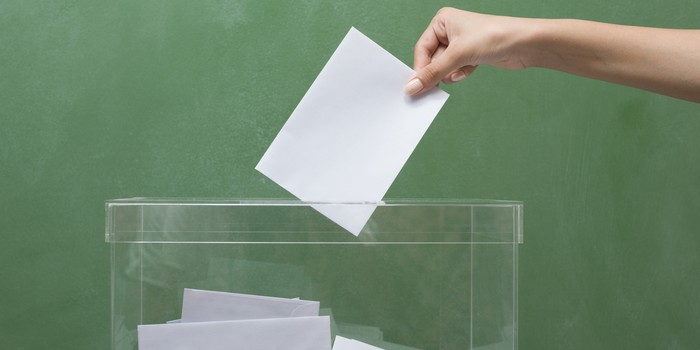
Here's the low-down on voting.
Every three years, the Australian public gets to decide which political party they would like to govern the country for the next three years.
This gets decided on Election Day; a day on which the eligible voting public heads to dedicated polling areas in parts all over Australia and casts their preferences for local political candidates.
Confused? This is a no-judgement zone, so if you need to brush up on your knowledge, we've tried to condense everything you need to know about AusPol in one article. You're welcome.

If the next election will be the first for which you're eligible to vote, welcome to democracy and fully-fledged adulthood.
Still, there's quite a bit you'll need to be across in order to be fully prepared for the phenomenon that is Election Day. Here's what you need to know.
Before the day, enrol!
Don't be disappointed on the day: make sure you're enrolled to vote! If you've recently changed addresses, you'll need to update that too. It only takes a few seconds to set up and you'll be on your way.
If you're not even sure where to start, here's a little guide we prepared earlier.
Expect to be swamped by political campaigners and how-to-vote pamphlets.
The first thing you'll probably notice on the day is that there will be scores of political campaigners at the voting area's entrance (which is usually a school hall or gymnasium). They will usually be in bright-coloured shirts (representing their respective parties) and will want to talk to you about their political party's election promises. They also hand out "how-to-vote" cards, which show you how to cast a vote for their party.
Obviously, these people are not going to be the most critical of their political party, so it's best if you brush up on your knowledge of each party's policies beforehand.
Political campaigners are not allowed within six metres of the official voting area, so once you pass through them, you're in the clear until you encounter your next issue...
Lines.

Inevitably, with the whole country voting on the same day, there might be a line at your local polling place. Within each electorate (voting division), there will likely be multiple polling places scattered around the suburb and some could be busier than others.
If you really want to avoid crowds and some of the campaigners, rock up just after the polling area opens up, which is usually around 8am, or strategise which of the polling places would be least busy.
Get ready: You're gonna receive two pieces of paper to vote with.
Once you reach the end of the line, a polling official will cross off your name (make sure you bring ID!) and hand you two pieces of paper. One of these (the smaller one) will be your House of Representatives ballot paper, and the other will be your Senate paper.
The House of Representatives ballot is pretty simple; put down numbers (usually one to six or seven) in order of who you'd like to preference.
For the Senate paper, don't fear; it's not that complicated. You'll have to vote one to six (at least, but you can always number them all) above the line if you're happy to vote political parties. If you want to vote below the line for individual candidates, you'll need to number a minimum of 12.
Democracy sausages should be abundant.
Welcome to the era of democracy sausages. As is the tradition in the land (of Australia), each polling place must have a democracy barbeque serving democracy sausages. (Okay, there might be some exceptions.)
After all that hard work showing up for democracy, it's important to remember to exercise some democratic rights and treat yourself to a barbequed treat.
The relief when it's all over.
You've completed your democratic duty, you've eaten your democratic snack and you're on your way home or to your next task of the day. Bask in that sweet, sweet relief and feel comfortable at the fact you won't have to do it again for another three years (or until your local or state election is announced).
...wait for the results to reel in.

The day doesn't end there for most of us who are interested to see who will be governing over the next few years. As soon as polls close at around 6pm in each state, the results will start to trickle in and most major networks will begin their results coverage. It's usually all over in a few short hours, although in closer elections, some electoral results are re-counted several times over to make sure there's a clear winner.
If you need a refresher on how the whole system actually works, try out our little explainer to get you started.
Read more:


Header Image: iStock.com/selimaksan
Topics
Ref: a36f9198-706b-4db4-9ed1-aa0600591bf9





Comments & Feedback
Share your opinion
Emoji cheatsheet Formatting Comment guidelines