Here's Why More and More Filmmakers Are Shooting With Smartphone Cameras
Time to get that Oscar.
This post is presented in partnership with Samsung. Student Edge members save 20% off on Galaxy Note20 and Note20 Ultra in-store. Find out more.
If you’re only using your smartphone’s camera to take pictures of your food, you’re missing out on a huge opportunity. In fact, if you really wanted to put in the effort, you could become the first person to win an Oscar for shooting an entire movie on that very device.
Don’t laugh. It’s gonna happen, if not for you, someone else, and soon.
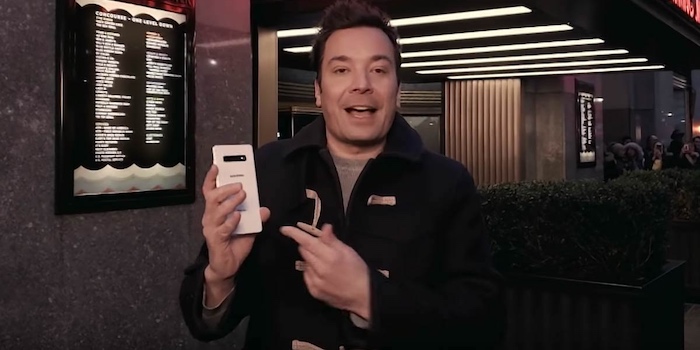
For close to a decade, some major filmmakers and artists have been experimenting with smartphone cameras to produce their shorts and features. They include Steven Soderbergh, Zack Snyder, Sean Baker, Park Chan-wook and Lady Gaga. In 2019, a Samsung Galaxy S10 was even used to film an entire episode of The Tonight Show with Jimmy Fallon.
Fallon's gambit was good training for the coronavirus pandemic, as most talk shows have ended up relying entirely on the hosts filming themselves at home on their devices and airing the handheld footage.
But it’s not the DIY at-home aesthetic that makes smartphone cameras a suitable tool for cinematographers creating works for the big screen. The fact is, as we’ve detailed previously, the cameras on smartphones are now crazy powerful. Case in point: the Samsung Galaxy S20 Ultra, with its wide-angle 108MP camera, is more comparable with the ARRI Alexa 65 (AKA the camera used to film the last three Oscar winners for Best Cinematography: 1917, Roma and Blade Runner 2049) than your smartphone cameras of yore.
Here's why aspiring filmmakers and amateur auteurs might want to ditch the big rig and focus on a smartphone for their next project.
They’re way more affordable.

As anyone who’s ever rented video recording equipment from their uni or institute already knows—and has been warned while borrowing them—those traditional filmmaking cameras are super expensive. And if you don’t have access to a school’s facilities to take them out for a weekend, you’ve basically got zero chance of getting your hands on a professional instrument, unless you’re willing to spend a whole lot of cash (or, let’s face it, credit). Smartphones, by comparison, are fairly affordable, and with increasingly impressive lenses. You can own your own smartphone camera and film when you please, rather than when you’re allowed to check it out. It also means not freaking out about breaking someone else’s $20,000 camera too.
They’re much lighter.
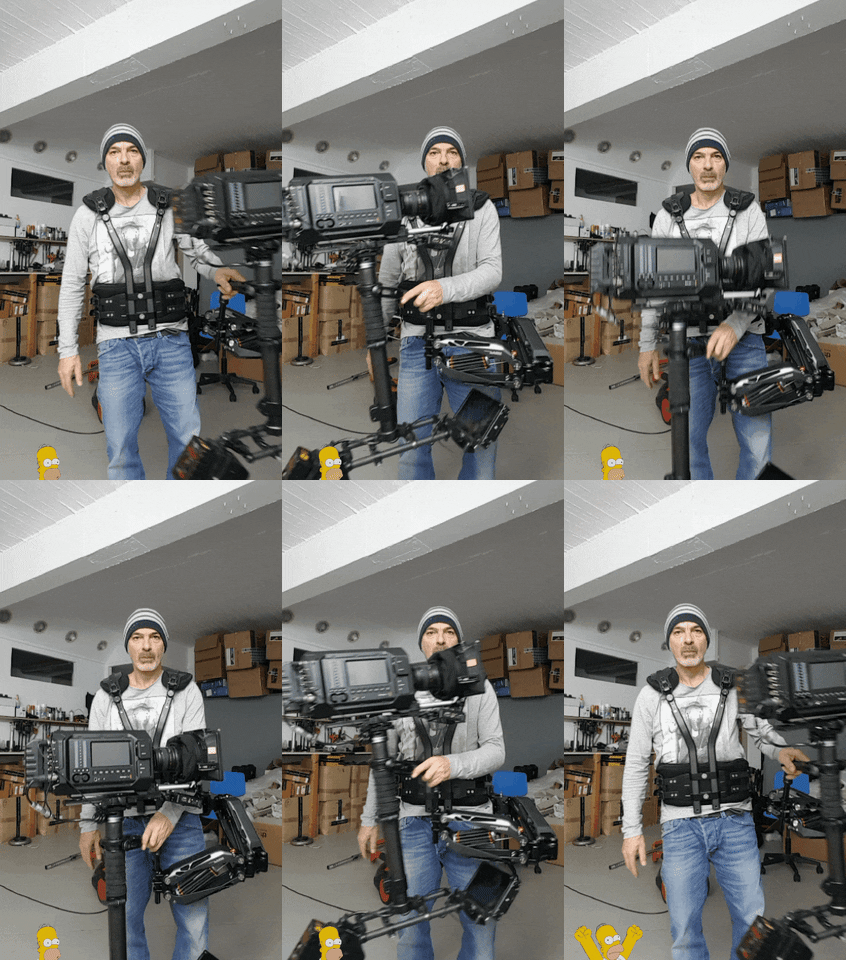
Have you ever seen a cinematographer lugging around a steadicam? Sure, they allow a camera operator to move around a set and capture a “steady” image while on the move, but they also seem to condemn them to a lifetime of sciatica and physiotherapy. Conversely, a smartphone doesn’t weigh much at all, and most of us are already pretty used to carrying them around. Some of the more serious filmmakers have also made special apparatus to keep the smartphones steady as well, but, y’know, you can just use a selfie stick and that’d work too. Not only will it keep you from aggravating your scoliosis, but also you’ll be able to wedge your camera into more nooks and crannies. A regular film camera could never.
Some smartphones, like the Samsung Galaxy S20 Ultra, have 8K video.

When Christopher Nolan shot the stunning Dunkirk, he largely relied on the IMAX MSM 908, a hulking behemoth of a camera that delivers, Nolan estimates, 18K quality video. They also weigh about 23kg, are too loud to use during scenes with dialogue, and cost $US15,000 per week. It worked great for IMAX screens, but since most televisions (and even many cinemas) aren’t capable of projecting any images greater than 4K quality, most smartphones will suffice. And the Samsung Galaxy S20 Ultra, with 8K capabilities, is even better.
(A reminder: 4K is just a catchy way to refer to a screen resolution of either 3840 x 2160 pixels or 4096 x 2160, which equates to about 8.5 megapixels. However, 8K resolution—referring to screen resolutions of 7680 x 4320—isn’t simply twice as good as 4K; it offers resolution of 33.2 megapixels. The benefit of 8K over 4K is it lets you crop and edit a video without sacrificing detail. You may only end up outputting to 4K because most TVs and devices can’t show much better detail than that at the moment, but 8K gives you the ability to have greater control over your next masterpiece.)
You can be a pioneer!

With modern legends like Soderbergh, Park and more paving the way with smartphones, it seems only a matter of time until the Academy finally accepts this technology with open arms. Though many, like Nolan, champion the cinema experience (and rightly so!) our current situation of social distancing and self-isolation might finally force some of the more rigid artists into relying on their smartphone to tell their stories. And given the fact that next year’s Oscars might be a bit thin on contenders (given all the cancelled releases), you could consider this your chance to put your smartphone to use and create a film that captives the entire world. Don’t just aim for TikTok virality: here’s your chance to beat Christopher Nolan at his own game.
Student Edge members save 20% off on Galaxy Note20 and Note20 Ultra in-store. Find out more.
Header Image: NBC
Topics
Ref: 8b07599a-2790-4904-8682-aba0002255c5




Comments & Feedback
Share your opinion
Emoji cheatsheet Formatting Comment guidelines