How Powerful Are Phone Cameras? Let's Explain Lenses, Megapixels and More
We know you’ve been afraid to ask.
This post is presented in partnership with Samsung. Student Edge members save 20% off on Galaxy Note20 and Note20 Ultra in-store. Find out more.
Back in the day, you needed a multi-thousand dollar piece of equipment and a dedicated darkroom to be considered a true photographer. At the very least, you had to first frame up your shots by holding your thumbs and forefingers in a rectangle, like a true artiste.
It was, honestly, a hassle, and it alienated amateurs who couldn’t even manage to work with even semi-complicated cameras.

But then came the smartphone, democratising photography forever. No longer were non-professionals doomed to wield disposable cameras or lacklustre lenses. Suddenly, we had an impressive photographic monster in our pockets, each with apps that make artistes out of all of us.
As a result, we now live in an age where people don’t fully appreciate the differences between certain phone's cameras (including the ones on the front and back of a single device!) or their sheer comparative power.
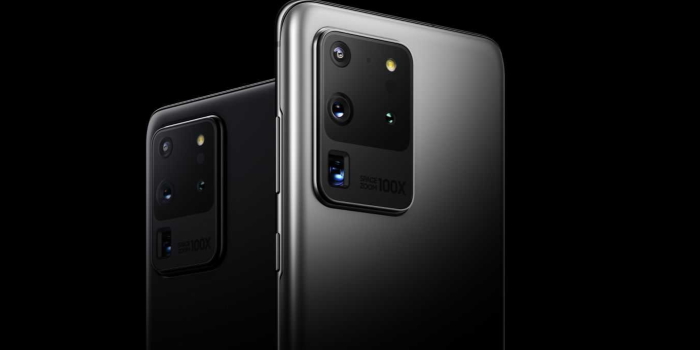
For everyone who's newish to photography thanks to your trusty pocket pal, let us help explain the differences (and why the new Samsung Galaxy S20 Ultra blows the competition out of the water).
So, what is a megapixel?
Whenever a new phone is launched to much fanfare, you’ll hear the makers brag about the megapixels (or MPs) of its cameras. But whether that number is '8' or '800', it won’t mean a damn thing if you don’t appreciate what a 'pixel' even is.
Basically, every digital picture is made up of tiny little dots, and the smallest of these physical points is called a pixel. If you have a low-resolution image, that means it’s made up of only a few pixels, and probably isn’t very crisp. You can tell when you start to zoom in and the pic gets all blurry.

A 'megapixel' represents one million pixels. So, if a phone camera is 8MP, that means its pictures contain eight million pixels, and will remain decent quality as you zoom in further. Try the below:

Any camera above 5 or 6MP is considered very good quality, and those in the 7 – 8MP range are excellent. Phones with 10MPs or more are in the realm of the unreal. There are some top of the line professional camera brands that boast 30MPs. And that’s why phone cameras are so impressive (well, some of them, anyway). The new Galaxy S20 and S20+, for instance, have high resolution triple-lens cameras that go up to 64MP, and the quadruple-lens Galaxy S20 Ultra hits a wild 108MP figure. They also have Space Zoom, which means you can basically pinch at your S20 and S20+ screen 30 times, and your S20 Ultra screen 100 times (give or take), and still get a crisp pic. (They also offer 'Single Take' mode, which is like 'burst' mode, but let’s you capture up to 10 seconds of footage and break each moment down in a variety of formats, for multi-platform meme-ification.)
That sounds cool, but I still have questions. Like, which lens should I use?
Cameras weren’t always on the front of phones, but they were eventually added for the ease of the regular selfie-taker. However, many wondered why their front-facing selfies were worse quality (even if they were better framed). That’s because the front of the phone couldn’t fit a powerful camera while also keeping the screen flat, so the front lens has had to settle for being slightly less powerful than the lens (or lenses) on the back.
In the case of the Samsung S20, the front camera is still an eye-boggling 10MP, while the three rear cameras are 12MP, 12MP and 64MP (that’s the telephoto lens). And don’t forget that the Ultra has that 108MP lens on the back too. Keep in mind when you pose for your next self-photograph (which is how you say 'selfie' but fancy).
How does this translate into video?
Pretty well! Some phone cameras have an impressive 4K video quality, while the S20 has 8K.
Basically, 4K is just a catchy way to refer to a screen resolution of either 3840 x 2160 pixels or 4096 x 2160, which equates to about 8.5MP (that’s great for a moving image). However, 8K resolution—referring to screen resolutions of 7680 x 4320—isn’t simply twice as good as 4K; it offers resolution of 33.2MP. That’s better than you can probably even tell on your tele.
If you’re not sure why exactly you’d need 8K over 4K when all you’re doing is recording videos of your cat sneezing, the benefit is in letting you crop and edit a video without sacrificing detail. You may only end up outputting to 4K (because most TVs and devices can’t show much better detail than that at the moment), but 8K gives you the ability to have greater control over your next masterpiece.

Student Edge members save 20% off on Galaxy Note20 and Note20 Ultra in-store. Find out more.
Header Image: Supplied
Topics
Ref: 41cc5542-dcc2-47bc-a553-ab790004447b



Most Popular



Comments & Feedback
Share your opinion
Emoji cheatsheet Formatting Comment guidelines
Wow, i'm excited to get my hands on this in the future. I hope corona virus doesn't stop the innovation of technology.