Movie Review: In “1917”, the Soldiers Can’t Stop, and the Director Won’t Stop
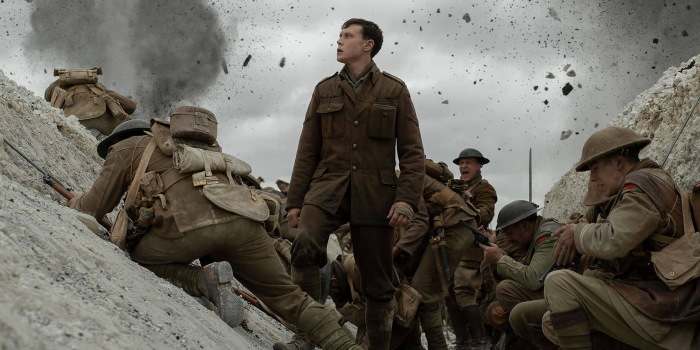
This WWI epic has been made to look like one very long shot.
As far as 'single-take' movies go (these are the flicks that make it seem like they’ve been filmed in one continuous unbroken shot), 1917 is one of the best.
It follows two young British soldiers dashing across the French countryside during World War I, in the hopes of stopping a fellow battalion from walking into a trap set by the German army at dawn.
The camera chases after them, sometimes from over their shoulder, other times from a safe distance, and most often in the firing line of enemy bullets, as they try to beat the clock. It’s one hell of a feat in cinematic cardio from director Sam Mendes and cinematographer Roger Deakins, even if they do sneak in a couple of cheeky, nearly-imperceptible edits, smoothed over in post-production.
Sure, it may not have the same level of difficulty as those projects actually filmed without any cutting, like Victoria, Fish & Cat and Russian Ark, yet it’s an improvement on those that simply appear to be one shot, such as Birdman, Silent House and the granddaddy of the genre, Alfred Hitchcock’s Rope.
The funny thing is, what helps 1917 transcend its gimmicky shooting style is a single cut, which comes at the end of the second act and elicited an actual gasp from the audience. It’s followed by a beautiful, nightmarish sequence—one that could have only been achieved by the sensory interruption—setting an essential course for the climax. So, yes, Mendes and Deakins have crafted a visual triumph here, but they have to thank the traditional language of cinema—specifically, the art of knowing when to cut and mark the passage of time—for helping make it leap to something special.
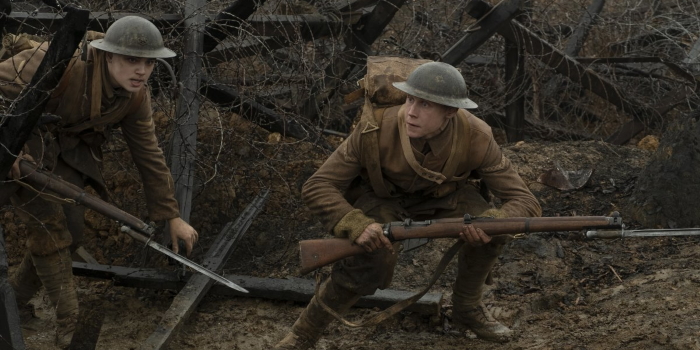
George MacKay and Dean-Charles Chapman (best known as Tommen Baratheon from Game of Thrones) star as the two soldiers hoofing it across northern France, and they do well to convey their distinct characters despite a lack of dialogue. You can make a good version of this movie without using Mendes’ chosen filmic style, but you can’t do it without engaging leads, so don’t underestimate the importance of their physical and honestly-quite-exhausting-seeming work. Other familiar Brits pop up throughout as the boys reach certain milestones (without me even telling you, you probably knew in your gut this thing had small parts for Mark Strong, Colin Firth and Benedict Cumberbatch). Just don’t get attached: it’s solely you and the young men for much of 1917’s very stressful runtime. Well, you, the young men and Roger Deakins (and Thomas Newman, the composer, who's also all over this thing).
Mendes, who co-wrote the script with Krysty Wilson-Cairns, dedicates 1917 to his grandfather Alfred, a WWI veteran who brought home "stories" from the frontline, inspiring this particular tale. Perhaps that human element is what gives 1917 something more tangible to grasp than simply technical innovation, especially from a director who’s seemed more concerned with tech lately. By finding the right fusion, it’s easy to call 1917 Mendes’ best picture.
However, it also reminded me of Martin Scorsese’s recent feud with Marvel, which he said didn't make "cinema". He later clarified to say the movies of today can be classified in two ways: as "worldwide audiovisual entertainment" and "cinema” (he conceded they "overlap from time to time"). I can’t help but feel that, even when working with serious subject matter, Mendes usually makes the former, creating theme park rides with admittedly dark themes. 1917 is indeed a rollercoaster, especially given its nearly-first-person perspective at times, bringing to mind video games such as Call of Duty and Wolfenstein. That’s not meant as an insult, just an observation, I guess. And maybe a reminder that "worldwide visual entertainment" can still tell meaningful stories, when done right.
4/5
In Australian cinemas 9 January. Rating CTC.
Header Image: Universal Pictures
Topics
Ref: 4242e1d0-5a8c-43b5-b6f8-ab1e001e913c



Comments & Feedback
Share your opinion
Emoji cheatsheet Formatting Comment guidelines