What Young People Need To Know About MS
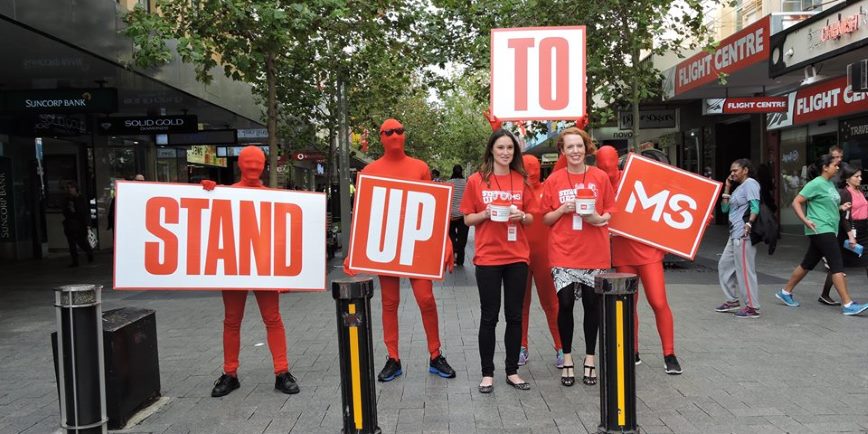
Multiple sclerosis is one of the most mysterious medical conditions affecting people today. It’s also one of the most misunderstood.
This post is presented in partnership with The Multiple Sclerosis Society of Western Australia (MSWA).
A chronic neurological condition that strikes the central nervous system for no identifiable reason, MS is certainly a frightening enemy.
Misinformation about MS, however, might be unnecessarily fanning those flames further.
MSWA’s Michael Van Oudtshoorn says that, although “we don’t know what causes it and we don’t know how to cure it,” raising awareness of MS is an effective tool in the battle.
Considering the majority of those with MS are diagnosed under the age of 40, Van Oudtshoorn believes getting the facts straight for young people is essential.
“We know that it’s not contagious. A lot of people presume that it is,” he said.
“We know that people in the same family don’t develop MS [from one another]. Husbands and wives generally don’t both develop MS.
“Kiss, hug; you’re not going to catch MS from someone. It’s not a catchable disease.”
Another common misconception: that most people diagnosed with MS lose complete function of their body.
Though extreme symptoms can include physical disabilities, Van Oudtshoorn stresses that the majority of people living with MS do not become severely disabled.
Rather, the most common symptoms are those ‘hidden’ from public sight, including fatigue, depression and affected balance and bladder control.
“We can treat some of the symptoms but we can’t do much around prevention without knowing what the actual causation is,” he said.
Nonetheless, cutting out smoking is recommended (and not just to prevent MS).
“Smoking is obviously something that has shown us increases the risk [of developing MS]. We know smoking causes a bunch of other health issues anyway, so it’s probably one thing to just avoid in general,” Van Oudtshoorn said.
“There is also some research into Vitamin D deficiency, which is basically sunlight, but that’s still in the early stages, though it is promising research.”
A new exercise program designed by Neuroscience Research Australia has also revealed positive improvements amongst participants.
Despite there not yet being a cure, Van Oudtshoorn says there are simple actions that can be taken by everyone to help support those living with MS.
“Talking to people who have it and actively treating people with MS the same way you would treat anyone else you know [is encouraged]," he said.
“Generally people with MS don’t experience cognitive issues; they don’t end up being a different person."
Even taking part in fundraising activities – like buying MS Mega Home MS Luxury Lottery tickets – makes a difference.
“I think, hopefully, with the help of young people and the rest of the community, we will find a cause and we will find a cure for this condition.”
If you live in WA, fundraise for MS by running, walking or crawling 1,103 stairs – that’s 53 flights – to the top of Perth’s tallest and most iconic building, Central Park, on Sunday 7 June 2015. Register to join Student Edge’s ‘Step Up for MS’ team for the reduced price of $30. Register by 29 May 2015 to go in the draw to win 1 of 2 running kits (including singlet, water bottle, cap and shoe laces).
Topics
Ref: 6f7f0418-0d6a-420b-9bd7-a49800901998






Comments & Feedback
Share your opinion
Emoji cheatsheet Formatting Comment guidelines