Why Does "Black Mirror" Keep Making Episodes Like "Smithereens" Over and Over Again?
Black Mirror’s back, and it’s spinning its wheels.
Stop me if you’ve heard this one before: What if technology, but bad?
That remains the general sentiment of Black Mirror, Netflix’s future-phobic anthology show, which returned last Friday for a truncated fifth season.
Of course, Black Mirror has used that central idea to develop plenty of thought-provoking parables, often with excellent results. Even if most eps end with its characters having been spiritually ravaged on account of the by-products of technological advancement, it’s usually worth the ride.
Instead, it’s another, more particular kind of repetition within the show that’s starting to get our goat: that of the anti-internet kidnapper.
Black Mirror is primarily Charlie Brooker’s baby, ever since it debuted in 2011 on Channel 4 in the UK, and as S5 proves, that’s both a blessing and a curse.
His wry comedy, penchant for pitch-black subject matter and uncanny ability to predict our future remain the series’ idiosyncratic calling cards. Just this year, we even saw Brooker push the form with the fun, deranged and deeply, depressingly circuitous interactive experiment, Bandersnatch.
However, one of Season 5’s episodes suggests Brooker might be spinning his wheels, and in need of an intervention from new writers. Fittingly, it’s the episode “Smithereens”, about a rideshare driver.
Spoilers ahead for the Season 5 episode "Smithereens". And Season 3’s "Shut Up and Dance". And Season 1’s "The National Anthem".
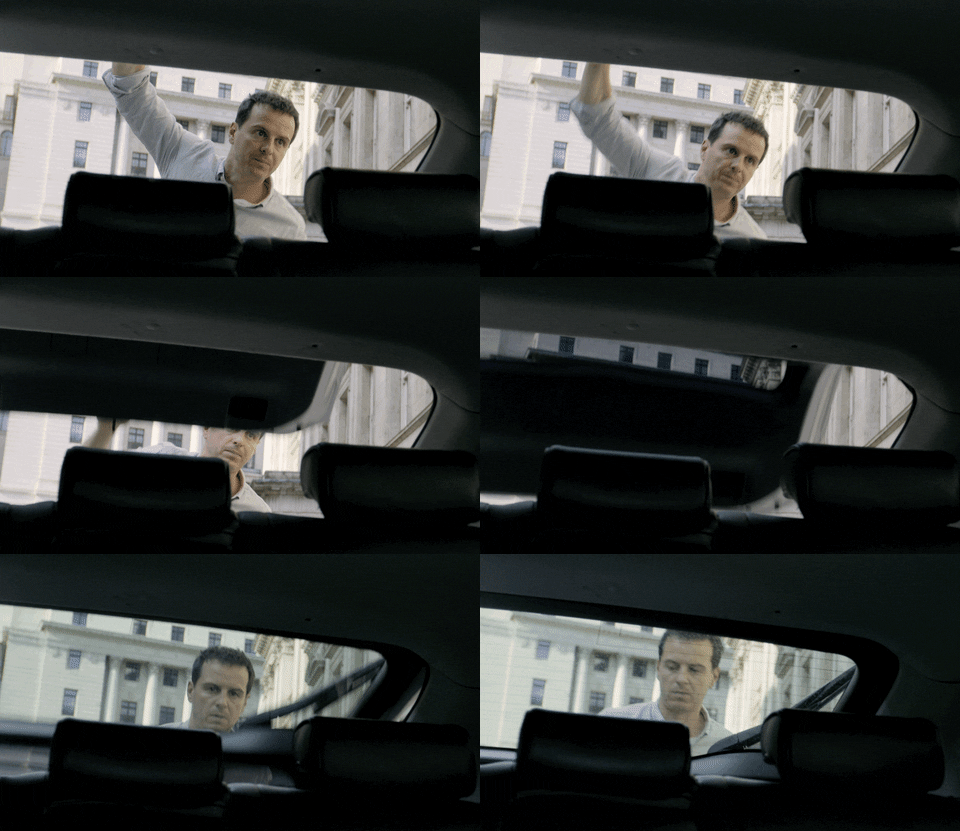
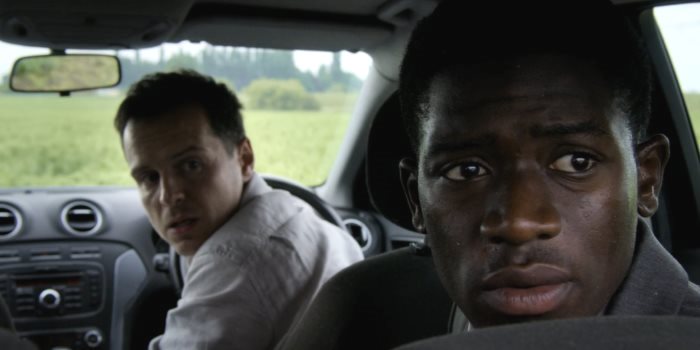
Andrew Scott stars in "Smithereens" as Chris, an exceptionally angry dude who spends his days working for the rideshare app Hitcher, sitting outside the London office of social media behemoth Smithereen. His plan, we learn, is to kidnap an employee and use them as leverage to get Smithereen’s creator Billy Bauer (a man-bunned Topher Grace) on the phone. But his plan goes awry when his hostage, Jaden (Damson Idris), turns out to merely be an intern. Nonetheless, Chris holds Jaden at gunpoint inside his car, parked in rural England, while British cops surround them. The police wind up getting support from Smithereen, who use their expansive reach to develop a profile on Chris based on his social media accounts, hack into his phone and, ahem, play 'calming' music.
It all builds to a finale in which Chris finally speaks to Billy. When connected, Chris spills his guts. Turns out, he feels responsible for the death of his fiancée, because while driving her home one night, he got distracted by a notification on his phone and veered into what turned out to be a drunk driver. Chris doesn’t blame Billy for inventing Smithereen, nor does he care about Billy’s remorse. He doesn’t even ask to change the app’s addictive nature when given an anything-goes wish. He just wanted to let Billy know. Eventually, the police open fire on the car, and instead of revealing if either Billy or Jaden survived, we see different people distractedly reading a notification about the stand-off on their phones before returning to their lives. Satire!
The ep is directed by James Hawes, and it's pretty compelling, thanks largely to the performances. There’s also a novel bit of commentary when it’s revealed that Smithereen have far more invasive resources than the British cops and the FBI combined. The real problem with "Smithereens" is that we’ve seen this all before. In the show’s very first episode, in fact.
"The National Anthem" kicks off Black Mirror in gloriously grim fashion, with an English princess held hostage, to only be freed if the Prime Minister, erm, makes love to a pig on the tele. After much hand-wringing, the PM goes through with it, only for it to be revealed that the princess was released before he did the deed; everyone was just too busy watching TV to notice she’d been left for rescuing on a bridge.
This tone-setting instalment basically conveys the same message as "Smithereens", though it is dated by one not-insignificant element: rather than everyone watching the PM in flagrante delicto on their phone screens, they’re assembling in public places to watch it go down on actual televisions. How 2011.
Brooker had another crack at this kind of story in 2016, with "Shut Up and Dance", in which a teenager is compelled to commit crimes by a computer hacker after being recorded doing something disturbing with his laptop’s camera. His virtual kidnapper is never seen, yet their motive is the same as the villain in The National Anthem, and Chris in "Smithereens": You deserve it, because the internet.
In the eye-rollingest scene of "Smithereens", Chris emphatically blames his victim for his own kidnapping: "Everywhere you look people are hooked on [phones]! It’s like chain-smoking... People don’t even look up anymore. The sky could turn f***ing purple and you c**** wouldn’t notice for a month."
Here’s the kicker:
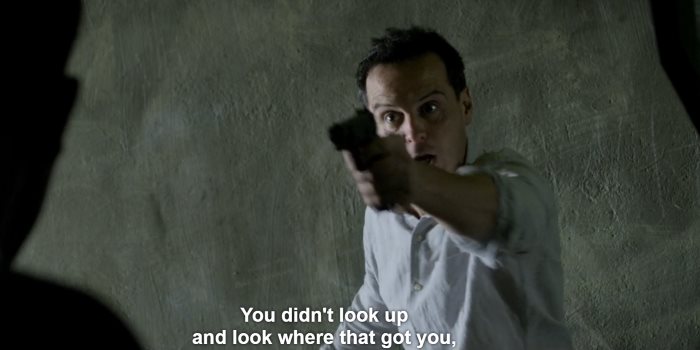
Wow, really makes you think.
It’s not that we disagree with the thesis statement of "Smithereens". The ep basically turns into a PSA advising people to not look at their phones while driving. Who would argue with that?! But therein lies the problem with this instalment: Who would argue with that?! "Smithereens" sets up a straw-man argument (for the third time!) and then attempts to boldly take a stance no one would ever reasonably challenge. In its best episodes, Black Mirror subverts our expectations to explore different lines of thought, highlighting the risks and the benefits of technology, as in "San Junipero", "The Entire History of You", "Be Right Back" and S5’s "Striking Vipers". By comparison, "Smithereens" never gets out of its first gear to dig into the meatier conundrums around social media consumption.
It’s time for Charlie Brooker to stop wasting his scarce few annual episodes by retelling this tired old tale. It's time to look up.
Header Image: Netflix
Topics
Ref: c4cc778a-730f-4724-ae2b-aa6800365a55




Comments & Feedback
Share your opinion
Emoji cheatsheet Formatting Comment guidelines