What Is COP26 and What Does it Mean for Young People?

Everything you need to know about our future.
If you’ve been keeping an eye on the news lately, you’ll have seen that COP26 Glasgow is making headlines around the world.
Why? Climate change.
It’s a scientific fact that humankind’s impact on the Earth is influencing climate—and not in a good way.
Enter COP26 in Glasgow, an event being labelled as the ‘last best chance to save the planet’. That may sound a tad extreme, but when dealing with the fate of humanity, a soft approach tends not to cut it.
To get you up to speed, here’s everything you need to know about COP26 and what it means for young people.
What is COP26?
COP stands for ‘Conference of the Parties’ as per the United Nations Framework Convention on Climate Change.
Basically, it’s a giant meeting attended by world leaders, scientists, activists and business leaders to plan how to curb the effects of global warming and save the planet.
The conference occurs annually, with this year’s agenda being highlighted as ‘do or die’ for global leaders.
What are countries being asked to do?
Remember the 2015 Paris Agreement? Countries who signed that committed to keeping global temperature increases below 2 degrees Celcius.
This led to countries setting their own emissions reductions targets, with most countries planning to have net zero emissions by a certain year.
The only problem is that a lot of those countries haven’t done very well at reducing emissions and Australia is one of them.
Experts say that countries should band together and aim for a 45 per cent emissions reduction by 2030. Currently, the world is on track to have a 16 per cent increase by 2030. Not good.
Who are the biggest contributors to CO2 emissions?
Industrial juggernaut China is the largest offender, with 28 per cent of the world’s CO2 emissions coming from them.
President Xi Jinping is expected to not attend the summit, but China did commit last year to reach net zero emissions by 2060.
The silver medal goes to the United States, contributing to 15 per cent of global emissions. President Joe Biden last year pledged to hit net zero emissions by 2050 and reach a 50 per cent reduction by 2035.
Following them is India on seven per cent and Russia on five. Australia contributes to one per cent of global CO2 emissions. Though that may not compare to China or the USA, on a per capita scale we’re leading the way.
What about Australia and COP26?
Initially, Prime Minister Scott Morrison was planning on skipping COP26, but public pressure—like the Schools Strike 4 Climate protests across Australia—led Morrison to announce he would be attending after all.
On top of that, Morrison revealed on Tuesday his government’s plan to reach net zero emissions by 2050. Getting to the net zero target took a fair bit of convincing by Morrison though, as the Nationals were resistant to the plan as it didn’t have rural Australia’s interests in mind.
While this plan might appear to be good, Australia and Morrison have been criticised for not reworking their reductions target for 2030. Currently, Australia’s aim is to reduce emissions by 26 per cent below 2005 levels by 2030 whereas the likes of Britain are committed to cutting emissions by 68 per cent below 1990 levels.
What does all this mean for young people?
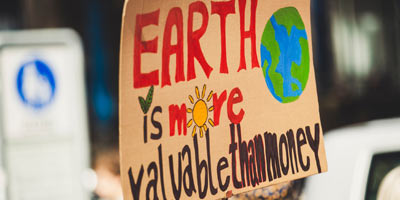
Young people around the world are deeply interested in climate change because it’s their future that is at stake.
Without committed action at COP26, a future of increased storms, flooding, fires and heatwaves is a reality. That’s why young people have been raising their voices and demanding change from world leaders.
With COP26 beginning on Sunday 31 October, it’s important for young people everywhere to inform themselves on the science of climate change, and raise their voice.
To have your say, write to your local MP and ask the government to make changes that ensure the future of young people is one not fraught with natural disasters.
You can search for your local MP here.
Header Image: Francesca Di Pasqua
Topics
Ref: 3b84397b-cb7a-4cc7-aa5d-adcf0045ec9f





Comments & Feedback
Share your opinion
Emoji cheatsheet Formatting Comment guidelines