Here's Everything You Need to Know About the New UN Climate Crisis Report
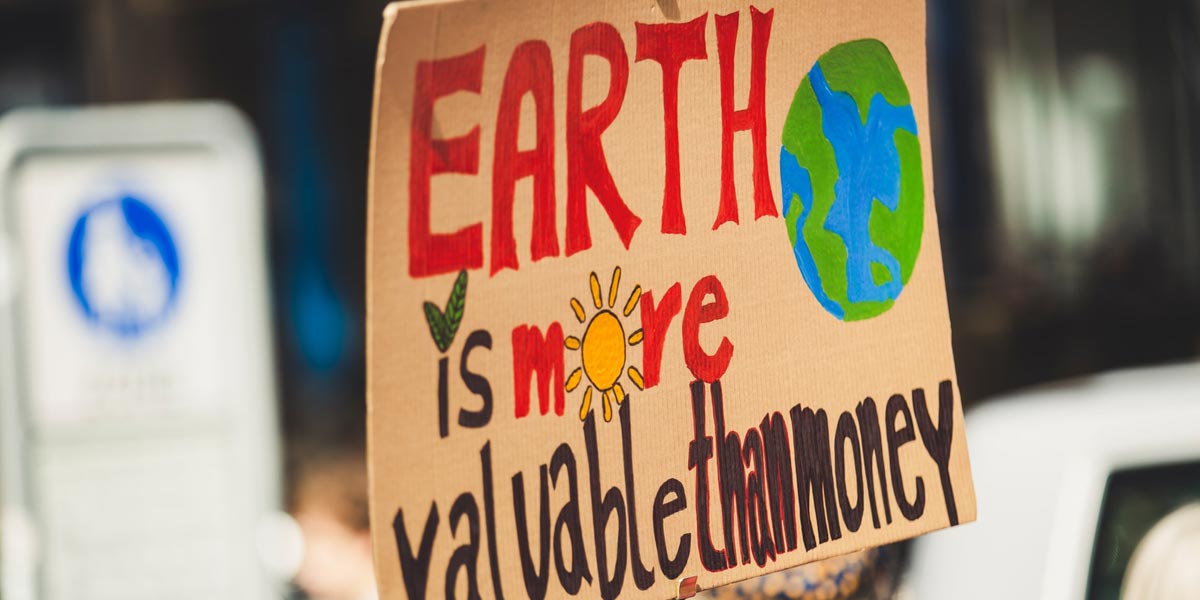
The climate crisis is out of control.
In case you didn’t know already, the climate crisis the world is facing is bad, but a new report from the United Nations (U.N) and the Intergovernmental Panel on Climate Change (IPCC) says the situation is now very close to becoming out of control.
In the simplest form, the report says that humans are “unequivocally” to blame for the rise in temperature on the Earth, with our slow inaction to do something leading to an increase in natural disasters like flooding, bushfires, heatwaves and more.
Here’s everything you need to know coming out of the report.
So, how fast is the Earth warming?
The short answer is: very fast.
It’s been 30 years since the IPCC released their first report in 1990, and in that time, humanity has released almost as much greenhouse gas into the atmosphere as humans did throughout all of history leading up to 1990.
Let that sink in for a moment.
The report states that the world has warmed by just under 1.1C and we’re on track to hit 1.5C by 2030. That might not sound bad, but the last time the Earth warmed by 1.5C, it took 1,000 years.
According to the report, we're gonna hit that in under 50.
Wait, why is 1.5C such a big deal?
Well, back in 2015, a lot of the world’s governments agreed to keep global warming to below 2C this century in a thing called the Paris Agreement.
They also agreed that they’d ideally pursue efforts to keep it to 1.5C. Why? ‘Cos every slight increase in global temperature can cause extreme weather like flooding, heatwaves and droughts. As of now, we haven't slowed the rise in temperature—it's actually accelerating—and extreme weather is becoming more frequent.
This report says we can kiss staying under 1.5C goodbye, with predictions saying that by the end of the century we’ll be closer to 3C.
Who is to blame?
Humans.
For anyone who still believes this is not humanity’s fault but the Earth going through its cycle, listen up: there is no doubt any longer that humans caused this according to the report.
“It is unequivocal that human influence has warmed the atmosphere, ocean and land,” the IPCC report states.
“Widespread and rapid changes in the atmosphere, ocean, cryosphere and biosphere have occurred.”
Unfortunately, many of the changes humanity has caused are here to stay or worse, continue to change for centuries to come.
What does this mean for Australia?
Remember the NSW fires at the beginning of the year? How about the flooding in Queensland? Events like that are expected to become more frequent in the years to come.
Fire seasons will get longer, fires will happen more often, heavy rainfall will lead to flooding in some parts of the country, while other parts will experience severe droughts.
So, can anything be done to fix climate change?
We know that was some heavy hitting stuff, but it isn’t all doom and gloom.
In November, the world’s governments will be gathering again at a climate change conference in Scotland to discuss their pledges to cut emissions to stop the warming (aka: a kick in the ass for countries who are failing to hit the 1.5C pledge).
For Australia, that means we need to reach net zero emissions before 2050. At the moment, we have a target of cutting emissions by 26 per cent by 2030, but according to IPCC vice chair Mark Howden, the world needs to cut emissions by 45 per cent by 2030 to stop the warming at 1.5C.
What can I do?
When we read all this it can be hard see how a single human can make an impact—and in truth, changes need to be made on an industrial level—but there are things we can do to make a difference.
Start by writing a letter outlining your concerns about climate change to state and federal politicians; your voice matters! You can search for your Member of Parliament here.
On top of that, participating in peaceful protests to let the government know you want them to take climate change seriously is another great way of making your voice heard.
Finally, check out our aritcle on six tips to tackling climate change at home.
Header Image: @markusspiske via Unsplash
Topics
Ref: d06c6da5-1183-41f3-8d67-ad800044be93





Comments & Feedback
Share your opinion
Emoji cheatsheet Formatting Comment guidelines