What Does “Defund the Police” Actually Mean and How Would It Work?
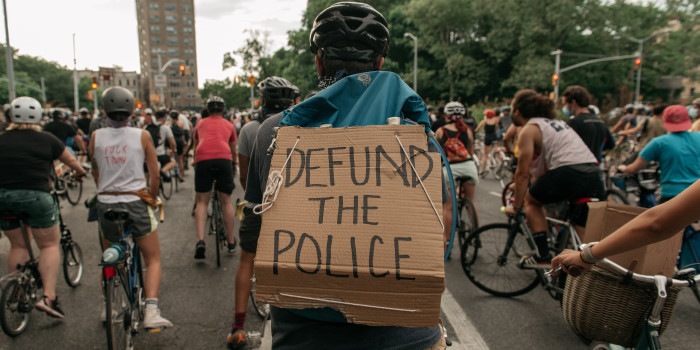
Here’s what you need to know.
Thousands of demonstrators in the United States and around the world have marched to protest police brutality, after the killing of George Floyd at the hands of a police officer.
With the movement receiving mainstream media attention over the past couple of weeks, advocates have also been calling for funding to be redirected away from the police. While "defunding the police" is certainly not a new idea, you’ve probably been hearing the slogan used more frequently in the news lately.
The thought of defunding the police may seem radical, but particular groups, such as Indigenous Australians, have been campaigning for it for years.
So, what exactly does it mean? Let’s go through it together.

What does "defund the police" mean?
Defunding the police doesn’t mean eradicating the police altogether. Alternatively, it’s about reducing police budgets and reallocating them to social services for things like mental health, education, public health or housing.
It is believed that redirecting money to these services would consequently deter crime, as professionals would be able to better address societal problems like homelessness and mental health issues.
oh boy i love video games, anyways defund the police
— ☆funké (@funkemcfly) June 11, 2020
Why do advocates want to defund the police?
As a society, we rely on the police to deal with societal problems. However, advocates of defunding the police argue that we have become too reliant on them and they have too many responsibilities.
For example, police officers are frequently acting as first responders as they attend to an increasing number of mental health call-outs. In July 2019, the ABC reported that police officers in Victoria were attending a mental health incident every 12 minutes. If some funds were taken away from the police, they could be reallocated to social work services or specialised teams, who are better trained to assist people experiencing mental illness or problems with substance abuse.
Homelessness is another issue that the police deal with regularly. Rather than criminalising homeless people, supporters of defunding the police argue that we should redirect funds to publicly finance supportive housing, counsellors, and restorative justice programs to help prevent homeless people from being incarcerated.
Advocates believe this alternative would help build communities up, reducing the responsibilities that police have.
But you might still be wondering: How does this relate to police brutality? Well, supporters of defunding the police hold that it would help diminish police brutality and racial inequalities because there would be better funding for services in communities, particularly in those communities where a lot of policing occurs.
The safest communities don’t have more cops. They have more funding, for housing, schools, and social services. This is why it’s time to defund the police.
— Elijah Manley (@iElijahManley) June 11, 2020
What would defunding the police look like?
Good question. Although, it’s actually a bit difficult to say considering we’ve never seen it done before on a large scale. It's important to note that most advocates are discussing defunding the police primarily in a US context.
According to the ABC, some proposals call for an end to no-knock warrants and military-style raids. Others are suggesting military-style gear should be restricted, and that police departments need to change tactics used to control protesters.
I joined twitter because of One Direction and now I want to defund and abolish the police
— ☾ hannah rat (@hannah_unlost) June 8, 2020
SBS reported that US abolitionist campaign 8 to Abolition has highlighted eight steps towards reducing the power of the police, including defunding the police, removing them from schools, investing in community safe governance, providing housing, freeing people from jail and immigration detention, and allocating funding towards healthcare and support services.
Even though people are mostly talking about defunding the police in the US, that doesn't mean changes couldn't happen in Australia as well. Except, they'd just look little different. In the US, funding for police is largely controlled by local governments, while in Australia, states and territory governments are responsible for allocating funding and defining police policy.
This tweet actually summarises what defunding the police would look like in the US pretty well.
.@AOC's answer to "what does defund the police look like?" was "a suburb" and that is totally gonna be my answer from now on pic.twitter.com/JIlIfngMCv
— Ashley (@ashley_quan) June 11, 2020
What about violent criminals?
It's only natural to wonder what would happen to violent criminals like murderers and rapists if we defunded the police. As criminologist at Brooklyn College Alex Vitale told ABC many of these criminals aren't caught under the current model anyway.
In fact, in the 10 years to 2017 police rejected nearly 12,000 reports of sexual assault on the basis that they did not believe a sexual assault occurred.
Part of defunding the police is about acknowledging that there are flaws in the current system, and finding a better way forward.
Plus, there are studies that suggest that decreased policing could actually result in less crime. According to The Guardian, researchers highlight that aggressive policing on the streets for petty matters can cause social disruption and lead to more crime.
“if we abolish the police, who's gonna solve crimes?”
— blue (@noctblues) June 9, 2020
Uhn hello??? they will pic.twitter.com/SC01AfCZFh
Well, there you have it. Defunding the police is evidently a complex issue, and one that requires a lot of thought. But hey, at least you now know what it means!
Header Image: Scott Heins / Stringer / Getty Images News via Getty Images
Topics
Ref: e2ac09ca-61f5-4044-b924-abd800804c44

Most Popular



Comments & Feedback
Share your opinion
Emoji cheatsheet Formatting Comment guidelines
nice article
Thank you for informing everyone.
now i am informed of what defunding the police means. Thank you.