"The Last Dance" Turned Michael Jordan’s Triumph Into Tragedy
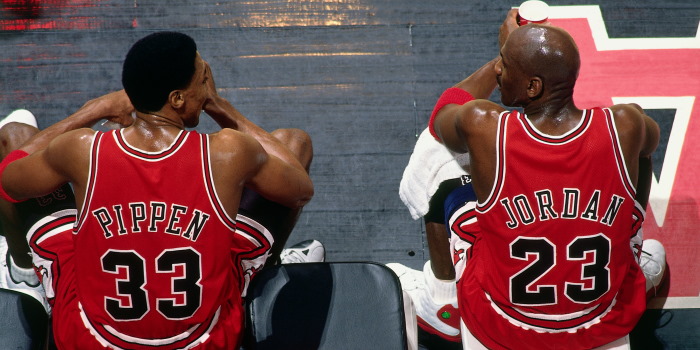
Well, what the hell are we going to do now?
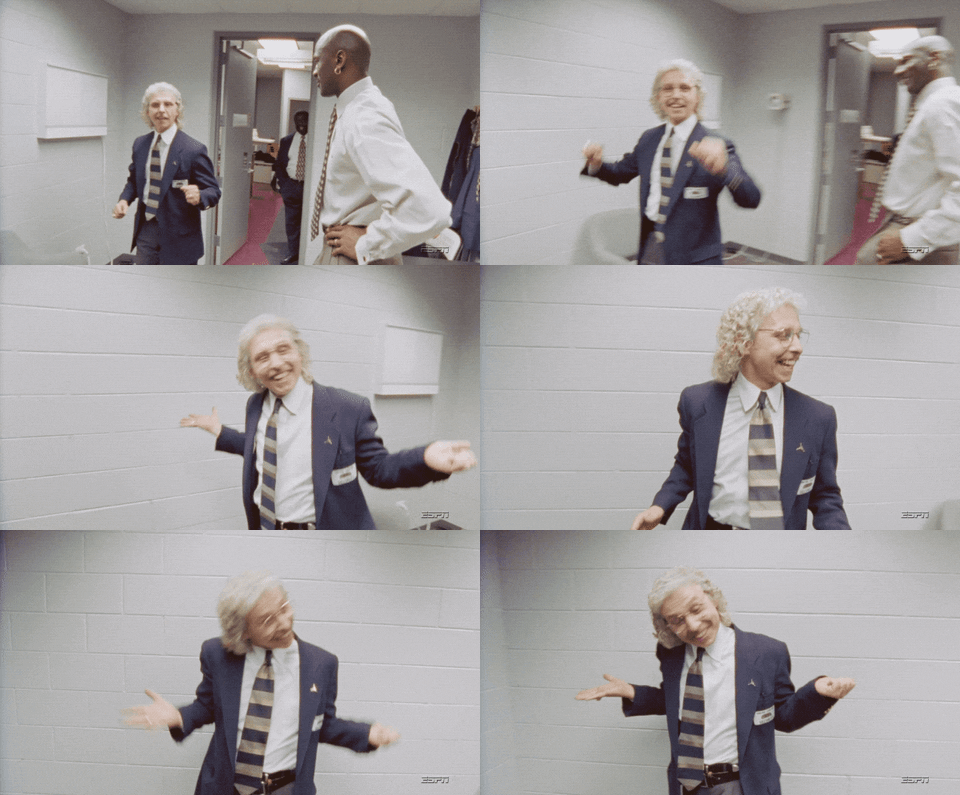
The final two hours of ESPN’s Michael Jordan documentary series The Last Dance aired last night, bringing the fantastically entertaining and illuminating ten-episode series to a stirring close with the Chicago Bulls clinching their sixth NBA championship. It was enrapturing, and not simply because we had nothing else to do anyway. (It was and remains available on Netflix in Australia.)
As far as inspirational narrative engines go, 'Can an unbeatable basketball dynasty with the world’s greatest athlete win their sixth chip?' doesn’t quite rouse the imagination like your typical underdog story. But The Last Dance wasn’t trying to be Hoop Dreams, or Hoosiers, or even Uncle Drew. By documenting the rise and rise and rise of Michael Jordan and the eventual, inevitable, inexplicably abrupt end of his Bulls era, it ultimately painted a lonely portrait of a man living in rarefied air. Because when all was said and done, in his most revealing soundbite, a current-day MJ confessed that six rings wasn’t enough. "Maddening" was how he described it, actually.
This ten-hour sports saga turned out to be a record of Jordan’s slow-motion march to the pantheon, and how he can’t look back on it as anything other than being put out to pasture.

Sure, there was a lot of retconning going on in director Jason Hehir’s opus. I don’t believe for one second that the infamous "flu game" from the 1997 Finals series was actually the result of a poison pizza, especially because of how succinctly and media-managed the explanation here seemed to be. You had to laugh at the 1994 Bulls, in present day talking head interviews, all expressing disappointment in Scottie Pippen for sitting out the final seconds of a playoff game (definitely a bad call) but refusing to call out Jordan for bullying, belittling or literally punching them. There was too generous a dismissal of the conspiracy theories surrounding James Jordan’s death, Michael’s gambling habit, and his strange, short-lived exit from the NBA to go play baseball. There was not even a fleeting mention of his tenure with the Washington Wizards following the Bulls era (as if his career ended in '98). Then there’s the matter of Michael’s wife and kids, who were a complete non-factor throughout. Scotty Burrell, a single-season player with the Bulls (and frequently smiling punching bag of MJ’s) gets more airtime than Jordan’s then-wife Juanita. She was even a character in Space Jam!
Hehir also did the most hilariously disrespectful thing I’ve ever seen in a doco: cutting from Gary Payton’s sincere commentary about Seattle’s Finals series against Jordan, to Jordan laughing out loud while watching Payton’s response and disputing him in real-time. Wasn’t the Supersonics' 4 – 2 loss enough?
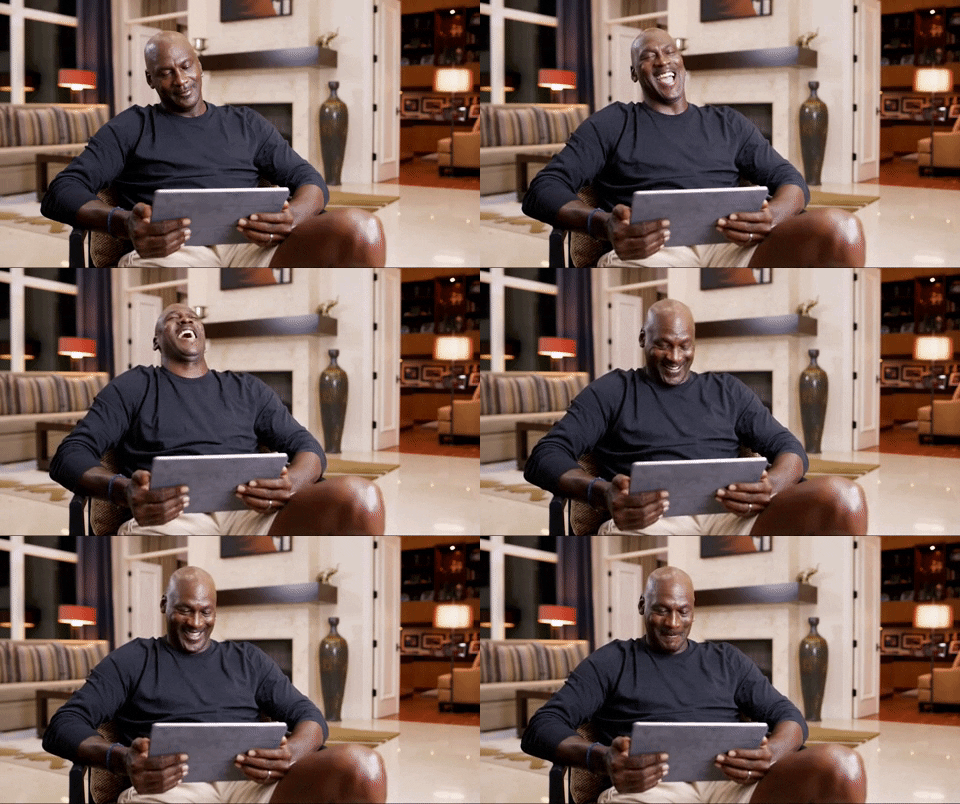
Jordan clearly had an influence on the final product, maybe without him having to even say anything. Fact is, if he wasn’t happy with how the series was cut, he wouldn’t have allowed his involvement. However, if he was trying to present us with a different, less menacing persona, he failed. If anything, The Last Dance is representative of Jordan’s truth precisely because of what was left unsaid and unseen. The absence of his family, that sense of omertà from those closest to him, and his inability to see himself as an a**hole in the footage taken in '97/'98 suggests a man committed to his basketball legacy and only his basketball legacy. (At one point, prior to him facing off against former teammate BJ Armstrong, we see Jordan smoking a cigar and twirling a baseball bat like Robert De Niro in The Untouchables. He looks straight up villainous. And this is what made the cut.)
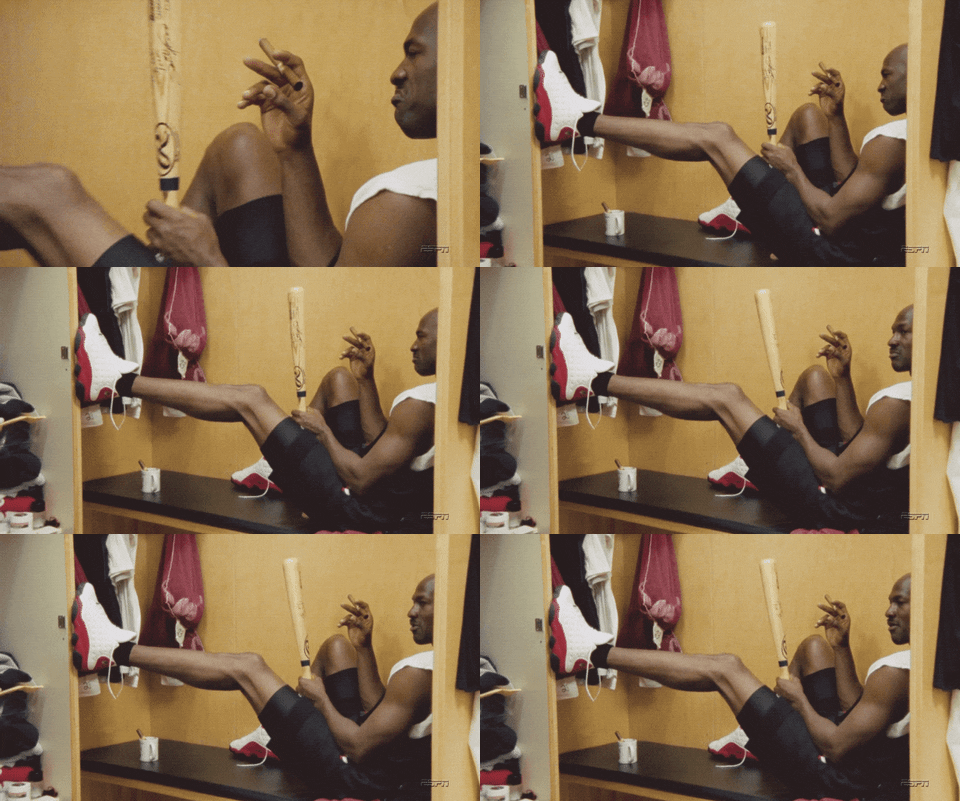
Jordan can’t redefine himself, his pettiness or his near-sociopathic commitment to the game with a friendly edit. But you can’t re-edit those games either, and his unparalleled performance on the court speaks volumes. Because of that, his drive for success is motivating and at times moving, especially for anyone who’s wondered how they’ll personally dig deep and drive further than their human capabilities.
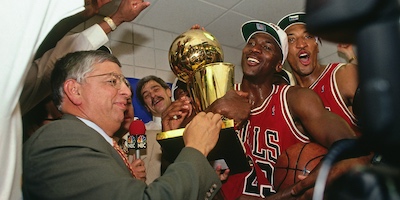
The Last Dance, needing some kind of motivational storytelling engine, became all about turning heartbreak into triumph, and in those moments, it worked beautifully: think of Jordan weeping on the floor following the Father’s Day victory in the 1996 Finals; or Steve Kerr sealing a clutch shot in Game 5 against Utah after a vignette about his own deceased father; or Dennis Rodman, misunderstood and maligned, being taken in under coach Phil Jackson’s wing. Yet, by the end, the triumph fades, with present day Rodman in muttering tatters (see also his 30 for 30 doc For Better or Worse); Pippen still carrying his financial grudges (while being apparently interviewed in the hallway of a display home); and Jordan, glassy-eyed, admitting that how it all ended was "maddening". He hasn’t gotten over it. And as the final title card suggests without saying about the never-again-champion Bulls, neither has Chicago. The Last Dance didn’t need to be an underdog story. It showed us a hero, and then wrote us a tragedy.
4.5/5
The Last Dance is available to stream on Netflix.
Header Image: Netflix
Topics
Ref: 4d3fa02d-7066-481c-a117-abc0003155e1




Comments & Feedback
Share your opinion
Emoji cheatsheet Formatting Comment guidelines