New (Depressing) Images of Coral Bleaching Has Heightened Fears for the Great Barrier Reef
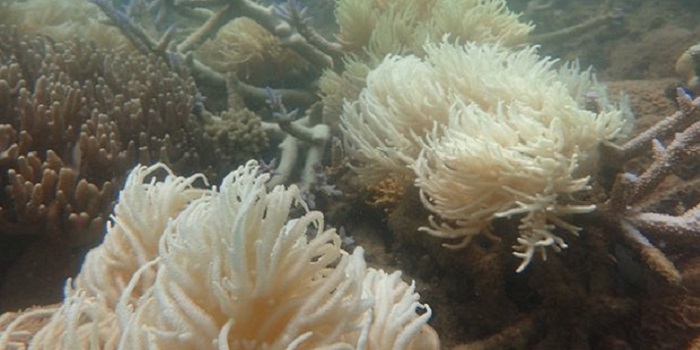
The Great Barrier Reef is expected to cop severe coral bleaching in the coming months; some areas are at risk of dying out completely.
New pictures provided to the Guardian by the Australian Marine Conservation Society show newly bleached corals near Palm Island. (See them all here.)
Coral bleaching—if you didn’t already know—typically occurs when there are elevated sea temperatures. The process results in vivid corals being zapped of colour, turning pale and white.
Alarmingly, most of the Great Barrier Reef has been placed on red alert for coral bleaching for the coming month. The warning has been issued by the US National Oceanic and Atmospheric Administration (NOAA), after satellite thermal maps projected unusually warm waters off eastern Australia.
The unusual spike in water temperature has been partially attributed to the extreme heatwave we experienced a little over a week ago (which you can read all about here).
Last year, the reef experienced the worst bleaching on record, with as much as 85 per cent of coral between Cape York and Lizard Island dying. At least 22 per cent of corals over the entire reef are now dead.
Prime Minister Malcolm Turnbull allocated $1bn to a reef fund last year in June; coincidentally, this was undercut by supporting fossil fuel initiatives such as Adani’s Carmichael coalmine.
Imogen Zethoven—the Great Barrier Reef’s campaign director for the Australian Marine Conservation Society—warns the Carmichael coalmine will spell the end of the reef. She said the government had made “a very deliberate decision to go down the coal road”.
Last year in December the government granted Adani “conditional approval” for a $1bn loan to finance its Carmichael coalmine. The project is expected to produce upwards of 60m tons of coal, annually. For 60 years.
Climate change contributing to warmer temperatures is a key factor in coral bleaching; more than two-thirds of Australians believe the reef’s condition should be declared a national emergency.
Photo: Australian Marine Conservation Society (via the Guardian)
Topics
Ref: d4ea6865-12a2-4df8-b16d-a72000093707




Comments & Feedback
Share your opinion
Emoji cheatsheet Formatting Comment guidelines