How You (and AI) Can Help Protect the Great Barrier Reef
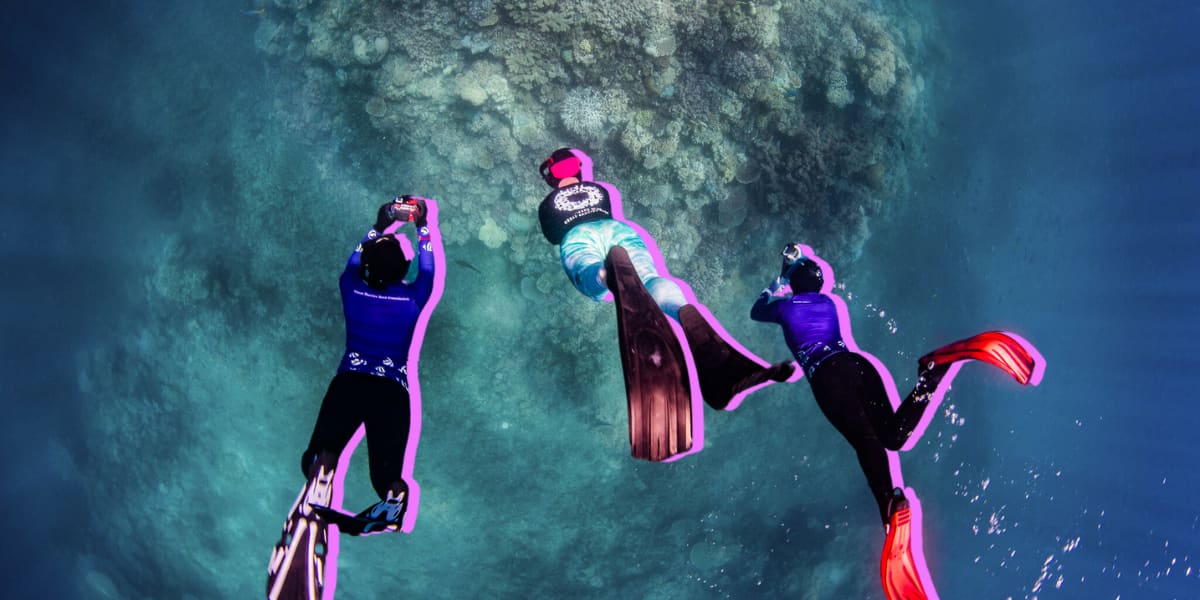
Protect the Great Barrier Reef from home 🤿
This article is presented in partnership with Citizens of the Reef.
With more and more talks of climate change, you’ve definitely heard how the changing temperatures are affecting our environment.
In Australia, it’s affecting our natural world in more ways than one. One particular place it’s harming is the Great Barrier Reef.
It’s one of the seven natural wonders of the world, so helping to conserve this iconic location is super important.
And while we may not be qualified scientists, we can still help the reef with some assistance from AI.
How does it work?
Before calling on the public to help, a group of experts at the University of Queensland first analyse a batch of images and provide this data to train the AI to identify specific coral categories.
This batch data is also used to compare analysis done by citizen scientists using AI to those analyses completed by experts to ensure the accuracy of project.
These experts then use this info to train the AI on specific coral categories.
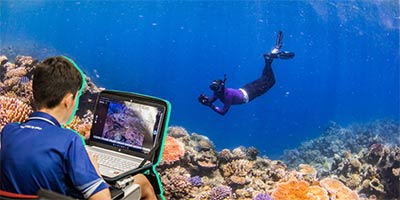
This is where we come in: we look at images of the reef and with the handy help of AI, help label different types of coral.
First, you’ll be asked to identify the types of corals you see in an image (more on that below). Then you’ll be asked what type of coral dominates the image. And finally, if there are any soft corals in the image.
And if you’re worried about getting what you see wrong, don’t stress – each photo is analysed five times.
What types of coral do we need to analyse?
There are four different types of coral you’ll be on the eye out for as well as two other categories. These are:
- Branching coral: These are tree-like branch structured corals and often the most recognisable. They grow in a wide variety of shapes from fine branches to coarse branching.
- Plating coral: These look like a dinner plate (or a stingray) and appear quite flat. They are usually elevated above the reef.
- Boulder coral: Like their name suggests, these look like dome-shaped boulders and are massive. They can range from 50cm to several metres in diameter.
- Other coral: Other corals that aren’t branching, plating or boulder coral. They could be leaf or flower-like corals.
- Reef structure: Reef structure is where coral grows but in this instance, you are looking for the rocky part of the reef without live coral growing.
- Water, sand and shadow: This is anywhere that doesn’t belong to the reef or where coral doesn’t grow.
There’s also the option to note that the image you’re analysing is a ‘bad image’, meaning they are blurry or the objects are too far away.
How does it make a difference?
It may not feel like much, but analysing pics from the comfort of your home provides real help.
As of time of publication, 17 per cent of reefs are now surveyed. Only 5 per cent were regularly surveyed before!
170,921 analyses have been completed and 88 per cent of reefs were reranked for conservation priority as a result.
Signing up is super easy so you can help save this beautiful part of Australia, from home.
Header Image: @theundertowmedia and @nicolemclachlanphoto
Topics
Ref: cb929f59-09e2-4651-8ea6-b17300809268




Comments & Feedback
Share your opinion
Emoji cheatsheet Formatting Comment guidelines