Movie Review: "Alita: Battle Angel" Has Big Eyes, Full Hearts, Still Loses
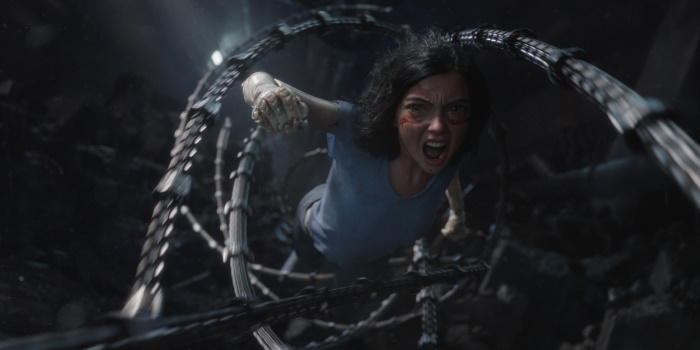
A fantastic lead performance—and eye-popping CGI—can’t save Alita: Battle Angel.
Rosa Salazar stars—but isn’t really seen—in director Robert Rodriguez’s Alita: Battle Angel, which has been ushered into existence after years of trying by dog-with-a-bone producer James Cameron.
She plays the title character in this manga adaptation; a memory-erased cyborg pieced back together in the year 2563, centuries after she fought valiantly in a war for the planet.
But Alita, as she’s named by her Frankenstein-esque doctor-dad Ido (Christoph Waltz), is a CGI girl in a mostly live-action world—'Iron City' to be exact—breathed to life by Salazar (doing the motion-capture grunt-work).
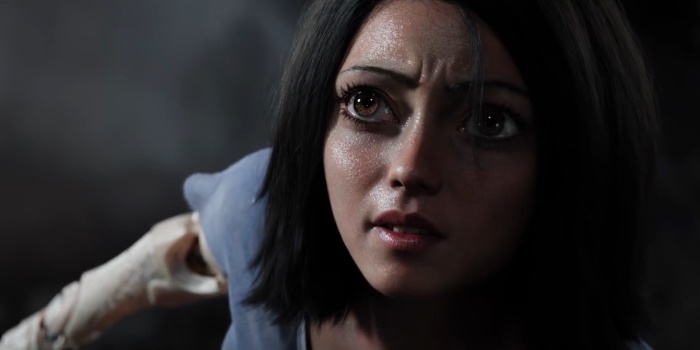
Alita has been intricately realised by the technical wizards behind the scenes, and the complaint that computer-generated film characters look dead in the eyes doesn’t hold much water here. (In fact, the decision to give Alita enormous, cartoonish, maybe-problematic eyes feels like a flex: look at how not dead those giant peepers are.) The cursed days of ghostly Jim Carrey in A Christmas Carol are definitely far, far behind us.
I fully accept mo-cap pioneer Andy Serkis’ argument that CGI is merely a modern form of makeup; here, it helps Salazar appear robotic while retaining her human idiosyncrasies. Besides, the gentle, lilting croak of her voice is all the humanity Alita, a tempestuous teen in a ‘berserker’-ready body, needs. She gives this not-quite-tangible figure some empathetic and concrete grounding.
Which is to say, in a twist, it isn’t the computer-generated lead character that delivers the fatal blow to Alita: Battle Angel. It’s everything else around her.
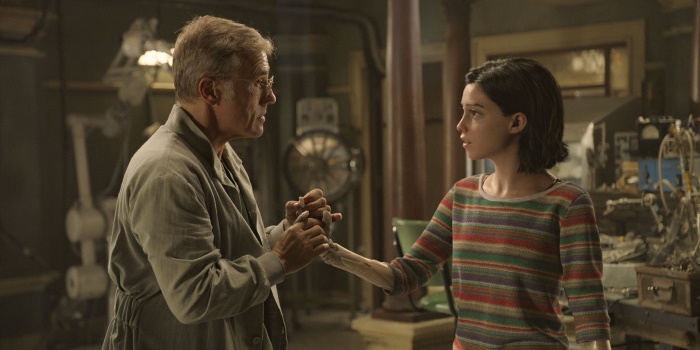
The screenplay, by Cameron and Laeta Kalogridis, compresses so much mythology from Yukito Kishiro’s source material, all motives, relationships and conflicts are rendered incomprehensible. The dialogue doesn’t help, but I guess that’s true of all James Cameron movies. And in what will be an exceptionally unpopular take, I have to say it’s not even as thematically interesting as Ghost In the Shell; admittedly, a far more egregious example of anime whitewashing.
Once the shock and aww of Alita’s interaction with Waltz’s Ido wears off, the audience finds itself trapped in paradox: desperately waiting for the inanely-scripted conversations to end, yet wanting to skip through the kinetic action sequences, which feel like video game cutscenes, as well. Sure, it’s fun watching Alita transition from a friendly naïf into a murderous assassin (dropping unexpected F-bombs), but her CGI enemies become indistinguishable after a point.
The human enemies don’t fare much better. Jennifer Connelly plays Ido’s inexplicably scheming ex-wife, Chiren, while the omnipresent Mahershala Ali pops up, in sunglasses and a turtleneck suit, as the villainous Vector. I respect the hell out of these actors, so I won’t make mention of their involvement in Alita: Battle Angel again.
However, no one suffers more than Keean Johnson, as the fleshy human love interest, Hugo. He is a street urchin who falls for Alita, and later trains her for the Motorball championships (don’t ask), to grant them both a one-way ticket to the wealthy cloud city of Zalem (definitely don’t ask). He also wears an Axl Rose headscarf and always appears at risk of bursting into a rendition of "Summer Lovin'". I’m assuming one’s romantic options are limited in a junkyard dystopia, but Alita, this ain’t it.
Why didn’t James Cameron direct this? Yes, he’s committed to making Avatar sequels until the heat death of the universe, but Rodriguez, better known for his run-and-gun filmmaking method, isn’t a natural second choice (except in the sense that, with his Machete, Sin City and Spy Kids franchises, he is similarly committed to producing sequels that no one has expressed any interest in seeing).
Whatever distinct flavour Rodriguez impressed on his previous features—successful or otherwise—he’s not able to leave much of a mark here, except perhaps in the casting of a Latina lead (which gets muddied by her CGI transformation). Ultimately, no part of Alita: Battle Angel is better than Dua Lipa’s soundtrack contribution, the war drum-driven "Swan Song", which plays during the credits.
I’d instead recommend the indie comedy Night Owls, or even the Maze Runner franchise, for the complete, not-so-pixelated Rosa Salazar experience.
2.5/5
In Australian cinemas now. Rated M for science fiction themes, violence and coarse language.
Header Image: 20th Century Fox
Topics
Ref: be1c04e3-8df6-4b6f-82d3-a9f40014b34a


Most Popular



Comments & Feedback
Share your opinion
Emoji cheatsheet Formatting Comment guidelines
It may be better