Millions Said #MeToo, But Now What?
Trigger Warning: This article discusses rape and sexual assault.
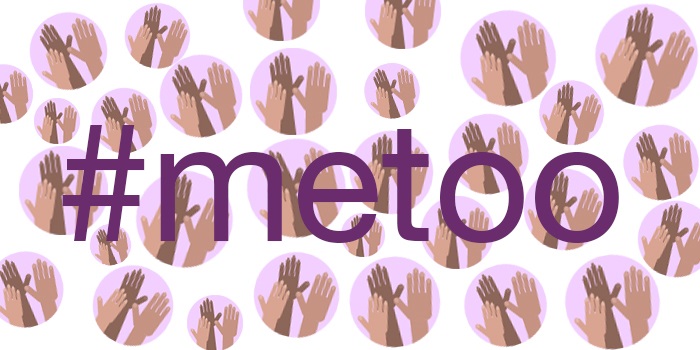
As #MeToo stories and posts swept across social media last week, following the Harvey Weinstein sexual assault allegations, it was clear this hashtag had achieved what actress Alyssa Milano initially set out to do (continuing a movement started by Tarana Burke).
If you’ve been sexually harassed or assaulted write ‘me too’ as a reply to this tweet. pic.twitter.com/k2oeCiUf9n
— Alyssa Milano (@Alyssa_Milano) October 15, 2017
We see the magnitude of the problem. And it is appalling.
One tweet has brought together 1.7 million voices from 85 countries. Standing side by side, together, our movement will only grow. #MeToo
— Alyssa Milano (@Alyssa_Milano) October 24, 2017
1.7 million people from 85 countries and counting...it’s more than a moment it’s a movement. #metoo
— Tarana (@TaranaBurke) October 24, 2017
But it’s also unsurprising, and that’s perhaps the most alarming thing about it.
It’s disturbing that little girls learn and accept (or are taught, for their own protection) that men are predators long before they learn how their own sexual organs operate. It’s disturbing that a young girl will wonder if she was ‘asking for it’, and not why she was not asked for consent. It’s disturbing that young women entering the workforce mentally prepare for uncomfortable advances, slurs and sexist jokes they may be expected to take in good humour.
And it’s disturbing that my hesitation, doubt and rigorous re-examination of sexual harassment experiences might be dismissed as jumping on the #MeToo ‘bandwagon’.
Millions across the world have reposted the hashtag and many have liked, commented and reacted in solidarity. However, like me, few women have expressed surprise over these figures.
Just a few months ago, the Human Rights Commission report on sexual harassment and assault in Australian universities concluded that women were three times more likely to be sexually assaulted than men within a university setting in 2015 – 2016. If anything, the #MeToo campaign makes it more apparent that sexual harassment and abuse is a routine part of women’s lives, even today.
Ask a woman if she has ever been a target of sexual assault or harassment. She'll respond "Which time?"#MeToo #allwomen
— Emily Brandwin (@CIAspygirl) October 16, 2017
But where are the men in this conversation? While hashtags like #IWill and #HowIWillChange have circulated on social media in the wake of #MeToo, they haven’t caught on in quite the same way. To be frank, they haven’t caught on at all on my personal social media feeds, as the response I and many of my girlfriends have received (even when explicitly calling on men to engage in the dialogue) is silence. No, let me rephrase that: The men on our social media are silent.
And in this digital age of validation by likes or ghosting, their silence speaks loudly. Men’s passivity and the passive language used when discussing sexual harassment and abuse can effectively erase the presence of the abuser and the complicity of bystanders that enable the abuser. Where are the men in our news articles and reports about ‘violence against women’? This language frames the issue as a problem for women to deal with and fix, and it’s only a few steps from there to victim-blaming. We need to address another major finding of the recent survey on sexual assault and harassment: 71 per cent of university students who were sexually harassed and 83 per cent of students who were sexually assaulted said the perpetrator was male. This is why our calls to action to stop sexual abuse must include men. Yes, all men.
If your 1st instinct is to say #NotAllMen, ask yourself as a man why are you defending our privilege & marginalizing women's voices? #MeToo
— Kon Karapanagiotidis (@Kon__K) October 18, 2017
It’s time that national strategies (such as the 10-Point Action Plan in response to the university student survey) outlined consequences and preventative education measures for perpetrators and not just victims. It’s time boys were taught about consent and healthy sexual relationships. It’s time young men were encouraged to cultivate emotional intelligence, instead of being excused by virtue of ‘being a man’. It’s time grown men set examples by calling out misogyny and acknowledging their privilege rather than silencing women with it.
It’s time we had a real Sex Ed talk.
I mean, it’s 2017. Better late than never, right?
Have you experienced sexual assault or sexual violence? Seeking to support someone who has? Call 1800 RESPECT on 1800 737 732.
Photo: Student Edge & Twitter
Topics
Ref: a17974fc-cb9e-4f79-a896-a817007681c8





Comments & Feedback
Share your opinion
Emoji cheatsheet Formatting Comment guidelines