Bill Cosby Has Been Released From Prison After His Case Was Overturned
Trigger warning: this article discusses sexual assault.
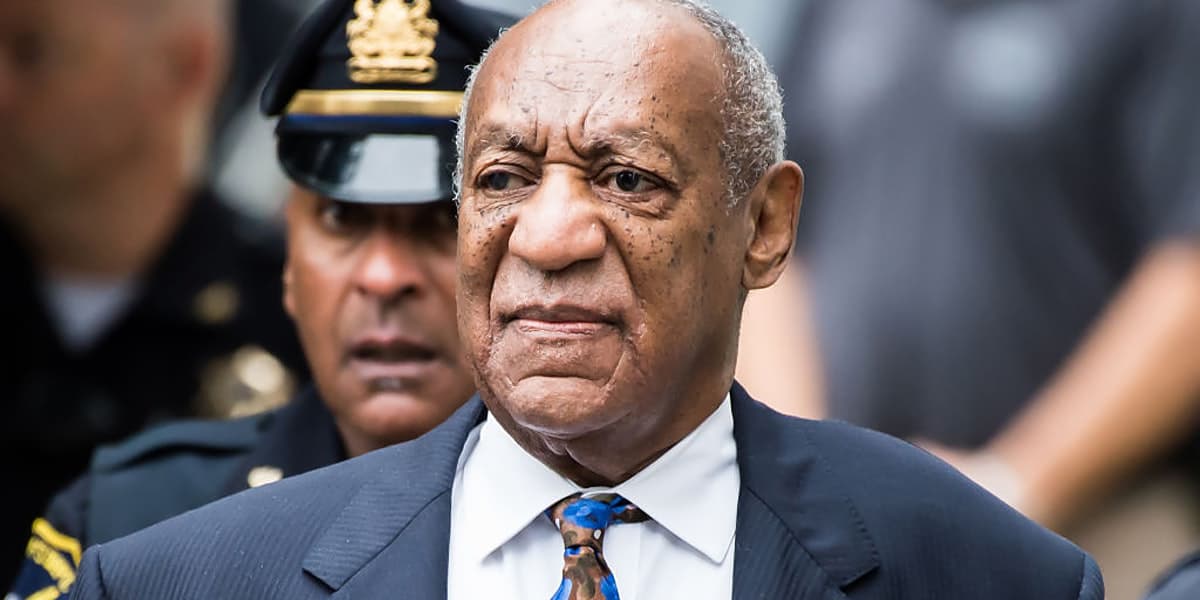
Overnight, former American comedian and actor Bill Cosby was released from prison after his conviction for sexual assault in 2018 was overturned.
The news comes as an extremely disappointing result for the #MeToo movement as Cosby’s case was significant during the rise of #MeToo.
Cosby, who is now 83, was released from prison at about 2:30pm on Wednesday after serving just over two years of a 3 – 10-year sentence for three counts of aggravated indecent assault.
He was accused by a Temple University staff member of assault in 2004 (whose name we will omit for privacy) as well as other unconvicted accusations of misconduct by 60 women, according to USA today.
Mr. Cosby was released from SCI Phoenix just before 2:30 p.m. https://t.co/9OrCeutiQP
— PA Department of Corrections (@CorrectionsPA) June 30, 2021
What is the #MeToo movement?
For context, the #MeToo movement is a social women’s rights movement against sexual abuse and sexual harassment. In particular, it aims to publicise allegations of sexual assault against perpetrators and allows other victims to come forward, hence the phrasing "me too."
The phrase was initially used in this social context back in 2006 on the social media platform Myspace but following the widespread exposure of allegations against former American film producer Harvey Weinstein in 2017, the movement exploded and went viral on social media, along with the hashtag.
#MeToo aims to give all people who have experienced sexual assault the opportunity to voice their experience and call out perpetrators, particularly those in Hollywood or high-profile positions of power.
It aims to be an international movement of justice for people belonging to marginalised communities.
Bill Cosby's case was one of the first high-profile sexual assault trials to unfold in the aftermath of #MeToo, and many considered his conviction a sign that going forward, women's experiences could be afforded greater weight and credibility by jurors. https://t.co/UyDpqZEeWm pic.twitter.com/BnXloYMpES
— The New York Times (@nytimes) June 30, 2021
For them and all the survivors who fight. You're not doing this in vain. We'll keep fighting. #MeToo pic.twitter.com/qwvL8P5hJ9
— Aurélie Pankowiak, PhD (@AureliePanko) July 1, 2021
Why was Cosby released?
Despite the multiple allegations made against him and the uproar from the #MeToo community, the Pennsylvania court that initially charged Cosby found that his rights had been violated during the trial.
It was apparently found that a testimony that wouldn’t be used against him to prosecute later was.
In other words, Cosby has been released on a technicality. It does not prove his innocence, nor does it dispute the claims of his accusers.
PA Supreme Court vacates Bill Cosby's conviction and orders him released.
— Ari Melber (@AriMelber) June 30, 2021
The Court is not ruling that he "didn't do it," but rather that he had a prior deal *not to be charged* for it.
Montgomery County District Attorney Kevin R. Steele described Cosby’s release on Wednesday.
"The majority decision by the Pennsylvania Supreme Court orders the release of William H. Cosby Jr. from state prison," he said.
"He was found guilty by a jury and now goes free on a procedural issue that is irrelevant to the facts of the crime.
"My hope is that this decision will not dampen the reporting of sexual assaults by victims. Prosecutors in my office will continue to follow the evidence wherever and to whomever it leads."
The announcement comes just after Cosby was denied parole for refusing to take part in a therapy program for sex offenders.
What has the online reaction been?
The revelation of Cosby’s conviction has left many people upset, with Twitter users describing it as a “miscarriage of justice.”
This is disgusting!! What is next? Harvey Weinstein declared innocent ? It is a rich man's world. So wrong!! https://t.co/PI17rPaolg
— Pam Kennedy (@timtypam) June 30, 2021
What a horrifying miscarriage of justice… Today it’s Bill Cosby, but who’s next? Harvey Weinstein? JFC this country does not care about women. #MeToo https://t.co/gVNX3NL5iP
— Krissy MacQueen Winters (@KrisWinters) June 30, 2021
On top of this, many Twitter users have also pointed out the hypocrisy in releasing Cosby, while Britney Spears is unable to gain her own freedoms.
So Bill Cosby gets out of jail, and Britney Spears remains in jail.
— Joe Walsh (@WalshFreedom) July 1, 2021
That’s pretty messed up.
Bill Cosby is a free man but we can’t free Britney from the chains that bind her from controlling her own body. WTF is wrong w our judicial system?!
— I. Marlene King (@imarleneking) July 1, 2021
Some users online are showing their support for Cosby. In particular, Howard University Dean Phylicia Rashad tweeted in support of Cosby, only for the university to denounce her statement and submit an apology.
FINALLY!!!! A terrible wrong is being righted- a miscarriage of justice is corrected! pic.twitter.com/NrGUdwr23c
— Phylicia Rashad (@PhyliciaRashad) June 30, 2021
@HowardU responds to @PhyliciaRashad’s first tweet re: #BillCosby. pic.twitter.com/1vqNKOfI7V
— Darryl Fears (@bydarrylfears) July 1, 2021
Rashad also later added an apology herself.
I fully support survivors of sexual assault coming forward. My post was in no way intended to be insensitive to their truth. Personally, I know from friends and family that such abuse has lifelong residual effects. My heartfelt wish is for healing.
— Phylicia Rashad (@PhyliciaRashad) June 30, 2021
For now, it is unclear if Cosby will face any other ramifications from his accusations or if Weinstein will similarly argue to be released from prison.
Watch this space for more details.
Are you experiencing suicidal thoughts, sexual assault or domestic and family violence? Seeking to support someone who is? Call Lifeline on 131 114 or Kids Helpline on 1800 551 800.
Visit ReachOut to get support to help you with everything from everyday issues through to tough times.
Header Image: Gilbert Carrasquillo via Getty Images
Topics
Ref: 6231b747-5ae4-41fb-b408-ad58004a91c0






Comments & Feedback
Share your opinion
Emoji cheatsheet Formatting Comment guidelines