It’s Time We Accept That "Inception" Was a Dream All Along
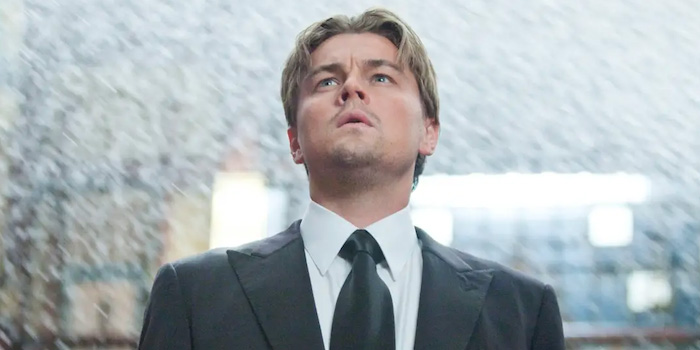
BWAHHM.
If you were just cryogenically defrosted a’la Austin Powers, or removed from pickle brine a’la Seth Rogen, you may be surprised to discover that the year 2020 is basically on fire.
Though we can’t be your guide through all the developments that have led to this current "season finale of Earth" vibe, one thing you should know is that cinemas have been closed around much of the world for many months. This means numerous blockbusters have been delayed for fear of not being able to recoup their budgets (or, worse, inciting a superspreader event that infects millions with COVID-19; yes, we’re dealing with a pandemic now).
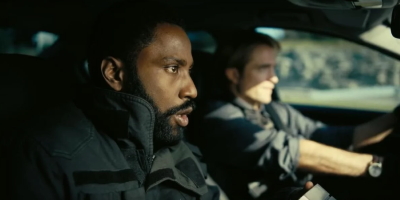
Thankfully, across (most of) Australia, cinemas have been able to slowly reopen since June, but notable releases like Christopher Nolan’s Tenet keep getting delayed. While that’s seen some unprecedented shakeups in the industry (such as Mulan moving to Disney+), Nolan has held strong, determined for Tenet to debut in theatres. It will finally launch in Australia (except Victoria) and other parts of the world on 27 August, before releasing in the US next month (for now).
In the meantime, cinemas have had to fill their schedules with older movies, especially those celebrating their anniversaries. That includes Nolan’s 2010 hit Inception, which is handily the last major studio release to reveal as little about itself in advance until Tenet.
Though you can catch the tenth anniversary screenings of Inception now, I decided to return to my Blu-ray instead and give the film its first spin in a decade, after originally seeing it cinemas and then once again as soon as it arrived on physical media.
My opinion on the film shifted between those two viewings. The first time around, in theatres, I was wowed by Nolan’s tale of a 'reverse dream heist', in which Leonardo DiCaprio’s character Dom Cobb led a team of thieves into the subconscious of their target, delving into a dream within a dream within a dream to plant the seed of an idea for some corporate subterfuge. The second time around, at home, I was exhausted by the exposition each of the characters needed to convey to ensure the audience wasn’t left behind, and bummed that Nolan’s envisioning of a dream state was just so ordinary and that the narrative was quite literal, really; hardly the psychological mind-f*** we might have gotten if David Lynch, Darren Aronofsky or Yorgos Lanthimos was at the helm. It was also unfortunate that the character of Dom’s wife, Mal, was such an underwritten and unconvincing femme fatale antagonist, right down to her name (literally translates from French into "bad").
Smash cut to ten years later, and both of those takes hold true. But I saw something new on this third go-around; perhaps something I could have only appreciated with the benefit of distance, zero expectations and an awareness of where the story is heading.
*Spoiler alert if you somehow haven’t seen Inception and clicked this article without reading the headline.*
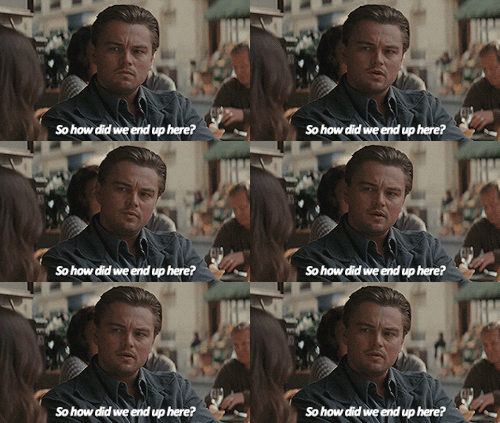
It’s all a dream, people. Dom’s dream (and dreams within dreams), specifically.
Yes, yes, I know, this is hardly a new take. The internet is basically 90 per cent made up of people expressing this exact opinion. But hey, I just got here, so feel glad for me!
Sure, neither the shooting script nor Nolan has ever admitted to this (it’s built to be ambiguous), and that doesn’t matter anyway, because the meaning of any film is defined entirely by the viewer and what they bring to it. But my reading is most correct, and these next four moments, which previously breezed by me, prove it, I say!
"Grandma says you’re never coming back."

Early in the film, Dom speaks to his kids over the phone, at which point his daughter Philippa tells him, "Grandma says you’re never coming back." Dom keeps insisting he’s on the run having been framed for the murder of his wife, Mal (Marion Cotillard), and framed by Mal, who believed their current level of reality was just one more dream they had fallen into. But as the rest of the film reveals, he’s nonetheless wrestling with the guilt of incepting her with the idea that reality is simply a dream. What if this was actually him reckoning with the guilt of truly murdering Mal in the real real world, or inspiring her to commit suicide based on his own false grasp of reality? Many have speculated this is the case. It wouldn’t even be the only 2010 film in which DiCaprio slowly came to realise he was a wife-killer (Shutter Island better depicted dream logic too). But these next three major instances of denial seem to certify it.
"Come back to reality, Dom."

Dom visits Michael Caine’s character, Miles, a professor in France who is both Mal’s dad and his own mentor. But this is most likely a projection of Dom’s subconscious, with this voice of reason leaning forward, mostly disregarding Dom’s convoluted explanation of his latest scheme, and begging him to "come back to reality". Dom doesn’t register the request at all. This carries further significance later.
"They come to be woken up."
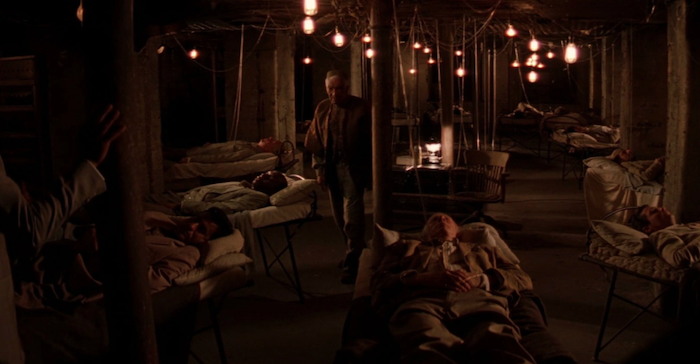
The scene in which Dom visits the chemist’s 'dream den' is the one that solidified my new opinion of the film. That’s because, in between 2010 and 2020, I saw Sergio Leone’s Once Upon a Time in America, which is bookended by scenes in which Robert De Niro’s character Noodles visits an opium den. In that film’s conclusion, Noodles flees from the fact that he’s been responsible for the deaths of his girlfriend and three closest mates, smiling dumbly at the camera as the drug soaks through him. Who knows if Nolan was directly inspired by this classic flick, but if so, and if this is truly Dom’s dream—and we know he’s guilty of building worlds based on his memories—it’s likely Dom’s actually dreaming it from a den such as this, where he’s permanently hiding from reality.
"That’s the house Mal grew up in."

In the film’s big finale, Dom and Ariadne (Ellen Page) sink to the "unconstructed" space in Dom’s subconscious, which he and Mal once shared and populated. They pass by Mal’s childhood home, and when Ariadne asks if she might be hiding there, Dom brusquely says no. That’s where, we're told, Mal hid from herself the truth that this was just a dream (represented by her spinning top totem, meant to indicate what was real and what was fake). More likely this is a trigger for Dom; a symbol of both her parents (the scathing mother; the disappointed father, represented by Fischer Snr played by Pete Postlethwaite) and Mal’s lost innocence, stolen by Dom himself.
All of this coalesces in a supposedly happy ending, when Dom’s mark, Fischer Jr (Cillian Murphy), is fooled into thinking he’s not a disappointment to his dad (when likely this is just a projection of Dom’s desire for he and Miles), and Dom is supposedly granted permission to return to his children (meaning he's not a disappointment to them either).
All these years later, I can’t shake the feeling that Inception is actually a melancholy story about a man trying to forgive himself for an unforgivable crime and constructing a scenario in which he can be absolved, while still suffering the punishment of banishment within his own head. It doesn’t matter whether or not the spinning top falls over at the end or not (it’s not even Dom's totem, remember). The fact is, as Nolan has also pointed out, Dom doesn’t care about the top in that final moment. That doesn’t mean it's really reality, but that he’s chosen it as his reality.
Don’t agree? That’s fine, but honestly, this is the only take that excuses the film for its otherwise unimaginative, Bond movie-esque renderings of dreamscapes. If the whole thing is within Dom’s head, and he’s built a specific 'real world' spy narrative for himself, it would make sense that it hews pretty closely to what we’d all recognise as ordinarily real. Even Mal accuses him of living in a dream where he’s "chased around the globe by anonymous corporations and police forces," and then he reiterates his version of her is incomplete (and in fact poorly written!) too. In this way, Nolan gets to have his cake and eat it too. Mal’s not really a bad character, she’s just dreamt that way.
Will we still be debating Tenet ten years from now the way we're still debating Inception? Will there even be a world for us to debate films in ten years from now? We don’t have an answer for either of those questions. But it’s good to know one thing hasn’t changed in ten years: Nolan’s penchant for extremely obvious, eye-rollingly metaphorical character names. The lead in Tenet is apparently called Protagonist. That’s quite... mal.

Inception is now showing in select cinemas. Tenet arrives in Australian cinemas on 27 August with advance screenings on 22 and 23 August.
Header Image: Warner Bros.
Topics
Ref: 7e8482ef-04b6-4914-ad8c-ac1d00301a25




Comments & Feedback
Share your opinion
Emoji cheatsheet Formatting Comment guidelines