Interview: O’Shea Jackson Jr. from Straight Outta Compton
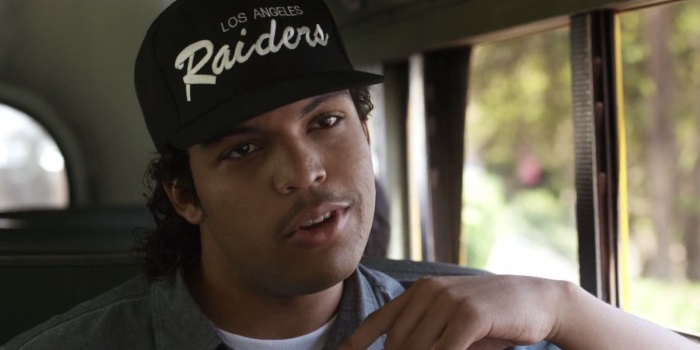
Imagine being tasked with playing one of the most iconic figures in modern music and having to live up to that burden of responsibility, not just to them, but to their fans and their larger than life legacy.
Then imagine having to play your parent, and all the awkward pressure that might entail.
It’s way worse, right?
Now, imagine doing both at the same time.
O’Shea Jackson Jr. doesn’t have to imagine it. He’s lived it, taking on the part of his pop Ice Cube in Straight Outta Compton. The film, a box office sensation, is all about Cube’s iconic hip-hop collective NWA, which was formed in the late ‘80s with then-teens Dr. Dre, Eazy-E, MC Ren, DJ Yella and Arabian Prince. It's pretty good.
“My initial thought was, let a seasoned actor take [the role],” he told Student Edge.
However, it was exactly the aforementioned burden of responsibility that inevitably drew him to the part.
“What will someone who is not a part of the family, or is not as passionate about it as you, bring to the table that you won’t? What sacrifices would they make that you won’t for your family? Once I got that into my head, I was off and running.”
The burgeoning screenwriter and rapper spent two years taking acting lessons to prepare for the gig, though Jackson Jr. says the best piece of advice on how to play it actually came from Cube himself.
“One of the few things that he told me when I first got the role, was, ‘Make sure I’m not frowning all the time.’”
“Everyone knows the scowl… that’s the signature of Ice Cube," he added.
“But the movie’s not really about Ice Cube. It’s about O’Shea Jackson. It’s about Andre Young. It’s about Eric Wright. They’re not icons, they’re regular people."
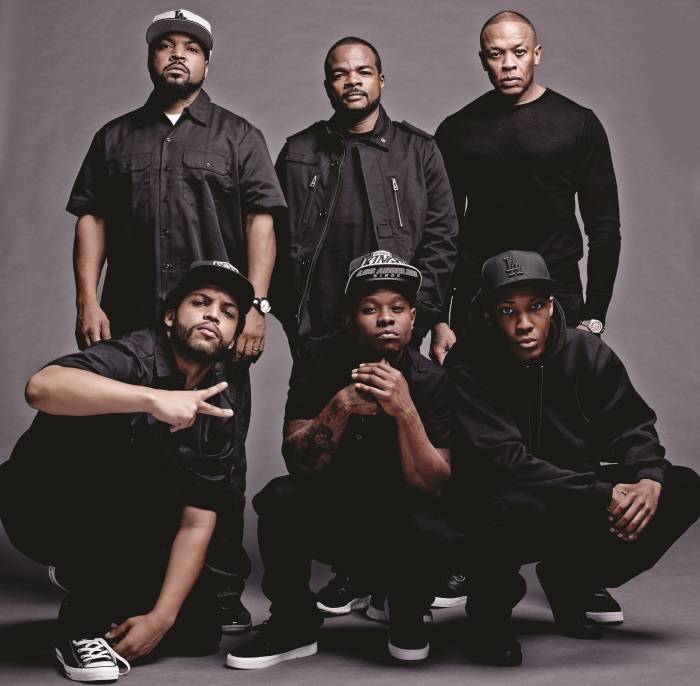
Top row: Ice Cube, director F. Gary Gray and Dr. Dre.
Bottom row: O'Shea Jackson Jr., Jason Mitchell (playing Eazy-E) and Corey Hawkins (playing Dr. Dre).
NWA burst onto the music scene at a time in which race relations in America were reaching a boiling point. With their “journalistic” gangster rap, the group communicated the black experience - and particularly the persecution of young black men by the police - to those in the country who were totally unfamiliar with their situation.
Within five years, the LA riots would make this issue a national concern; the soundtrack belonged to NWA.
“What NWA was, back then, was a way of social media,” Jackson Jr. adds.
“A lot of people weren’t aware of the things going on in Compton; well, basically, all around the world.
“In that way, NWA worked as a social media, getting others aware of the problem.”
Their influence lingers still; a sad necessity given the way in which the United States remains fractured. (You need only look to Ferguson and the #BlackLivesMatter movements of today to see points of comparison with the events in Straight Outta Compton.)
But NWA’s influence also extends to the realm of hip-hop feuds, a storied tradition that has provided much entertainment lately (specifically as we watch Meek Mill's futile attempts to punch up at Drake), but much bloodshed and tragedy in the past.
Are feuds an embarrassment to the genre, or are they simply part of the “theatre” of hip-hop?
“As long as it stays on the microphone,” Jackson Jr. reckons.
“It has to stay within the art. Once you step outside of that frame, once weaponry and Twitter, and people start to get beat up and all these non-hip hop things start coming in, it becomes something else.
“That’s what’s really embarrassing. When it steps away from the culture in general.”
Topics
Ref: 0c43150e-2a2c-457b-9d67-a509005a071d




Comments & Feedback
Share your opinion
Emoji cheatsheet Formatting Comment guidelines