How “Fifty Shades” And Its Spin-Off “Grey” Are Hurting Us
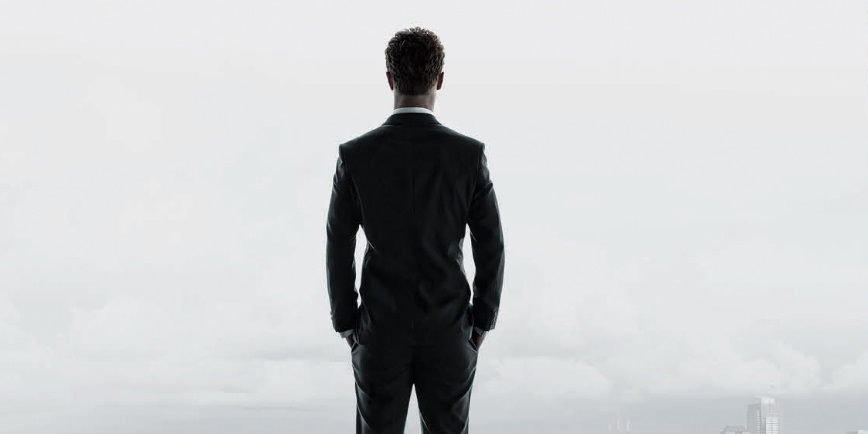
Are these books innocent fun, or actually more dangerous than we realise?
Trigger warning: This article deals with violence against women and abusive relationships.
The debate over abusive relationships, as portrayed in literature, began to grow when Stephanie Meyer released Twilight: the story of a love triangle between a teenage girl, a possessive hundred-and-something year old vampire and an emotionally abusive werewolf.
The series came under further scrutiny when fanfiction writer E.L. James adapted it into the Fifty Shades of Grey trilogy, bringing both its representation of emotional and sexual interaction into question.
James' latest book, Grey, explores the mind of Christian Grey in a repeat performance of the first novel, released after the highly successful movie adaptation. With the target audience ranging from young women to those in their forties, I can’t help but wonder how many readers now accept the behaviours of the men in these books, and in their lives, as “romantic” or “protective,” rather than abusive and possessive.
The Fifty Shades trilogy has an abundance of frankly alarming actions as portrayed by billionaire Christian Grey (Jamie Dornan in the movie adaptation). Grey stalks the object of his “affection”, Ana to her workplace, despite not living in the same town. He then tracks her mobile phone to locate her while she is out with friends, despite her initially telling him not to come. These typically abusive behaviours continue throughout the book, such as when Christian isolates Ana from her family and friends, again stalking her when she escapes for “time to think” with her mother.
What is often overlooked, however, is that Christian is only
The book’s more salacious elements are explored in the lead-up to Ana signing a “contract” to become Christian's “submissive”, leading the way to physical and sexual abuse. As a marketing attempt, a Q&A was held on Twitter as a way for “fans” to ask E.L James about the new book… it went exactly as would be expected.
Do you ever feel guilty that you made so much money from romanticizing sexual abuse and selling it as "erotica romance"? #AskELJames
— Hoely Golightly (@Jherane_) June 29, 2015Although some of the questions posed were by fans of the series, I was glad to see that people on social media recognised the true nature of these books.
Awareness of the damage they can cause is essential. People are unaware of the degree of abuse faced by women. As of July this year, 48 women have been killed due to domestic violence in Australia. Ignorance of this problem will only lead to more. Though books alone can't be held accountable for people's actions, it's important that all readers know what is and isn't acceptable in a relationship before romanticising a fictionalised one like Christian and Ana's.
If you are in an abusive situation please seek help: Call 1800 RESPECT (1800 737 732) or visit Reachout.com
Sarah Bellis is one of Student Edge’s student contributors. Learn more about the contributors program.
Topics
Ref: 95fc6985-43ac-4213-b45c-a4d5004c43cb



Comments & Feedback
Share your opinion
Emoji cheatsheet Formatting Comment guidelines