Here's Why This Perth Bookstore Pulled J.K. Rowling's Novels (Yes, Even "Harry Potter")
Let’s break it down.
Trigger Warning: This article discusses transphobia
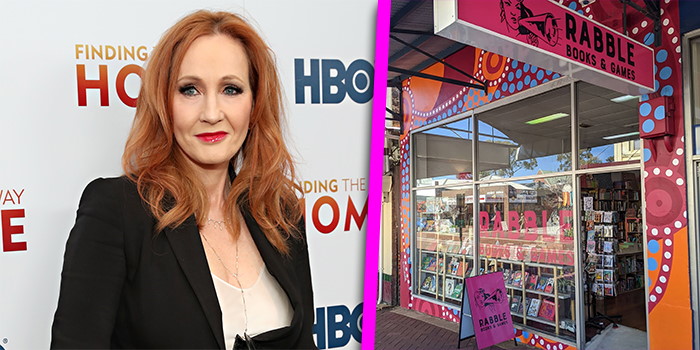
Rabble Books and Games in Perth has decided to remove all of J.K. Rowling's works from their shelves in an effort to make their shop a 'safer space' for customers.
The decision by the store was prompted by the release of Rowling's newest book, Troubled Blood, which is credited to her pseudonym Robert Galbraith and includes a subplot featuring a cross-dressing serial killer.
Not only does it follow Rowling's previous negative comments about the trans community, but it builds on the stereotypical trope that trans women are psychopathic serial killers in dresses. Critics and reviewers believe that the moral of the book is to "never trust a man in a dress" and have noted that Rowling deadnames her trans chartacter several times throughout (which means she uses the birth or other former name of a transgender or non-binary person without their consent).
It is unclear whether or not Rowling's character is intended to be a transwoman or a cross-dresser because she refers to the character as a 'transvestite'. These terms are unfortunately often used interchagably by those who do not understand the difference and it is unclear as to whether or not Rowling understands this.
In Instagram and Facebook posts, Rabble Books and Games announced they would no longer stock any of the author's efforts as a result, including the Harry Potter series.
"We actually made this decision in June on the basis of the Tweets that she made at the time that were quite transphobic, and seeing the grief in the community, particularly in the trans community," Natalie Latter, owner and manager of Rabble Books and Games, tells Student Edge.
"We felt like that didn’t really align with the values of our business and so we decided to not stock her new books and to phase out the Harry Potter books.
"There was this real sense that she was kind of supported, I guess, by the book industry to continue these kind of aggressions and micro-aggressions against the trans community [without consequence]; we just wanted to let people know that we didn’t want to be a part of that and we had their backs."
How this all began...
Since June of this year, Rowling has been losing popularity thanks to a Tweet she shared of an article that discussed the phrase "people who menstruate". In her Tweet she publicly announced her issue with the article not using the word woman, essentially dismissing the existence of trans and non-binary people and claiming that only women menstruate.
‘People who menstruate.’ I’m sure there used to be a word for those people. Someone help me out. Wumben? Wimpund? Woomud?
— J.K. Rowling (@jk_rowling) June 6, 2020
Opinion: Creating a more equal post-COVID-19 world for people who menstruate https://t.co/cVpZxG7gaA
This tweet obviously got a lot of backlash but the author continued to defend her opinion in an essay-like series of tweets that wound up making her look even worse.
Later in the month, Rowling published an actual essay detailing why she made her comments about the transgender community.
Other celebrities from the Harry Potter movies including Daniel Radcliffe, Bonnie Wright and Emma Watson spoke out against these comments, reassuring their trans followers that they stand with them. Now comes Rabble Books and Games.
What Rabble's decision means...
While the decision from the bookstore might seem politial to some, Natalie explained that bookstores always have to curate what books they have on offer, and supporting smaller authors is more important to her.
"Every month we get shown catalogues with thousands and thousands of books in them and we can only choose a really small fraction of those books; from the beginning we’ve always tried to stock books based on what we think is important and what we think is underrepresented as well," she says.
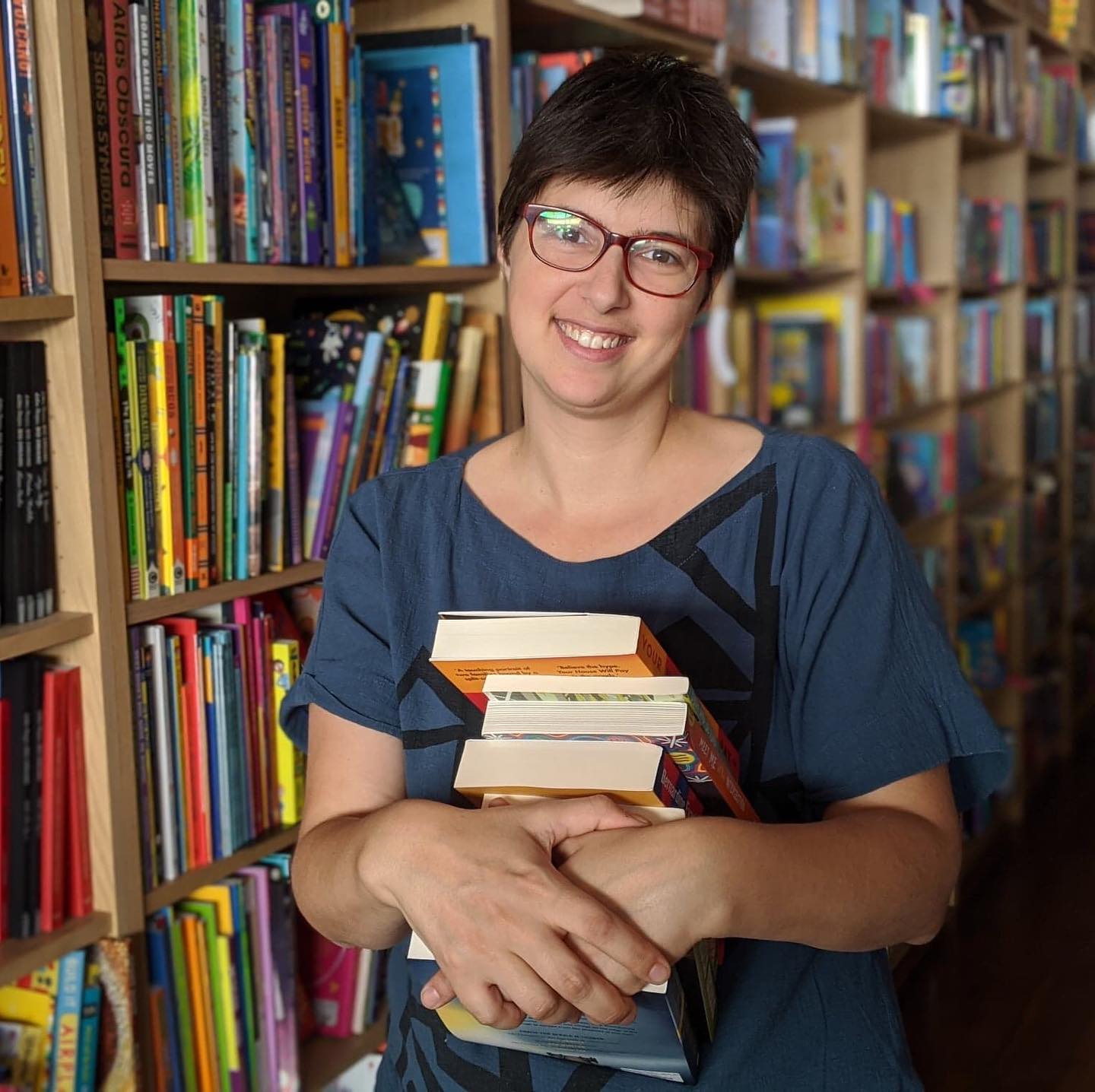
Image: Rabble Books via Facebook
Since the bookstore's Facebook post on Tuesday, they have recieved a lot of negative press from mainstream media but also a lot of community support.
"We made a post to our pretty limited social media following, talking to our community, and then suddenly the whole world feels offended by it," she says.
"The headlines were pretty polarising: 'book banning', 'killing off Harry Potter' and all kinds of wild things, so we got hate and threats and [were] just pretty inundated by some pretty gross corners of the internet.
"At the same time we also have this incredible and really moving outpouring of love from across the world from people saying they felt seen and respected by the decision of this tiny bookshop in Perth and that felt pretty incredible."
The backlash against Rowlng's most recent book was certainly heightened by the fact this isn't the first time the author has been found making comments against the transgender community.
It was also amplified by Robbie Coltrane, the actor who played Rubeus Hagrid in all eight of the Harry Potter films, speaking out in defence of J.K. Rowling, telling the Radio Times that he didn’t understand why people were so offended and wished they would move on.
Robbie Coltrane’s comment on JK’s transphobia reads like a boomer algorithm wrote it pic.twitter.com/3qCKxOhd8l
— Lindsay Dodgson (@linzasaur) September 15, 2020
Yer a bigot, Hagrid. https://t.co/IA9MwMaNFG
— Zach Kornfeld (@korndiddy) September 15, 2020
OF COURSE Robbie Coltrane and many (though not all) people in their 50s, 60s, 70s don't understand what the problem is
— Paris Lees (@parislees) September 15, 2020
OF COURSE they think it's OK to laugh at people for being trans and imply we're perverts
Most people thought that
That's precisely what we're fighting against
However, it is undeniable that the transgender community is negatively affected by the pervasive stereotypes of Rowling's text; these stereotypes often lead to low self-esteem, depression and even suicide in the transgender community.
Historically, transgender people have disproportionately been portrayed as mentally ill, murderers or psychopathic in film and televison. This negative trope comes from the idea within society that being trans can be conflated with being mentally unwell and Rowling's addition to this only reinforces this negative stereotype.
With a lot of film and television representing trans people as mentally unwell and drawing a connection to homicide, it instills fear and hatred in society and groups that may not know much about the LGBTIQA community, which can lead to hate crimes and violence.
According to The Trevor Project, young transgender people report significantly higher rates of depression, suicide and victimisation compared to their cisgender peers.
"Notably, in the past year, one in three transgender youth reported attempting suicide, almost one-third reported being a victim of sexual violence, and more than half reported a two-week period of depression," they said.
When celebrities speak out negatively about marginalised groups, it makes it a lot harder fot those communities to become normalised and accepted. This can in turn lead to more mental health issues and low-self esteem for people that belong to those communities.
If you or anyone you know needs help, support is available now. Call Lifeline on 131 114 or Kids Helpline on 1800 551 800.
Visit ReachOut to get support to help you with everything from everyday issues through to tough times.
Header Image: Safe Space Alliance via Facebook and Cindy Ord / Staff via Getty Images
Topics
Ref: 18da58da-79be-4d14-84cf-ac3900966473



Comments & Feedback
Share your opinion
Emoji cheatsheet Formatting Comment guidelines