There’s a Petition Calling for Gender-Affirmation to Be Covered By Medicare
Trigger warning: this article discusses suicide and transphobia.
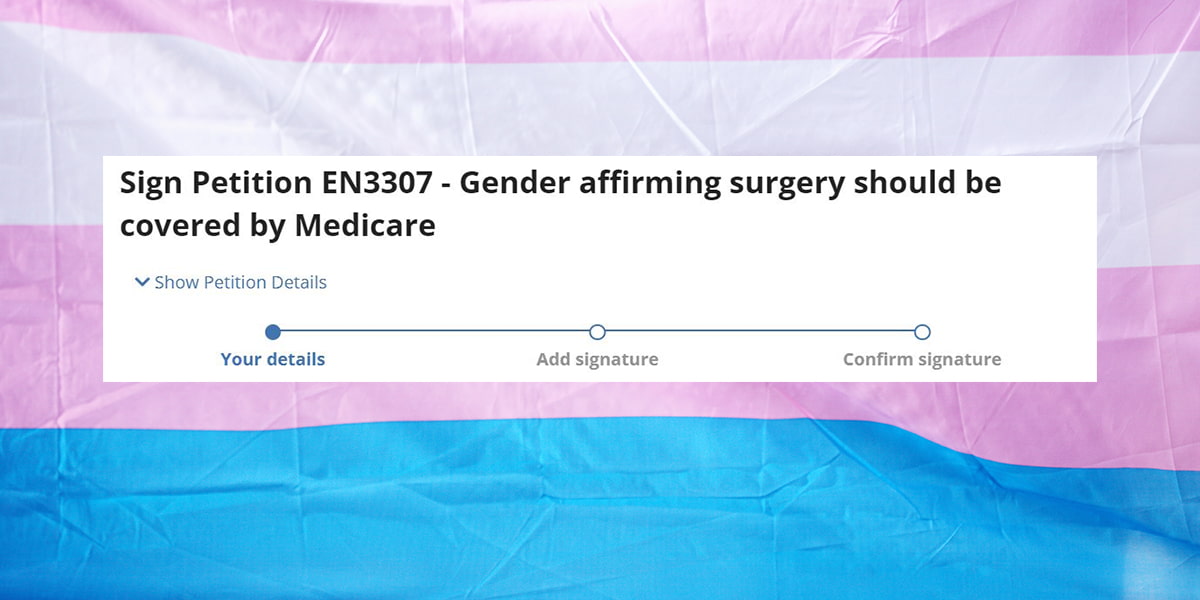
Currently, a petition calling for gender-affirmation surgeries to be covered by Medicare is gaining a load of attention online.
The petition, due to be presented to the Australian government later this month, argues that medical procedures that affirm trans and non-binary people’s true identities should be covered by Medicare as they are not just cosmetic procedures, but lifesaving surgeries.
As of right now, trans people in Australia often pay around $30,000 out of pocket to have their outward appearance match how they truly feel on the inside.
To make the process easier and more accessible to the trans community, the petition is calling for Medicare benefits, as gender-affirming surgeries are essential for the mental health and well-being of people in the LGBTIQA+ community.
To give you a better understanding of why this is gaining so much traction online, and why it’s so important, here’s a breakdown.
What are the details of the petition?
The e-petition, on the Parliament of Australia website, is going viral on Instagram after being shared over and over again on heaps of account’s Insta stories.
At the time of writing, the petition has more than 121,000 signatures and directly asks the House of Representatives to make gender-affirming surgeries more accessible and eligible for Medicare benefits.
“Transgender people and other people in need of gender-affirming surgery must pay a lot of money, up to $30,000, so they can finally have their outward appearance match how they truly feel on the inside,” the petition reads.
“I know of someone personally who is struggling to bring together the money to get this surgery as it is not covered by Medicare, even though this specific person is eligible for a breast reduction for medical purposes anyway.
“We therefore ask the House to make gender-affirming and gender reassignment services eligible for Medicare benefits, as these surgeries are essential for the mental health and well-being of select people in the LGBTQ+ community.”
It is not clear who started the petition, but it is increasingly gaining support from Aussie youth and political parties like The Greens.
Although Australia is considered to be a very inclusive and accepting country, we are hugely lacking when it comes to specialist healthcare for trans and non-binary people.
In this year’s Census, there were zero questions about sexuality or gender identity, completely ignoring the unique health needs of that community.
Equality Australia chief executive Anna Brown told the ABC that the lack of representation in The Census could impact the needs of LGBTIQA+ communities.
"It's absolutely vital that we collect data on our communities, because otherwise the government can't plan our programs and services that meet our needs," she said.
"Unless we're counted, we're invisible."
On top of that, The Census also allegedly reassigned non-binary Australians to male or female at random even if they selected ‘non-binary’ as an option.
In 2017, a study by the Telethon Kids Institute found that 48 per cent of trans youth in Australia had attempted suicide. This meant that trans kids made up a disproportionate amount of the 2.4 per cent of youth in the general public who had attempted suicide.
The report also found that young trans people are 10 times more likely to suffer from serious depression and anxiety compared to other young Australians.
Here’s where you can find out more and sign the petition.
What is gender-affirming surgery?
If you’re a little bit lost, let’s break down what gender-affirmation is and why it’s so important for trans people.
Gender-affirming surgery refers to the medical procedures and surgeries (often including hormone replacement therapy) that change a persons outward physical appearance so that it can match with the gender that they identify with on the inside.
For example, for a person who is assigned female at birth, but identifies as a trans man, they may feel that they need to get gender-affirming surgeries on certain parts of their body to remove feelings of gender dysphoria and general discomfort.
Currently in Australia, the financial burden and medical necessity proof are placed on trans people, who often end up thousands of dollars out of pocket to pay for these procedures or can’t afford them at all.
While the petition states an out of pocket cost of up to $30,000 for gender-affirmation, according to a report by the ABC in 2018, trans people often end up a whopping $100,000 out of pocket when you add in the cost of pre-planning, consultations, aftercare and more.
Gender-affirmation is considered a cosmetic procedure in Australia despite its impacts on improving the mental health and overall well-being of the trans community.
The World Professional Association for Transgender Health (WPATH) states that top surgery is “not merely another set of elective procedures.”
“Reported quality of life was higher for patients who had undergone breast/chest surgery than for those who had not,” WPATH explains.

What is Medicare and how does it work?
Basically, Medicare is Australia’s universal health insurance scheme. It guarantees all Aussies (and some overseas visitors) access to a wide range of health and hospital services at low or no cost.
It is paid for with taxpayer money and is managed by the Australian government to ensure that all Australians have access to healthcare despite their financial situation.
It means that if you have to go to the doctor for a headache, blood test or cold, you pay either nothing or very little. The same goes with hospital visits, surgeries and some medications.
However, not every medical procedure and health issue is covered by Medicare—gender-affirming surgeries being just one of them.
 (Image: Department of Health Australia)
So, the petition is basically asking for the government to extend Medicare’s cover to gender-affirmation, as they are considered to be life-saving.
If you want to learn more about Medicare and what is covered in Australia, head to the government’s Department of Health website.
You can also learn more about gender identity and the trans community on the Trevor Project website.
If you want to sign the petition and get more involved in LGBTIQA+ advocacy, you can find it here.
Are you experiencing suicidal thoughts, sexual assault or domestic and family violence? Seeking to support someone who is? Call Lifeline on 131 114 or Kids Helpline on 1800 551 800.
Visit ReachOut to get support to help you with everything from everyday issues through to tough times.
Header Image: Sharon McCutcheon via Unsplash and The Parliament of Australia E-Petitions
Topics
Ref: 985755d3-cf25-4a70-8dec-adba004eb14e






Comments & Feedback
Share your opinion
Emoji cheatsheet Formatting Comment guidelines