The Census Will Allegedly Reassign Non-Binary Aussies to Male or Female at Random
Trigger warning: this article discusses suicide.
Tomorrow is officially Census night, which means that the Australian Bureau of Statistics (ABS) will be collecting a whole lot of important data on every Aussie in every household across the country, to better make decisions that reflect the population and our needs.
Unfortunately, some Australians are feeling left behind for another year. As we revealed last month, the 2021 Census won’t contain any questions about sexuality or gender identity—a huge blow to the LGBTIQA+ community.
Kudos to the ABS for figuring out a way erase gender diverse people AND fabricate data at the same time, well done guys pic.twitter.com/ecSjaRMnk7
— Joshua Badge (@joshuabadge) August 7, 2021
Aside from allowing Aussies to specify that they are living with someone of the same sex, the Census does not account for LGBTIQA+ participants who are single or don’t live with their partner.
Now, a spokesperson for the ABS has also revealed that people who select the ‘non-binary’ option on their Census will allegedly be randomly assigned as ‘male’ or ‘female,’ completely erasing the existence of trans, non-binary and intersex Australians.
It’s important to also point out that while the Census does meet the bare minimum requirement of including a ‘non-binary’ option in the survey, the question only refers to a person’s sex, not their gender—which are two very different things.
What’s the difference between sex and gender?
According to ReachOut, sex refers to your body’s physical characteristics. It is likely what you were assigned at birth, and it is usually based on a person’s external genitalia. Gender, however, refers to the cultural or social construct that societies have developed to refer to a person’s identity or expression.
Gender identity isn’t always binary either, some people don’t feel like they fit into the social or cultural aspects of being a man or woman, so they may identify as non-binary or genderfluid. People who transition from the gender that they were assigned at birth to another might be considered transgender.
To make a long story short, the inclusion of ‘non-binary’ exclusively for sex and the lack of questions on gender kind of dismisses the existence, and therefore needs, of trans and non-binary people in Australia.
Imagine if the govt was like “we’re going to randomly assign everyone as either old or young on the census” because that’s what they’ve done to gender diverse people
— Joshua Badge (@joshuabadge) August 7, 2021
Also, I’d like to point out that I’ve already done my Census and was not even given the ‘non-binary’ box as an option in the online form.
So, why isn’t the Census acknowledging trans people?
According to a spokesperson from the ABS, the release of Census data will present sex data via only two categories: male and female.
“Where a respondent has provided a non-binary sex response, a statistical method will be used to derive the sex variable," the spokesperson told The Feed.
The spokesperson confirmed that there would be separate articles released by the ABS that will cover non-binary Australians, but they will essentially be excluded from the Census data—which is Australia’s largest and most important survey.
Just completed our census, and we are leaving feedback on the ways it fails to represent our household (gender options, sexuality options, relationship options) - I strongly encourage you to take five minutes at the end of your census to do the same for your household!
— sim (@slapdashgames) August 7, 2021
As for why the government is choosing to exclude gender diverse people: the ABS is concerned about confusing some Australians.
“We found that while stakeholders did identify the value in collecting gender identity in the Census, there were some limitations in collecting this information, such as people's understanding of why the question is being asked and the sensitive nature of the topic,” the spokesperson added.
“Gender identity isn't collected in the Census this year, however, the upcoming National Health Survey and Mental Health Survey will include questions on gender along with sexual orientation and variation of sex characteristics.”
Acting Director of Community Health at ACON, Teddy Cook told The Feed that the exclusion of trans people in the Census will result in “flawed data.”
“The Census has let us down. What this means is we’re basically unable to assess and understand how many LGBTIQ people there are in Australia,” Mr Cook said.
“It's not about being inclusive, it's the right thing to do in the most accurate way to get a sense of how many of us there are, and what we're experiencing.”
Mr Cook added that as trans people experience higher risks of mental health conditions, suicidal ideation and physical harm, they need to be counted to ensure health systems are able to include relevant resources.
“Census data enables funding, [it] enables health systems and governments to be able to apply resources to areas that are needed,” Mr Cook said.
“It’s something that only happens once every five years.
“A really great way to improve the health and wellbeing of trans people is to make sure that we see ourselves reflected.”
With the census coming up next Tuesday I chatted with @theprojecttv about the fact that there are still no questions about sexuality, gender or variations in sexual characteristics on the survey. #countusin
— Courtney Act (@courtneyact) August 4, 2021
pic.twitter.com/twOUV0T9ui
Not sure how to complete your Census or want to learn more about why you gotta do it? Check out our article on everything you need to know, and get yourself counted!
Are you experiencing suicidal thoughts, sexual assault or domestic and family violence? Seeking to support someone who is? Call Lifeline on 131 114 or Kids Helpline on 1800 551 800.
Visit ReachOut to get support to help you with everything from everyday issues through to tough times.
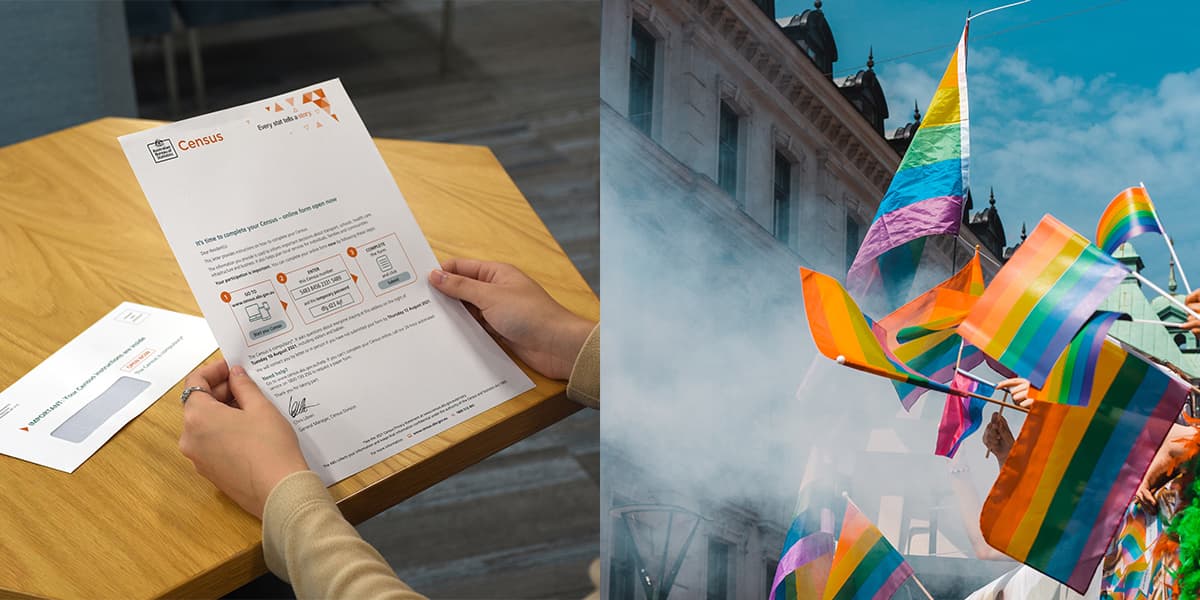
Header Image: Australian Bureau of Statistics (ABS) and Teddy Österblom via Unsplash
Topics
Ref: 2c83c0b6-97e4-4121-b783-ad7f0040e7c7




Comments & Feedback
Share your opinion
Emoji cheatsheet Formatting Comment guidelines