Facial Recognition Is the Future, So Here's What You Need to Know
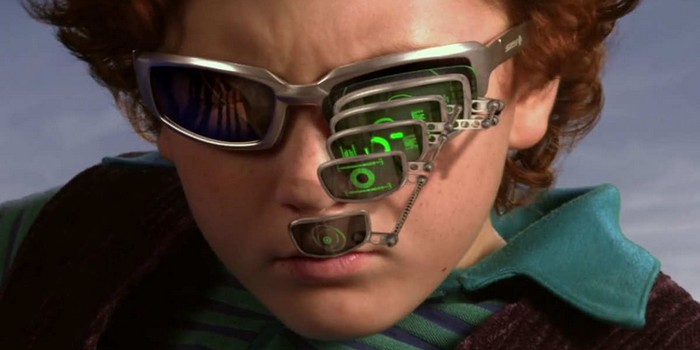
After announcements from Apple, KFC and even the Australian government, it appears the age of facial recognition is upon us.
Facial recognition is no new concept. We've seen it in spy movies. We've seen it in sci-fi movies. We've kinda seen it in freaking Charlie's Angels (okay, technically that was a retina scan).
Given that facial recognition has appeared in pop culture for decades (like the original Terminator series in the '80s), it's almost surprising that 2017 seems to be the year companies have decided to embrace the futuristic technology. Aren't we a little late?
This year, we've seen KFC in China integrate facial recognition technology with fried chicken purchases (a noble cause). Apple also announced that the new iPhone X will unlock with your face. These initiatives can make life way more convenient, but some privacy advocates are arguing we are prioritising convenience over privacy.
So, to help you get learned about the future of facial recognition, we've decided to break down the concept of facial recognition into some easy to divulge paragraphs, to help you decide when and where you want your face to be recognised.

How does facial recognition work?
Facial recognition is artificial intelligence that recognises human faces and connects them to existing data, such as name and address. This has been used to identify criminals from CCTV footage but can also be used in more everyday activities such as unlocking your computer or walking through immigration gates.
It mostly works off a biometric identification system, which looks at faces through key points (such as distance between features) and matches them to a database of faces and data.
What can private companies do with my face data?
This is the contentious part. Australia's privacy laws were recently redefined in court, so the definition of "personal information" has narrowed. What this means is that your personal information is now considered information that's 'about' you (like your age, gender, birth date). Other data such as what sites you accessed and information you've written on the internet isn't quite considered "personal" anymore.
You are lucky, however, for the time being. The Australian Privacy Principles (APP) dictate that biometric information and templates (that's what makes your face, your face) is sensitive information and therefore, private companies need to apply higher standards to what they do and how they handle this information.
These higher standards mean they can't use it for marketing purposes unless you've consented to it. This is why reading terms and conditions is important (because you might have already accidentally given consent), but more on that later.
What is the Australian government doing my face again?
If you've been to the international airport in the last year, you might have noticed that to get through immigration, you will have to go to a human-less gate and look at a camera, which will grant you access. This is facial recognition at work. Because your face is known to the government through your passport, they will verify your identity through their database of faces (dataface?) and allow you entry into the country.
But just last week, Prime Minister Malcolm Turnbull announced he would like to extend the face database (which currently only includes passport photos) to integrate all states' drivers licence photos, so that they can use it to track criminals before and after terrorist-related incidences (this can also extend to "other" criminal activities which haven't yet been further clarified). This has got some privacy advocates worried.
I'm not a criminal so I don't have to worry about my face being known by the government, right?
It's not about being a criminal or a law-abiding citizen. Privacy advocates argue that when it comes to third parties, as well as the government, citizens should have the right to choose whether or not they want to be recognised wherever they go.
There are suggestions that this face database can be used in the future to deliver catered advertising just like Minority Report or Blade Runner. If you think this is an amazing concept and you don't mind tailored—and intrusive—advertising, then props to you. However, if you don't like how it is now (when your Facebook newsfeed suddenly suggests you buy that shirt or camera you were just browsing on another site), then maybe this is something you should look into a bit more.
How can I make more informed decisions about my face and personal data in the future?
Making informed decisions isn't always easy. Often, the information about what happens to the data you agree to share with third-party companies and apps is nestled in-between thousands of words in the terms and conditions or privacy policies (which we all read, right?).
As a rule, anytime you sign up to something where you offer them access to your camera, and generally, your face, you should double check the terms and conditions for how they use your image or your data. (Hit that CTRL + F combo if on a computer to sort through that dizzying essay/contract.)
If they say something along the lines of "by agreeing to this, we own you", then that's a red flag.

Overall, the future isn't some big scary thing to worry about.
Advancements in technology help make things simpler and get us closer to reaching a reality where real hoverboards are a common mode of transport (we can dream).
The important thing is to know your rights before making decisions and staying on top of any changes to privacy. Because once you lose those rights, it's very hard to get them back.
Read more:
Turnbull Wants to Put Your Face in a National Database, But Some Warn It's a Bit Too "1984"
Say Farewell To Passport Lines And Passenger Cards Because Airports Will Be Using Biometric Recognition By 2020
Photo: Dimension Films
Topics
Ref: d884dece-9498-402e-9ac5-a8070044777d





Comments & Feedback
Share your opinion
Emoji cheatsheet Formatting Comment guidelines