Chadwick Boseman Deserves an Oscar, Even In Death
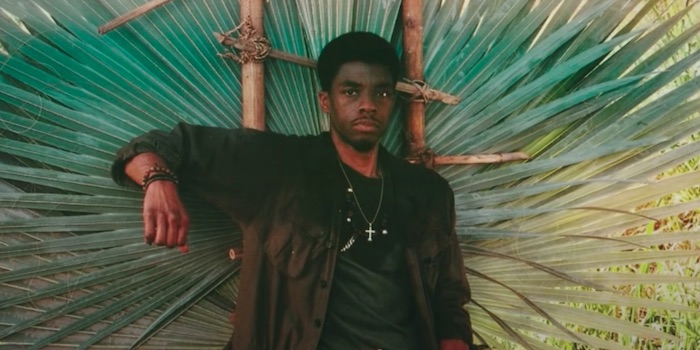
A tribute fit for a King.
The joke used to be that the only actor capable of starring in the eventual 'Chadwick Boseman biopic' was Chadwick Boseman himself, given he made his career inhabiting the roles of iconic Black men, real (Jackie Robinson, James Brown, Thurgood Marshall) and fake (King T’Challa of Wakanda).
The joke’s not so funny anymore, but at least we can agree that Boseman, in death, has officially joined that league of icons; the 'ancestors' as they were called in his Black Panther.
— Chadwick Boseman (@chadwickboseman) August 29, 2020
There’s no shame in being affected by the death of a celebrity you don’t intimately know. Creating an assumed familiarity with the audience is the hallmark of a movie star, and Boseman, as graceful and comfortable as anyone has ever been on screen, excelled at this. But his shocking death at age 43 after a private four-year battle with colon cancer hits different.
It’s not simply that it’s tragic for his wife and family (which it of course is); nor is it simply because it’s the loss of an incandescent actor whose peaks may have still been ahead of him (imagine if we’d lost Denzel Washington, to whom Chadwick was often compared, at age 43 too).
It hits different because we did seem to know him; or at least, he gave of himself more fully than others have before him. Largely, this can be credited to his role as T’Challa in the Marvel Cinematic Universe; a role that not only endeared him to kids across the world, but, because of his status as the MCU’s first Black superhero, made him take on a mantle of great responsibility. He used his role model status to inspire children, Black children and sick children especially, on the biggest platform imaginable. That he did this while in a fight for his life is unfathomable.
Chadwick Boseman had cancer and still found the strength to give so many Black children a superhero they could see themselves as.
— Ahmed Ali (@MrAhmednurAli) August 29, 2020
All children deserve to believe they can save the world. pic.twitter.com/g06D590Xsv
It’s not every day that St. Jude gets a visit from an Avenger! Thank you @ChadwickBoseman for stopping by to bring joy to our patients and learn more about our lifesaving mission! ❤ 🎉 pic.twitter.com/7RwPO7qgPD
— St. Jude (@StJude) September 12, 2018
Chadwick Boseman getting emotional about trading letters with kids with terminal cancer who passed before they got to see Black Panther...knowing he was himself battling cancer when he said this. Jesus. pic.twitter.com/o6l6hUjanU
— David Dennis Jr. (@DavidDTSS) August 29, 2020
And now, they’re all being told that Chadwick Boseman, realer than Black Panther, is gone.
The very least of the tragedies here is that Chadwick Boseman never received an Oscar for his work. That’s meaningless in the grand scheme of things. It’s meaningless even in the scope of Boseman’s legacy—the Academy has never been able to ascribe timelessness to any one person or any one film; we do that, and for Chadwick, it’s already been done.
There is nonetheless an opportunity for the Academy to acknowledge his legacy by awarding him the Best Supporting Actor Oscar for his work in Spike Lee’s Da 5 Bloods. The film was released to Netflix in June, and it now stands as the greatest movie he ever participated in (with apologies to the very good Black Panther, whose larger contribution to pop culture is unparalleled). Fact is, Boseman usually elevated average biopics like 42 or Get On Up with transcendent turns. However, Da 5 Bloods is legitimately brilliant, and he is a key reason for its success. I returned to my review of it over the weekend and painfully realised I only referred to him in passing. My excuse: How could we have known this would be the last word on his career?
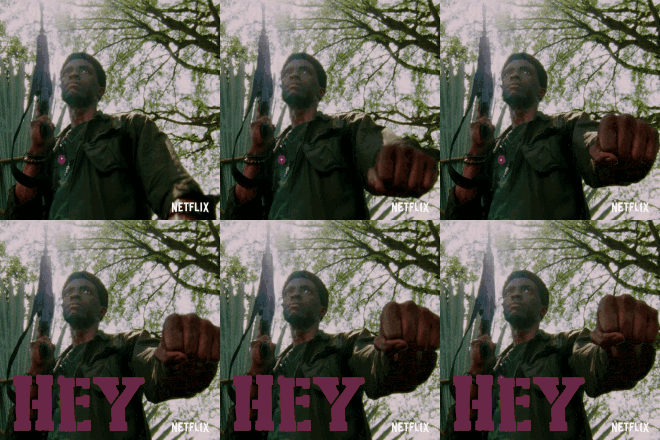
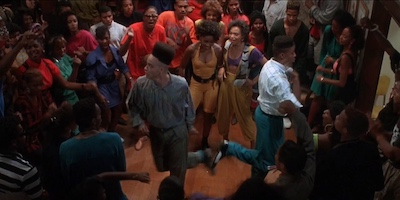
He stars in the movie, in flashback only, as 'Stormin'' Norman, a fallen soldier in the Vietnam War who served as mentor to four other Black men who return, decades later, to find his body. Most of the movie takes place in the present day, with his fellow 'Bloods'—played by Delroy Lindo, who needs the Best Actor statuette; Clarke Peters; Isiah Whitlock Jr. and Norm Lewis—now in their sixties. In flashback, they also play their twentysomething selves, opposite the clearly younger-looking Chadwick. Initially I thought this was simply Netflix running out of de-aging special effects money, having blown it all on The Irishman instead. In retrospect, there’s something additionally heartbreaking about seeing Norman—and now Boseman—forever boyish and unblemished by age in contrast with his surviving peers.
Lee, in memory of his departed star, has posted scenes to his Instagram of Boseman in action as Norman, and though I wouldn’t recommend watching them if you haven’t seen the film (for the sake of spoilers), they offer glimpses at the power, beauty and grace of his work. There’s also something profound about him playing a character described as a combination of Martin Luther King Jr. and Malcolm X, intent on providing reparations to Black men and women at home, but unwilling to be undone or overcome by rage, no matter how warranted it may be. Boseman handled himself similarly: a mass appeal role model who didn’t shy away from his cultural duty. (Coarse language warning below.)
View this post on Instagram
It wouldn’t be a meaningless gesture for the Academy to reward Boseman posthumously for Da 5 Bloods. He earned it. He wouldn’t even be the first to win in death: Peter Finch won Best Actor for Network, and Heath Ledger won Best Supporting Actor for The Dark Knight. More importantly, it would be meaningful to acknowledge the contribution of Boseman himself to our culture and film history. The people he portrayed were larger than life, and it’s time to recognise that he too was as big as his characters.
Header Image: Netflix
Topics
Ref: ec026ec4-3703-4f0f-9f65-ac28002dd6f0



Comments & Feedback
Share your opinion
Emoji cheatsheet Formatting Comment guidelines