Reckon Removing Racist Movies Is Bad? Australia’s Been Deleting Black Films for Decades
We’ll trade Gone With the Wind for Bamboozled any day.
This week, as a response to the roiling Black Lives Matter movement that originated in the United States but has spread like wildfire worldwide, Netflix decided to yank four of Chris Lilley’s shows and several UK comedies for their usage of blackface. In the States, HBO Max removed the 1939 Oscar-winner Gone With the Wind for its "racist depictions", though they promised to return it with accompanying context.
The reaction online was swift, with many wondering if suddenly all works of art from the past would be bounced because they no longer fit within these times. Others still, to this day, could not wrap their heads around why blackface is insulting and offensive, willfully ignorant to the history of its usage to diminish black people. (These are usually the same people who cite White Chicks as an example of reverse racism, refusing to engage with a full century of preceding context.) Those responses won’t get further oxygen here.
Of course, it’s not that Summer Heights High or Gone With the Wind are 'suddenly' racist, but rather, always were. It’s just that the predominantly white critics of the time who decide on the 'canon' viewed them through a white lens, and never saw the problem. (I’ve been guilty of this myself, and it’s only by having my attention brought to examples that otherwise blew right past me did I realise that many comedies I loved growing up included such demeaning depictions.)
I realise it's still more complicated than that, however. What do we do with the information that Gone With the Wind's Hattie McDaniel became the first African American to win an Oscar for her turn in the film? Should we delete the past entirely? Certainly not if we want to learn from it. Disney, for decades, has refused to release their controversial and extremely yikes Song of the South from their vault, but that, in a sense, was a move of self-protection; to help kill the idea that racism was ever normalised within the Mouse House. Shielding it from today’s viewers—without even adding an explanation for how inappropriate it is and was, as they did for Dumbo—means they can’t be held accountable. I personally wouldn't want to see any film scrubbed from existence; some just need to be made examples of.
The good news, for those Gone With the Wind die-hards out there, is that you can still easily get your hands on it across a variety of other streaming and digital services, and DVD. Same goes for Chris Lilley’s shows, and even Breakfast at Tiffany’s, which is notable today for having the world’s most grotesque example of a white actor (Mickey Rooney) playing a caricature of an Asian man.
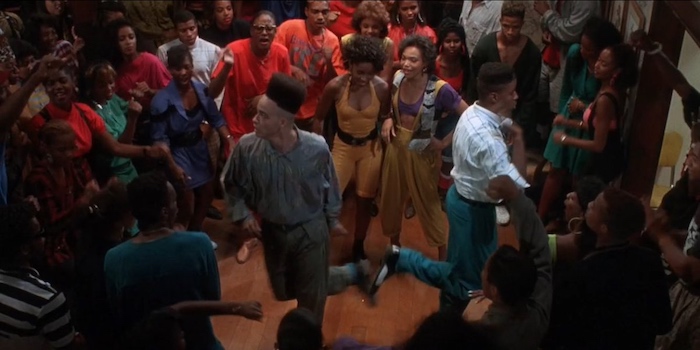
But you know what you can’t get in Australia, via streaming or digital services, or even physical media, as of this writing? Spike Lee’s 2000 masterpiece Bamboozled, in which America’s blind spot for blackface is mocked mercilessly. You also can’t see Ali, starring an Oscar-nominated Will Smith as iconic sportsman Muhammad Ali. You can’t get the hit teen comedy House Party, starring Kid 'n Play and directed by the legendary Reginald Hudlin. You can’t see the comedy spoof Don’t Be a Menace to South Central While Drinking Your Juice in the Hood. Or Fresh. Or Juice. Or Pariah. Or Barry Jenkins’ first film, before Moonlight, titled Medicine for Melancholy. These are just the ones I thought to look up on JustWatch off the top of my head. Literal decades of black culture and voices are inaccessible in Australia.
And those are just a handful of American examples. What about those by Indigenous Australian filmmakers, like Rachel Perkins, Warwick Thornton and Ivan Sen? Even in their home country, you can’t currently see their respective features Radiance, The Darkside or Beneath Clouds on any streaming service, or on DVD.
But yes, go off, fans of Jonah from Tonga. It’s $19.98 at JB Hi-Fi at the moment.
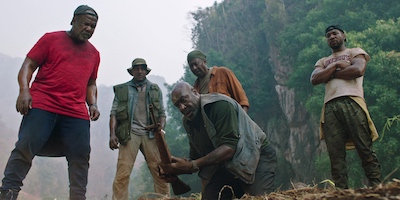
As we’ve previously covered, Australian exhibitors have historically been extremely hesitant to give black stories a big screen berth, thinking they might not be successful here (even after Get Out and Black Panther proved them wrong). Thank goodness Spike Lee’s latest project, Da 5 Bloods, is going straight to Netflix on Friday 12 June. Before 2018’s BlacKKKlansman, it had been more than a decade since any picture of his played in Australian theatres.
The real tragedy here is not the fact that it is now slightly more difficult to watch Gone With the Wind than it was 24 hours ago. The tragedy is the erasure of black stories and voices throughout the duration of cinema's existence, and those who never got the chance to make their movie. Streamers, studios and outlets should be less concerned with tearing down old monuments (though adding notes of context is very welcome) and more concerned with opening up opportunities to new diverse storytellers. And they should also bring back these aforementioned titles like Bamboozled and Juice and Radiance, for an audience that needs—and is now, finally, hungry—to learn about what they’ve been missing. The canon is in need of a shakeup.
Header Image: New Line Cinema
Topics
Ref: 0f0a5bee-00a4-40da-932d-abd7004e89da



Comments & Feedback
Share your opinion
Emoji cheatsheet Formatting Comment guidelines