Why Schools Are Staying Open (For Now)
Here is what you need to know.
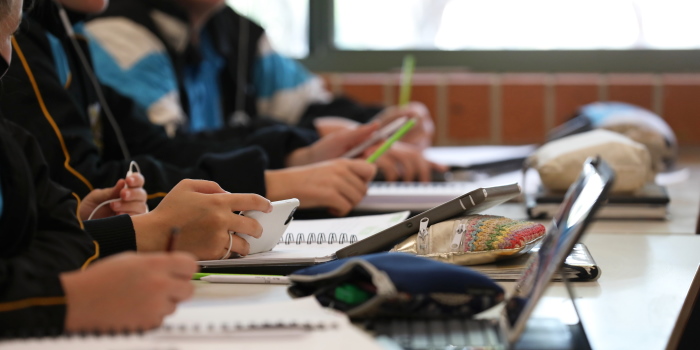
Prime Minister Scott Morrison has announced that, despite the calls for more social distancing, schools will remain open for the time being.
The announcement made by the Prime Minister described a ban on all non-essential gatherings with more than 100 people indoors and 500 people outdoors to prevent the spread of COVID-19.
Despite this ban, schools, universities, education facilities and childcare centers will remain open for the foreseeable future.
Many parents, teachers and students have gone to social media to express their disappointment on this morning’s decision for schools.
I am not a babysitter! I am an educator. If people were arguing for schools to stay open for the good of the kids/ their education, I could accept that. But every point I see is about supervision, & it shows what people really think of teachers #iamnotababysitter #ShutTheSchools
— Rebecca B (@LadyMacBec) March 18, 2020
#ShutTheSchools All schools should be transitioning to online learning wherever possible and giving people the option. There are a lot of people who can be home. This would at least reduce numbers and risk #ScottMorrison
— Michael (@MickPmq) March 18, 2020
With new information and bans being updated daily, there are a lot of questions and anxiety surrounding why these decisions have been made and how they will affect students and children.
To make things a little less stressful, let's break some of those questions down.

Why are schools staying open?
Due to the rapid spread of COVID-19 within the last few months, our government has put measures and restrictions in place on travel, gatherings and events to prevent the spread of the virus any further.
Despite this, the Australian government, supported by numerous health experts, believe that keeping schools open is the easiest and safest way to protect children and vulnerable people within our communities.
Health experts believe that while children and young people can contract the disease, it appears to be less contagious and severe for them.
"The health advice here, supported by all the premiers, all the chief ministers and my government is that schools should remain open," the Prime Minister said.
"The disruption that would occur from the closure of schools around the country make no mistake would be severe."
Chief Medical Officer Dr Brendan Murphy said that the virus is not as contagious nor dangerous to younger people, explaining, "Children have very very few instances of clinical disease and if they do, of even more severe disease."
"Only 2.4 per cent of the cases reported in the Hubei Province were in people under 19."
Children and teenagers staying in school will ensure that they are kept away from the wider community and if they do contract the disease, lessen the spread to those who may be more vulnerable.
What is an essential gathering?
After this morning’s announcement you may be wondering what exactly is an essential gathering? And why are schools a part of that list?
Basically, an essential gathering can be defined by any grouping of people that is unavoidable or must continue to ensure the regular continuation of our society.
Essentially some workplaces, transport and markets.
The list described by the Prime Minister this morning includes:
- Airports and public transport.
- Medical or health services.
- Disability or aged care facilities.
- Emergency service facilities.
- Correctional centers, youth justice centers or other places of custody.
- Courts, tribunals and parliaments.
- Food markets, grocery stores, supermarkets, retail stores and shopping centers.
- Office buildings, factories, construction sites and mining sites.
- Schools, universities, education facilities and childcare facilities.
- Hotels, motels and other accommodation facilities.
Schools remain a part of this list because of its impact on students, educators and healthcare workers.
Making sure that all students continue to get their education is extremely important so that no one misses out.
Schools staying open will also avoid losses to employment, both in education and the health care sector, from workers who would need to stay home to care for their children.
Anything else excluded from this list is considered a non-essential gathering and the government is encouraging all people to avoid these gatherings wherever they can.
How will this affect you? And what you can do to protect yourself.
If you’re worried about how this could potentially affect your health or education there are some things you can do to ease that stress.
While schools and universities are staying open it is important to remember that most people are taking all the steps possible to prevent the spread of the disease and maintaining high levels of hygiene at all times.
Whether you’re at home or on campus make sure you continue to wash your hands regularly and keep at least a meter and a half distance away from people wherever possible and practicable.
When you head home at the end of the day make sure to do your best to socially distance yourself from others.
Instead of going out with your mates after class, head home, read a book, watch some Netflix or do some cleaning because the safest option for everyone right now is to keep distance.

Some universities and schools offer online classes and lectures, and WA’s largest uni, Curtin University, has announced that, as of Friday, all of their lectures will be conducted online and they are working to provide access to online tutorials and laboratory work.
If you have the option to take classes online through your school or uni, consider it as your first choice; it’s the best step you can take to protecting yourself and others.
If the stress of COVID-19 is preventing you from studying or keeping you away from class consider trying some relaxation techniques, give meditation a go, try out a calming podcast or talk to those closet to you about your feelings.
For now, while schools remain open its crucial to keep accessing their services for as long as they are available because your education is so important.
Read More:
What to Do If You Think You Might Have Coronavirus
Why Social Distancing Is Essential to Stopping the Spread of Coronavirus
What Does Self-Isolation Actually Mean? (Like, Can I Still Go to the Shops?)
Want to Avoid Getting the Cold or Flu? Stop Touching Your Face!
Don’t Snooze On Podcasts: 8 Recommendations While You Self-Isolate
Podcast: Everything You Need to Know About Coronavirus (and a Few Things You Didn't)
Header Image: Lincoln Beddoe via Getty Images
Topics
Ref: 1bcd535c-c509-4d19-859d-ab82007a342f
Most Popular



Comments & Feedback
Share your opinion
Emoji cheatsheet Formatting Comment guidelines
I dont know I think a school is a larger breeding ground for the virus to spread than at home. Cuz we're literally touching desks/equipment others had touch and its crowded sometimes and we sit so close to each other, even tho scomo himself is to scared to meet with other ppl and face times instead.
Plus if we're trying replicate Singapore's actions we're not doing it as strictly as them, they've literally tracked every infected persons history from and told the public and have also quarantined like 5,000 ppl already. They're much stricter than here in implicating their policies and laws.