Why Crusty Old Literature Is Still Relevant Today
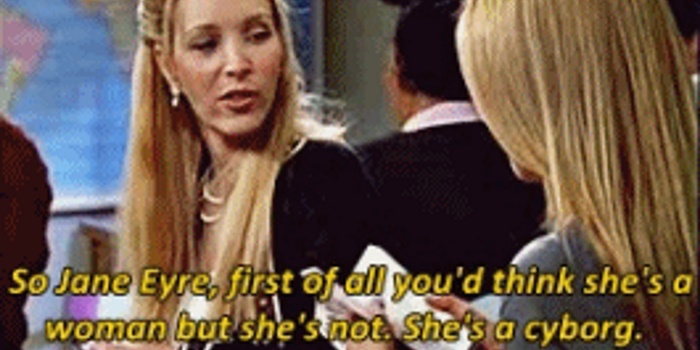
Is Jane Eyre the original Mean Girls? Maybe not, but you get the idea.
English is one of those subjects you just have to take in high school; a non-negotiable, even for seniors.
With that in mind, it’s not hard to understand why most students don’t have an appreciation for the subject.
It was only when I took up an English Literature paper that I realised just how firmly connected we are to the subjects of our past texts. Yes, they’re old, their language is way complicated and the storylines aren’t all that similar to those tales we love so much today, but there are many ways in which crusty old lit can still be relevant to our lives in 2017.
Keeping It Relatable
If you had to choose between Jane Eyre and The Hunger Games, which would you pick? I wouldn’t blame you for going withThe Hunger Games. It’s a really good read! Edge of your seat action, emotional romantic relationships, relatable protagonist, et cetera…
I would argue that older literature went to equal pains to make its protagonists relatable. Jane from Charlotte Bronte’s 1847 novel Jane Eyre was definitely not seen as beautiful by any stretch of the imagination. In fact, characters went so far as to say things like, “one really cannot care for such a little toad as that.”
We’re all young adults here, right? We all know what it’s like to be considered less than beautiful at some point in our lives. This is where I believe modern and classic literature can be similar; both strive to make their characters as relatable as possible. Katniss from The Hunger Games even has her relatable fits of anger, and if you’ve read Jane Eyre, you’ll know that Jane does too (though not to the same extent).



Neither protagonist is perfect. Maybe that’s why reading about both can be so addictive. At least we can all agree that book protagonists are almost never accurately portrayed in the movies. If only they were, hey? I want an awkward teen with a couple of mid-puberty pimples fumbling around on screen, not model-material actresses in their mid-20s playing teens. Yes, I’m looking at you Mean Girls.

How About Those Themes?
Let’s not also ignore the themes in old lit! Yeah, I know, that word—themes—only ever arises in an English essay or on the ratings on DVDs. Nonetheless, it can’t be overlooked. Many of the themes covered in classics are still essential today, like feminism, class and discrimination.
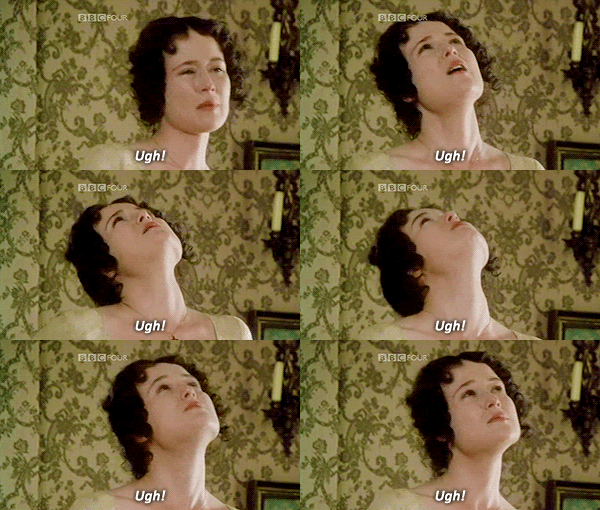
The type of feminism raised in Jane Austen’s 1813 book Pride and Prejudice provides a precious lesson for modern teens. The protagonist Elizabeth is constantly seen as refusing to be objectified. She declines Mr. Collins out of a refusal to marry for convenience, she is never easily insulted by the males of the book (cough cough Mr. Darcy cough cough) and she completely slays Lady Catherine: “He is a gentleman; I am a gentleman's daughter; so far we are equal.” Damn straight Lizzy; women are not possessions weighted by their inheritance.
Don’t mistake me for thinking that marriage for stability’s sake is practiced as much today as it was in 19th century England, because obviously it is not. However, the perception of women as objects remains. How many pop songs do you hear with a classy comparison between girls and other objects, like cars? Listen to Bruno Mars’ “That’s What I Like”: “You and your ass invited/ So gon' and get to clappin'/ Girl, pop it for a pimp.” Sure, we aren’t being married off to older men for the sake of financial security, yet women are still often perceived as something to own. Those Women’s marches didn’t just happen because we woke up one morning and decided we were bored.
How Far Have We Really Come?
Finally, let’s not forget class, or any form of discrimination really. Looking back over history, it’s not hard to find instances where entire groups of people have been dehumanised or underappreciated because of either their social class, race, sex or beliefs. Sometimes, it seems like little has changed.
What better vessel to harbour these themes than literature? To Kill a Mockingbird, Harper Lee’s relatively recent 1960 novel, is a perfect example of a text that not only brings to light the themes of discrimination based on race and class, but one that makes these things relevant to everyday life. Atticus, protagonist Scout’s father, even explicitly says that racism is present in the everyday language of his time.
Literature can remain relevant for decades; sometimes, centuries. Where else will you get that amount of sarcastic sass, relatable awkwardness and rewarding knowledge?
So, next time you go to the library, try something written more than 50 years ago. You never know what kind of drama, action or mystery you might uncover!
Georgia Clements is one of Student Edge’s student contributors. See more student contributions here.
Photo: NBC
Topics
Ref: 2b3032a1-66d1-4825-8648-a7630087407e





Comments & Feedback
Share your opinion
Emoji cheatsheet Formatting Comment guidelines