Everything You Need To Know About David Foster Wallace, A Modern - And Missed - Writing Great
Trigger warning. This article discusses mental heath, depression and suicide.
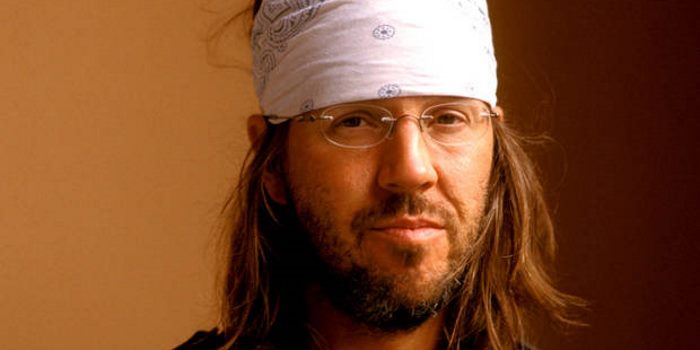
Yesterday would have been author David Foster Wallace’s 54th birthday. Hailed as “one of the most influential writers of the last 20 years”, in his 21 years of work he only wrote three novels (one incomplete), but multiple essays on everything from tennis to visual effects to lobsters. Let’s take the opportunity to reflect on his incredibly fascinating and rather sad life. Born in 1962 New York, he majored in English and philosophy at college, where he became a regionally ranked junior tennis player and a glee club member. His philosophy thesis was on modal logic, and his English thesis became his first novel, The Broom of the System, concerning a switchboard operator who begins questioning her own reality. It received mixed reviews, but critics were unanimous in agreement that this marked the emergence of a truly original author. By the time these reviews were published, Wallace had graduated summa cum laude and was now completing a Masters of Fine Arts in Arizona. He’d become venerated among his fellow scholars, which terrified him, as he constantly worried that he and his novels would never meet everyone’s high expectations. This partially stemmed from his burgeoning depression that too frequently forced him to leave school to recover. Around this time, he began abusing alcohol and marijuana, and when he moved back to New York he attended group meetings to ease his addiction. During this time in the late '80s he began work on his magnum opus, Infinite Jest; a thousand-page-plus postmodern masterpiece. At the root of its sprawling narrative, featuring several story strands across many timelines and locations, is a film also titled Infinite Jest, which is so engrossing that viewers never do anything but watch it, resulting in their death. The book utilises almost 400 footnotes and touches on themes ranging from consumerism to film theory to Quebec separatism, and has echoes of Wallace’s addictions, depression and personal tennis history. Published 20 years ago this month, it was named one of the best English-language novels since 1923. Wallace was interviewed by Rolling Stone reporter David Lipsky during the promotional tour for this book, which formed the basis for Lipsky’s memoir Although Of Course You End Up Becoming Yourself, which in turn was adapted into the film The End Of The Tour, featuring Jason Segel as Wallace and Jesse Eisenberg as Lipsky (out on DVD in March). Riding on the back of Infinite Jest’s success, Wallace occupied his time writing several articles for various magazines and newspapers, and short stories, such as Brief Interviews with Hideous Men (turned into a mediocre movie by John Krasinski). He also taught classes at universities and attempted becoming Catholic. Wallace entered a brief relationship with memoirist Mary Karr (who initially rebuffed him after he began stalking her and to whom he was abusive during their time together) before marrying painter Karen Green in 2004. He also gave an iconic commencement speech at Kenyon College in 2005. Titled This Is Water, he urges the graduates to be compassionate, to consider alternative explanations for people’s annoying behaviour and to embrace the mundane minutiae of their lives - an idea that he explores in his last two novels. (Watch the original speech here, or the shorter dramatisation here.) However, Wallace’s demons lingered. His depression persisted for more than 20 years, and he was only productive whilst medicated. Multiple attempts to wean himself off antidepressants failed, and when he stopped taking them altogether in 2007, the depression returned. He trialled ECT, which didn’t work, and when he went back to antidepressants, he found they had basically no effect on him. Finally, at the age of 46, on September 12 2008, he arranged the uncompleted manuscript for his posthumously published and Pulitzer-nominated The Pale King and hung himself from a patio rafter. An international outpouring of grief followed, with warranted superlatives hurled around the blogosphere. It was entirely unfortunate that a man with such a perceptive view of human experience, who urged often to appreciate the trivialities in everyday life, could succumb to all he stood against. Lipsky noted that “anyone [who] picks up his work… will have their antenna polished and sharpened, and they’ll be receiving many more channels than they were aware of.”If you or anyone you know needs help, support is available right now. Call Lifeline on 131 114 or Kids Helpline on 1800 551 800.
For more information on counselling and treatment plans you can contact your school’s health services as well as the following organisations:
Kyle Uglow-Turpin is one of Student Edge’s student contributors. Learn more about the contributors program.
Photo: Hachette Book Group.Topics
Ref: 95993825-58d6-4449-939e-a5b100580111





Comments & Feedback
Share your opinion
Emoji cheatsheet Formatting Comment guidelines