When I say the word 'politics', your mind may take you in many different directions.
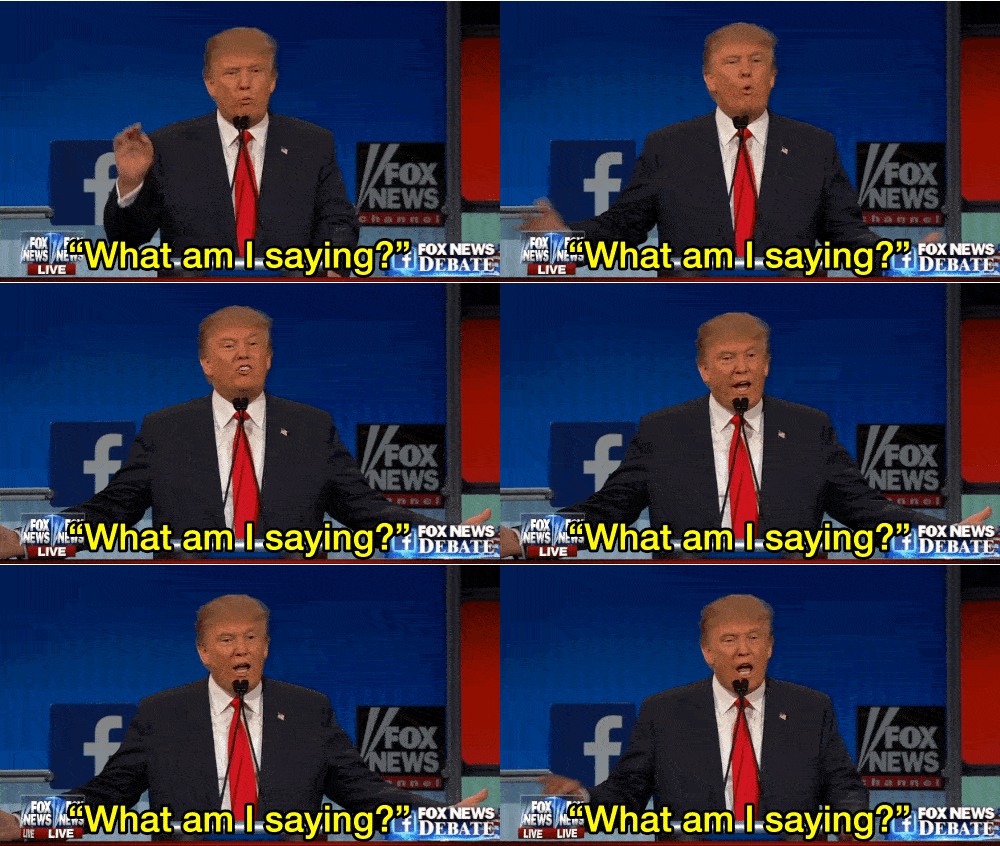
You might think of Donald Trump and his hair, or of that student activist who insists you protest capitalism alongside them outside the university library.
Few might think of the rumblings of an early election (which might become a reality on the second of July). And even fewer will bother to prepare for it by enrolling.
In the last election,
400,000 people aged 18-24 chose not to enrol (or one in four people from that age group). Why is it that young people don’t want to vote?
With such an unstable political environment (we’ve had four different Prime Ministers since 2013) it’s easy to think of politics in Australia as a bad joke that is just too embarrassing to pay any attention to. But that's too simplistic an excuse.
So, why should I vote?
In the upcoming election, important decisions will be made about issues many young people care about, whether it be potential budget cuts to
tertiary education, the status of
safe schools or
climate change action.
These are all issues that the major parties approach differently, despite the fact that their rhetoric is often very similar.
No matter how ridiculous they can seem, politicians make decisions that affect our future. So take the time to determine which policies work for you and, when called, vote accordingly.
By voting, you choose which policies you prefer rather than allowing others (generally, older people) choose for you.
And remember, there’s always the option of voting for a smaller party or an independent if you don’t feel the two major parties represent you.

How do I make politicians listen?
Perhaps it’s inaccurate to equate not voting in elections with not engaging with politics. Young people are known for finding
new and creative ways of telling politicians
what they think the Government should and should not be doing.
We’re a generation that signs petitions and protests, writes letters to MPs and makes Instagram posts about the issues that we care about.
But we’re also a generation notorious for not voting.
And while these creative campaigns are important, they are rarely accompanied by a visit to the ballot box. Our opinions rarely translate into votes and therefore, don’t have a significant impact on the outcome of the election.
Our demographic is unlikely to make the deciding vote, so politicians don’t bother competing for our approval. They rarely strive to make the policies we care about a reality nor do they meticulously orchestrate policies designed to appeal to young people.
Politicians won’t address student concerns without student voters. To make politicians listen and respond to our concerns, we have to do the unexpected, and vote.
How do I enrol?
If you’re over 16, you can enrol now, so you’ll be ready to vote the day you turn 18 (but I should tell you that it’s unreasonable to expect an election to be waiting for you).
If you're already 18, registering means you'll be able to
cast a ballot in the impending same-sex marriage plebiscite (expected to come shortly after the election, depending on the result).
Head to the
Australian Electoral Commission’s website to enrol online. You will need to have proof of identity details ready and have someone there to witness your declaration. But other than that, it’s as hassle-free as making a Facebook account (though, you shouldn’t tell quite as many lies).
Susan Alfayadh is one of Student Edge’s student contributors. Learn more about the contributors program.
Photo: ABC News.






......
sick