What You Need To Know About Australia's Upcoming Same-Sex Marriage Plebiscite
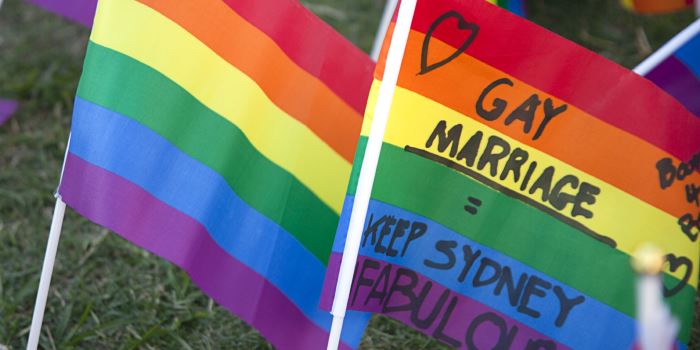
It seems that the subject of legalising same-sex marriage has been at the forefront of Australian politics for the best part of the last decade.
But, with Attorney-General George Brandis confirming Australia will hold a plebiscite on the matter by the end of this year, legislation in favour of same-sex marriage could finally become a tangible reality. What is a plebiscite? Put simply, a plebiscite is a national vote on an issue; in this case, same-sex marriage. Its purpose is limited to gaining an understanding of how the public feel. The results in no way bind the government to act in a certain way. How will it unfold? The government will most likely initiate the process by passing a special Act specifying the purpose and procedures of the plebiscite. This will activate relevant existing legislation which will enable the Australian Electoral Commission to conduct the vote. It will also outline how the plebiscite will operate differently to a standard election. In the past, this has involved making voting voluntary and choosing to conduct the vote by post. The enabling Act usually also spells out the question that will be asked. There are fears the wording will be loaded in a way that triggers a particular response, with many people ready to revolt should the government fail to phrase the question appropriately. Will I be able to vote? You will if you’re an Australian citizen that is 18 years of age or older. You also need to be enrolled to vote (which you can get started on at the age of 16). Why can’t we have a referendum? A referendum is similar to a plebiscite; however, it is only necessary when the Constitution needs to be amended. Australia’s Constitution, unlike Ireland’s (remember their referendum last year?), does not limit marriage to a union between a man and a woman. That makes it completely within Parliament’s power to legalise same-sex marriage without a more explicit mandate from the people. A plebiscite is also simpler than a referendum. To pass, a referendum needs a double majority. That means it needs majority support on a national level and the majority of people in at least four out of six states need to vote in its favour. But a plebiscite just needs a simple majority on a national level. Is a plebiscite necessary? Gauging the public’s opinion on this issue seems superfluous, considering poll after poll consistently shows the majority of Australians are in favour of legalising gay marriage. (Crosby/Textor, a research company key to the 2010 and 2013 Liberal Party election campaigns, put Australian support of gay marriage in 2014 at 72 per cent.) Perhaps these polls can be accused of inaccuracy. After all, not everyone’s opinion is recorded. However, a plebiscite would be similarly flawed. As previously mentioned, it is probable that voting will be voluntary, much like as in a poll. Any insight it gives us will be no more reliable than the many polls that have been conducted in the past. Also, as the organisation Australian Marriage Equality argues, the High Court has already confirmed that Parliament is empowered to legalise marriage equality without taking the temperature of the people via plebiscite. What are the consequences? A plebiscite is likely to be time-consuming and expensive. The results of Australia’s last plebiscite took seven years to implement and the Australian Electoral Commission estimates the cost of this plebiscite to be $160 million. At a time when cuts are being made to social services and foreign aid, it seems ludicrous to spend money on something that will essentially be a confirmation of what we already know. A plebiscite will also give anti-gay campaigners the most focussed media attention they have ever had, potentially translating into an unprecedented platform to spout hate. A study in the US found that there is a 248 per cent increase in general anxiety disorders in the LGBTQI community when there is a referendum on the legalisation of gay marriage. As Penny Wong states, "extreme, intolerant views and some hateful language would start to hijack the debate - a clear demonstration on why we need a parliamentary vote and not a plebiscite on this issue.” This concern was dismissed by the Liberal Party as “a pathetic political stunt”, perhaps evidence of the politicking that is already taking place at the expense of an entire community of people. When is this going to happen? Though Attorney-General Brandis has said a plebiscite, followed by a Parliamentary vote, would likely take place soon after the federal election this year (supposing the Coalition is kept in power), Prime Minister Malcolm Turnbull was unwilling to commit to that same timeline. So, don’t expect the plebiscite to take place before the next federal election. However, with increasing rumblings of a snap election on the horizon, we should at least have a proposed date for the plebiscite soon.Susan Alfayadh is one of Student Edge’s student contributors. Learn more about the contributors program.
Photo: iStock.Topics
Ref: 109b0701-3576-42ac-bf84-a5c3006f1699

Most Popular



Comments & Feedback
Share your opinion
Emoji cheatsheet Formatting Comment guidelines
Personally, as someone who holds beliefs against gay marriage, I find it quite ridiculous that because there may be a national debate, those who disagree hold 'extreme, intolerant views' or 'spout hate'. I have homosexual friends, and though I disagree with their views, to suggest that I then hate them is both ridiculous and extremely offensive, not to mention that it spreads misguided beliefs and opinions about those who hold conservative beliefs. We, for the most part, are not hateful bigots, and there are people on the other side of that debate who could be accurately described as hateful bigots against anyone who disagrees with them. I find it extremely concerning that the trend in society's beliefs is increasing intolerance to anything that does not fit with the progressive definition of tolerance. It's a two-way street, we each hold our beliefs, and I shouldn't be labeled as hateful and bigoted just because my beliefs differ from yours.
It's against every religion