Here's Where The Major Parties Stand On School Funding, Uni Fees And HELP Repayments This Election
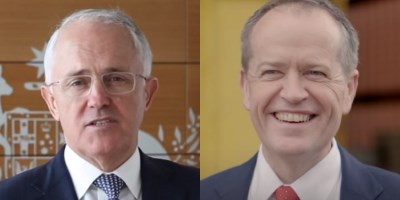
With a spike in youth enrolments this election year, the promises made by the two major parties about youth issues could have a considerable impact on the outcome of the vote.
Of key concern to young people is what our education and career prospects look like. So, what are the two major parties promising? Let's take a look.
What’s Being Spent On Schools?
For most young people, the journey begins with school.
Both major parties have prioritised funding for schools. Labor has pledged $4.5 billion in funding to schools over the next three years. In their Gonski model, each student receives a base amount of funding with more funds directed towards students with special needs or from disadvantaged backgrounds
Head here for a state by state break down.
While the Coalition hasn’t committed to the same sizeable sum (and isn’t looking to continue with the Gonski model), they do intend to pump $1.2 billion into funding schools from 2018 to 2020.

What’s Up At Uni?
If your path should lead you to tertiary education, government policy can have a considerable impact on the nature of your course and the opportunities available to you.
Unfortunately, the government hasn’t fully explained what their intentions are for higher education.
They plan to save $2 billion by reducing spending on tertiary education but have not articulated where the cuts will be made. However, we do have this consultation paper to gauge the possibilities.

After two years of consideration, the Coalition has abandoned the idea of deregulating university fees (which may have resulted in $100,000 degrees).
But we could still see partial deregulation of selected courses. (Labor has ruled out full fee deregulation.) We could also see a reduction in the repayment threshold of FEE-HELP. This means that if you took out a loan to pay for your degree (as many of us do), you would be required to start repaying this when your yearly earnings reach as low as $40,000 as opposed to $54,126.
Labor has also said that, if elected, they will lower the fee repayment threshold, to $50,638. They also intend to make some other cuts to tertiary education. This includes scrapping HECS-HELP Benefit, a program which reduces repayments for certain courses including mathematics, early childhood education and nursing.
The Liberals are also considering this as a potential way of saving $2 billion from spending on higher education.
What’s Being Vowed For VET?
Both parties have also identified the current VET sector as problematic. Labor intends to cap loans for students studying at private colleges to $8,000 per year hoping that this will reduce scamming and save the government $6 billion over the next 10 years.
This program is also being reviewed by the Coalition with changes expected to be announced after the election.
Who’s Waging On Work?
We’ve talked extensively about the money associated with being career-ready, but aside from the uncertain costs of higher education, it’s also worth looking at the opportunities the two parties are proposing to help graduates become employable.
For under 25s who’ve been unemployed for six months, the Coalition has created “Youth Jobs PaTH”. For 30,000 young people, this means a paid fifteen to twenty-five-hour (per week) internship at a business willing to take them on. During the course of this internship, they’ll get a $200 addition to their usual welfare payments.
However, this has been widely criticised, not least of all by the Australian Council of Trade Unions who describe the internships as “$4-per-hour jobs for young people”.
Alternatively, Labor has proposed that young people who have been unemployed for six months should be offered a free 20-week TAFE course that would aid in their transition to an apprenticeship.
While flagging the problem of low-wage apprenticeships, Labor has not provided any financial incentive for people to take up this opportunity, nor have they guaranteed that it will result in an apprenticeship.
If you need to explore where you stand on a wider range of issues before making your decision this election, check out the ABC’s vote compass.
For more on the election:
Your Guide To The 2016 Federal Election
What Aussie Yoof Need To Know About The 2016 Budget
First-Time Voter? Here’s What To Expect On Election Day
Susan Alfayadh is one of Student Edge’s student contributors. Learn more about the contributors program.
Photo: ABC.
Topics
Ref: 3ca2131c-5f71-4c16-9a56-a627005ccfe7


Most Popular



Comments & Feedback
Share your opinion
Emoji cheatsheet Formatting Comment guidelines
i love that show but it is not right to be doing that