We Asked Underage Voters Who They Want To Win The 2016 Federal Election
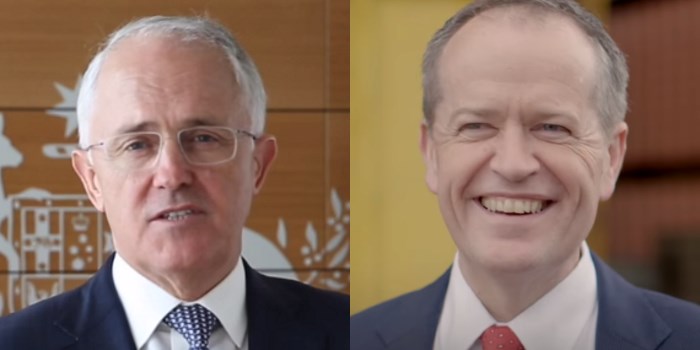
… and the results are in.
More young people will vote at this weekend’s election than in 2013, suggesting Aussies aged 18 to 24 are eager to make their mark on the political landscape.
But what about those aged 12 to 17? Though they can’t legally cast a ballot on Saturday, many have opinions (loud ones!) about the direction Australia is heading.
More significantly, they’ll be watching the results closely, knowing that they’ll be able to make a difference at the next federal election in 2019/20.
(Well, the 15-17 year-olds can. Sorry 12-14s! You’re on the bench for at least one more election season.)
We were curious what our members would do if handed the green and white ballot papers this weekend; who they’d usher into the House of Representatives and who’d they elect to the Senate.
More than 1,700 members cast a vote for their electorates in the Student Edge Mock Federal Election (and we didn’t exclude contributions from those under the age of 18).
Though a recent Newspoll (also of 1,700 people) sees the Coalition edging ahead of Labor (51% to 49%), our survey suggests young people are heavily leaning towards Labor and the Greens in 2016.
First, the key issues.
We asked members what the top three issues were to them this election.
Perhaps unsurprisingly, young people said ’education’ matters most, followed by ‘health care’ and ‘marriage equality’. The ‘environment’ (including the preservation of the Great Barrier Reef’) came in fourth, followed by ‘youth unemployment/ welfare’ and ‘the economy’.
1. Education (e.g. Higher education fees, Gonski) (55%)
2. Health care (e.g. Hospitals, Medicare, mental health, disability) (44%)
3. Marriage equality (31%)
4. Environment (e.g. Climate change, renewable energy, forests, Great Barrier Reef) (30%)
5. Youth (e.g. Youth unemployment, welfare) (19%)
6. The economy (e.g. Jobs, growth, deficit v surplus) (19%)
7. Refugees (e.g. Asylum seeker offshore processing) (17%)
8. Violence & abuse (e.g. Domestic violence, alcohol & drugs) (16%)
9. Family (e.g. Family welfare, maternity, child care) (16%)
10. Innovation & technology (e.g. NBN, STEM, CSIRO) (14%)
The results.
When asked to pick their preferred Member of Parliament, the majority of respondents gave their support to Labor, followed by the Liberal party and then the Greens.
In the Senate, Labor similarly triumphed with 36 elected senators, followed by 19 Greens, eight independents (four for Marriage Equality; the rest to Animal Justice, Family First, Xenophon and Sex Party) and just two Liberals. (11 seats were too close to call.)
Okay, what does this even mean?
Obviously, the results need to be taken with a pinch of salt (and not simply because many of those who cast a ballot in our mock election aren’t actually eligible to vote).
What is clear, however, from the general results, is that young voters are leaning left; more so than their older counterparts. (The pollsters at Ipsos recently found that Parliament would be overwhelmed by Coalition representation if only those over the age of 55 could vote.)
Considering voters aged 18-24 make up 10 per cent of the electorate this year (according to the AEC), you have to wonder what role the youth vote will play on Saturday.
Though the Coalition leads among older voters, our survey suggests younger voters feel better represented by Labor and the Greens.
Will that ultimately change the predicted results on polling day? Can young Australians alter the chessboard?
We shall find out, Saturday.
For more: Here’s Where The Major Parties Stand On School Funding, Uni Fees and HELP Repayments This Election.
Photo: YouTube.
Topics
Ref: c146c9d5-5982-4533-9213-a632008065ea



Comments & Feedback
Share your opinion
Emoji cheatsheet Formatting Comment guidelines