What’s Up With Some People Getting COVID-19 While Others Don’t?
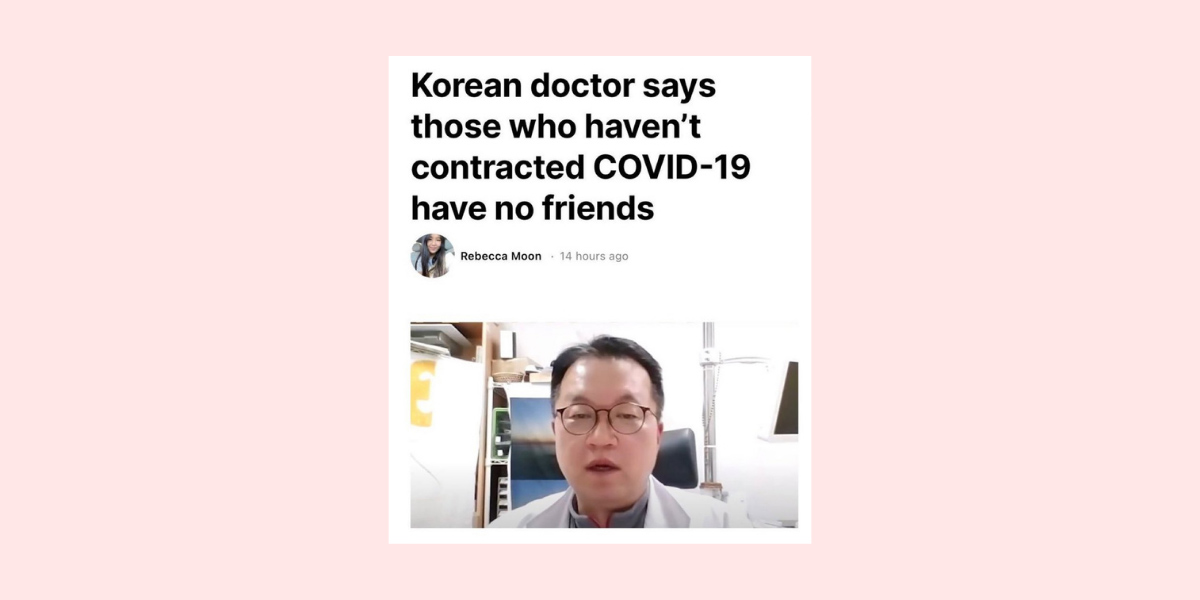
Hint: Despite what that Korean doctor said, it’s not ‘cos people don’t have friends.
It’s the question on everyone’s lips – someone you live with or spent a fair bit of time with gets COVID-19 and you’re a close contact, but you don’t test positive. How the heck does that work?
Scientists are desperate to know why and although it remains a bit of a mystery, they’re beginning to find clues.
Here’s all the research there is so far, in language that makes sense:
Immunity, baby.
Melbourne immunologist Vanessa Bryant told the ABC “there’s a bit of luck to it”. She’s a part of the Australian research team investigating how COVID spreads in households and why some people don’t test positive at all.
She says it comes down to immune systems – and everyone’s is totally different.
A big theory is that prior infections to other common colds build up pre-existing immunity to COVID-19.
It’s important to remember the different strains of coronavirus (common cold included), and the fact that there were other forms of COVID before the pandemic.
One study found that people with higher T-cells (these are the primary immunity cells) from these other infections were less likely to become infected with SARS-CoV-2 (the virus that caused COVID-19).
This all sounds pretty standard, right? Low immune system = more likely to get sick. But then how come healthy people still get COVID?
Maybe she’s born with it?
Scientists believe our genes play a part. Thanks, ancestors!
We know that genetic variation plays a role in exposure to a number of diseases (proven in HIV and Malaria).
This could also answer why some people face heavier symptoms, while others are asymptomatic.
Studies into this concept have found two stretches of DNA with variations of interest – blood types and even an ancient inheritance theory (Neanderthals have entered the chat).
The exposure variable.
The nature of exposure and timing of vaccinations are also said to contribute.
Stuart Tangye, an immunologist at Garvan Institute of Medical Research, told the ABC the length and location of virus exposure are important, as well as potential viral load.
A personal (and definitely not an expert) example: that could maybe explain why I didn’t get COVID after having dinner with people who were positive over a week ago?
Was it because we had dinner outside? Was it because we were socially distanced? Was it because I’m superior and COVID-19 can’t touch me?
Despite my wishes, we probably don’t need a scientist to tell us the latter is probably not the case. And we can’t really be certain about the others either.
Hot vax summer?
It’s unsurprising that vaccinations act as an armour to the spicy cough.
But what’s interesting, according to Dr Bryant via the ABC, is the inner workings protecting you.
For example, when you’ve just gotten your booster is when you have the highest immune protection. She says this is when lots of protective antibodies are circulating, neutralising and mopping up the virus before it infects your cells.
What goes up must come down, though. Vaccine effectiveness does wane over time.
So, is COVID a game of luck? Not quite. There’s a lot of science behind it and the experts are still working to figure it out. Are you or your pal a superhero for not getting the ‘vid just yet? Potentially.
Ultimately – this is serious stuff, and all of these studies and theories are vital in understanding infections, and potentially how to combat them in the future.
Header Image: @rosieICM via Twitter





Comments & Feedback
Share your opinion
Emoji cheatsheet Formatting Comment guidelines