What You Need to Know About Apple's Homepod and Its Rival Robo-Assistants
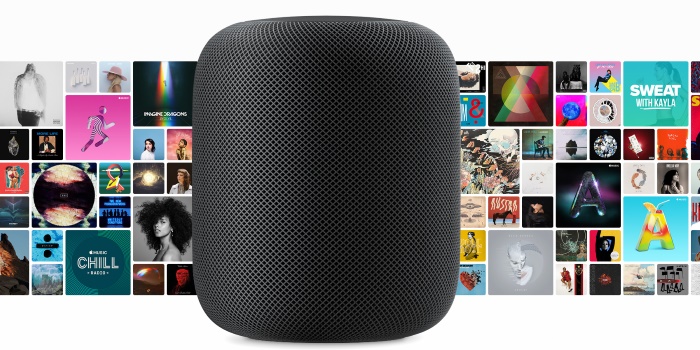
Apple recently introduced their Siri-powered home speaker, the Homepod, following in the footsteps of Google and Amazon.
For $US349, you can buy a sweet new electronic device that serves almost your every need. But maybe it’s suited too much to your every need. Is it getting a little creepy, having devices listen to what you’re saying every second of the day? Is this the beginning of the robot takeover?

Google has been selling their voice-controlled smart speaker, Google Home, since April 6, 2017. Amazon, however, was the first to release anything of the sort waaaaay back in June of 2015, with Amazon Echo.
With the three usual rivals battling it out, we're wondering: What’s the difference between them and which one’s better?

Business Insider Australia can help us out with that. Apple’s Homepod costs $US349 and is the most expensive on the market. Amazon Echo is next at $US180. Google Home will cost you the least, at $US129. (There are no official Australian prices for any, yet.) All the devices can connect to Wi-Fi and Apple’s Homepod has Airplay 2 functionality. Google Home and Amazon Echo have said Bluetooth is ‘coming soon’, whereas the Homepod hasn’t said anything on whether Bluetooth will be available.
Each device has their individual selling points alongside their weaknesses. Apple’s Homepod reportedly has stronger privacy protection and the best sound quality, although this information is only based on demos and requires further testing. On the downside, it has the weakest third-party app and smart-home device support, meaning it’s unable to connect with popular apps including Spotify, Soundcloud and YouTube Music. (Only Apple Music for you!)
Google Home is more affordable and has a customisable design, along with being able to connect with Google services and Chromecast devices. But Google Home doesn’t have as much third-party app support as Amazon Echo and has weaker sound than both Echo and the Homepod.
Amazon Echo has the widest third-party app support; it also integrates with Amazon services and has better sound quality than Google Home. Having gained experience within the market since Echo’s 2015 launch, Amazon have developed a range of Echoes, including Amazon Echo Dot and Amazon Echo Show. A negative for Echo, though, is that it isn’t as smart with general knowledge as Google Home's Assistant (their Siri) and also has poor sound quality when compared to the Homepod.
So, which one is worth your money?

Depends on your needs! So far, the best argument for the Homepod is that it has the best sound, and the fact Siri also been updated to learn what music you like and don’t like. You can simply command, “Hey Siri, play something different”, giving Apple Music the information it needs to learn your taste. But will sound and artificially intelligent song recommendations be enough to convert consumers?
Considering WikiLeaks recently released information on how the American C.I.A. have found ways to hack smart devices—including Apple, Google and Samsung devices—should we be allowing a microphone like this into our homes? Should we be a little concerned that they can use certain apps to listen to anything spoken near a phone or texted into? Then again, what will another smart device do to our privacy that previous devices haven’t already?
Even with all these questions, it may just be inevitable for this new technology to be welcomed into the future of mankind. For now, I suppose we can just see where the wind takes us in terms of technology.

Jess Pabian is one of Student Edge’s student contributors. See more student contributions here.
Photo: Apple
Topics
Ref: 71ec0b18-3f13-40c0-9386-a79000414909





Comments & Feedback
Share your opinion
Emoji cheatsheet Formatting Comment guidelines