What Will Happen to Donald Trump If He Is Impeached?
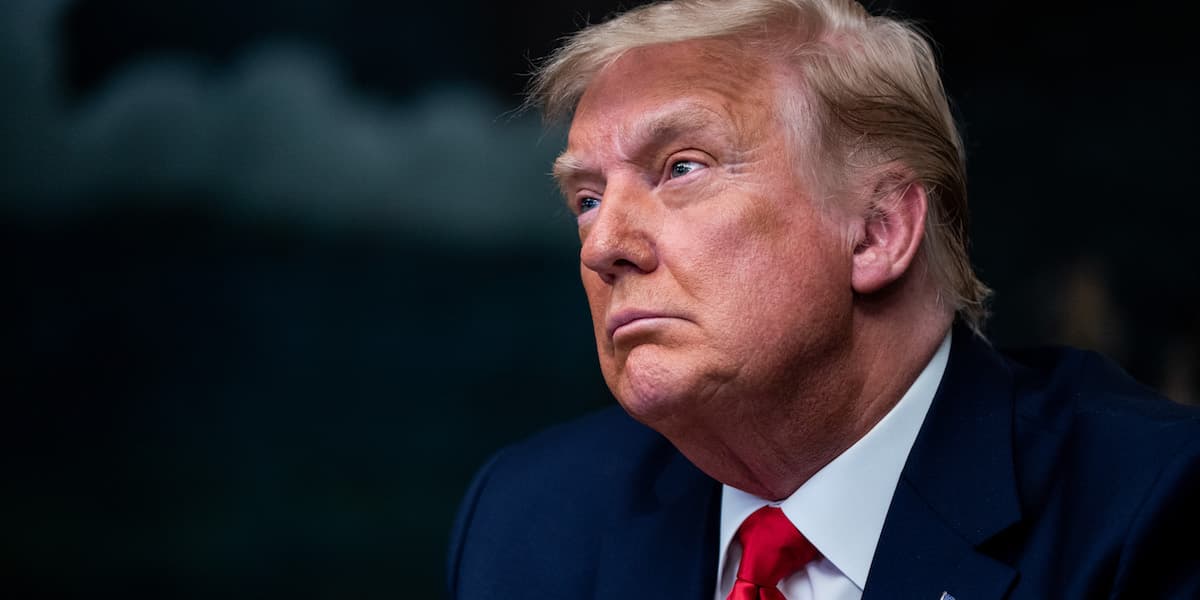
Here's what you need to know.
Following the riots at the US Capitol building last week, many members of Congress and the public called for US President Donald Trump to be removed from office due to his role in inciting the violence.
Some members of Congress suggested invoking the 25th Amendment of the US Constitution or impeaching Trump for the second time.
"You're on the wrong side."
— Bloomberg Quicktake (@Quicktake) January 6, 2021
Protesters chanted at police as hundreds pushed against barricades outside the Capitol in Washington, D.C. pic.twitter.com/dWxv0duuDe
On Tuesday morning, the democratic party formally introduced their resolution to impeach Trump, charging him with "incitement of insurrection" for his role in last week's riots.
So, could Trump actually be impeached?
As the current US government stands, the House of Representatives is controlled by the democratic party who are expected to hold a vote on the matter as early as Wednesday.
Considering Trump is the leader of the Republican Party, it is very likely that the House of Representatives will vote to remove him. The Senate, however, is controlled by the Republican Party, so it will be up to them as to whether they want to convict him or not.
1) The Hitchhiker's Guide to a 2nd impeachment of President Trump: The House can impeach someone twice. And the Senate can even launch an impeachment trial after the President vacates his office.
— Chad Pergram (@ChadPergram) January 11, 2021
When we refer to the Senate or House of Representatives being ‘controlled’, it means that there are more members of Congress from one party than another. This means that the majority of votes for a bill will likely be from the controlling party, even though other members of Congress from opposing parties also make up the vote.
The last time Trump was impeached back in 2019, the Republican Party controlled Senate voted not to convict him and he remained as the current sitting US president.
This time, the result of a potential impeachment is up in the air because, according to CNN, many Republican Party members have anonymously supported the suggestions to remove Trump from office.
How exactly does this article of impeachment from the democrats work?
Impeachment is the process by which a legislative body levels charges against a government official. Essentially, it’s the way of charging a government official with a high crime or misdemeanour.
We have an article on exactly what an impeachment is and how it works here if you need a refresher.
The impeachment process differs this time because the crime Trump is being accused of is different.
The bill of impeachment in question states that Trump faces a solitary charge of "incitement of insurrection." This essentially means he is charged with inciting and encouraging the violence that occurred at the Capitol.
Here is the article of impeachment I just introduced, along with 213 colleagues, against President Trump for Incitement of Insurrection.
— David Cicilline (@davidcicilline) January 11, 2021
Most important of all, I can report that we now have the votes to impeach. pic.twitter.com/RaJIjzQSvm
"President Trump gravely endangered the security of the United States and its institutions of Government," reads the four-page bill.
"He threatened the integrity of the democratic system, interfered with the peaceful transition of power, and imperilled a coordinate branch of Government.
"He thereby betrayed his trust as President, to the manifest injury of the people of the United States."
"He will remain a threat to national security, democracy, and the Constitution if allowed to remain in office," reads the bill.
With somewhere between 213–215 members of Congress already in support of impeachment, it is looking very likely that the bill of impeachment will make its way through the House of Representatives.
BOOM: We already have 215 US Reps who will vote to impeach. Raise your hand if you support impeachment.
— Scott Dworkin (@funder) January 11, 2021
Please share this link far and wide.
https://t.co/hAZp8JsJmo
Right, so what would impeachment mean for Trump?
Impeachment of Trump will mean a lot of things, both for the US government and for Trump himself.
Firstly, the decision would make history. If the bill makes its way through the House of Representatives, Trump will be the first US president to be impeached twice, although this could mean nothing if he is not convicted by the Senate.
Secondly, if he is convicted, he will also become the first US president in history to be removed from office via impeachment.
The likelihood of all of this is very mixed. While Trump could be convicted by both the House of Representatives and the Senate, there is no telling as to whether or not both could get everything finished before 20 January when Joe Biden—the US President Elect—is sworn into office.
Outside of just being impeached, the result of this bill could have future consequences on Trump's plans to run for office again.
If Trump isn’t convicted and the impeachment process fails, Trump can still run for office again in 2024, which is what he plans to do.
However, if he is convicted in the next few days, it is likely that he would be prevented from ever running for the presidency or even holding public office again.
Trump could also face several criminal charges after leaving office.
This is on Donald Trump, period. He called folks to D.C. and gave them marching orders. He needs to be impeached and removed immediately.
— Rashida Tlaib (@RashidaTlaib) January 6, 2021
Is a self-pardon option for Trump still possible?
With all this talk of impeachment and the 25th Amendment, people have pointed out that it is possible for Trump to contest any ruling or attempt to give himself a self-pardon for any crimes he may be convicted of.
While it’s unclear if this option is actually on the table, some online betting agencies seem to think it could be.
Also prevents a mass pardon or a self pardon in the next two weeks.
— Charlie Board (@chaboard2) January 6, 2021
There's also a chance that even if it's not possible, Trump will attempt it anyway. If so, he would make history again by becoming the first president to attempt a self-pardon.
Back in 2018, Trump claimed that it was his "absolute right" to pardon himself, even if he has done nothing wrong.
For now, we will just have to wait and see what happens in Congress over the next few days.
Header Image: Pool via Getty Images
Topics
Ref: 4b700810-ea8e-4896-93b8-acae00764c07



Most Popular



Comments & Feedback
Share your opinion
Emoji cheatsheet Formatting Comment guidelines
thank u for making this article. now I understand. thank u.