What to Do, Or Not to Do, About the Ukraine Crisis

If you're feeling overwhelmed.
You might have just been doomscrolling your way through endless news pieces on the Ukraine crisis to arrive here, at this article.
Live updates, opinion pieces and calls to action are everywhere, and as a young person with the future of the world in your sights, you may feel compelled to do something.
But you can be forgiven for also being completely overwhelmed by everything, including the ongoing pandemic. It’s a lot, and it may not be clear what to do.
We’ve compiled a list of action points for you, whether it’s to help you feel involved, or to relieve your mental stress. There’s no right or wrong way to go about living through the geopolitics of our time. These are some suggestions, but do what works for you.
Set limits on your social media and phone usage.
It is possible to stay informed, to not feel ignorant, and keep feelings of helplessness from bubbling over. You just need to be conscious of how much time you’re looking at a war unfolding on your screen.
According to ABC Health, people exposed to more than six hours of daily coverage of a disaster are more likely to feel “vulnerable”, “despairing”, “alienated” and “sleepless”, among many other negative feelings.
View this post on Instagram
You can make use of the screen time feature on iPhone or similar apps on Android. It will send you gentle reminders if you spend more than the allocated time on a particular app.
Plus, on apps like TikTok that use an algorithm to show you more content based on what you engage with, it’s important to not get into an echo chamber of upsetting war content. You can press down on a TikTok video and press “not interested” to tell the app not to show you similar content.
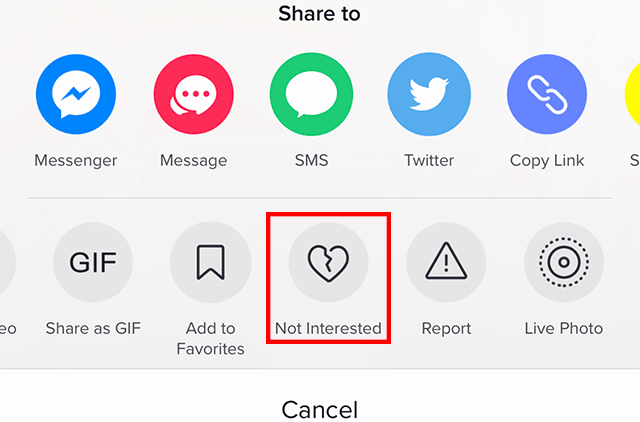 (Image credit: Adweek)
Ensure your news sources are verified.
If you do choose to stay up to date, try not to follow sensationalist news sources which can either give false, unverified information, or fear-monger.
Global Citizen has curated a list of reliable sources, including The Kyiv Independent, The New Voice of Ukraine and Kyiv Post.
And if you get your news from social media accounts, these ones are verified: @withukraine, @svidomi_eng and @ukrainiansinsolidarity. They provide updates, wrap-ups, and advice for followers to take action.
View this post on Instagram
Donate to organisations.
If you have money to spare, you can consider donating to a non-profit organisation. Their missions vary from providing relief to Ukrainian refugees, to helping victims get medical assistance.
Be wary of scams when deciding which organisation to donate to. Finder has created a fully vetted and verified list, including:
- GlobalGiving, a relief hub supporting a wide range of efforts in Ukraine.
- International Committee of the Red Cross (ICRC), assisting those in war-torn areas and enabling medical professionals and engineers to improve living conditions for Ukraine residents.
- Save the Children, supporting children in hard-to-reach war-torn areas of Ukraine.
- Ukrainian Red Cross assisting people caught in armed conflict.
Attend a peace protest.
If it is safe and accessible for you to do so, you can attend a peace protest in your area.
The nature of these protests should be non-violent, and create the sense of community you may be longing for if you’re feeling alienated.
Anti war protesters have been gathering around the world to demonstrate against Russian aggression. Thousands took to the streets on Saturday in major rallies across Europe while protests were reported as far away as Japan, Iran, Australia and the U.S. https://t.co/X3zPDG06Uc
— John FitzGerald (@TheTweetOfJohn) February 27, 2022
There’s a great website to search for peace protests all over the world. But if you’re in Australia, there’s no centralised directory for protests as yet. You can generally find them being organised in Facebook groups and on Instagram pages.
Check in with your friends and family.
If you’re feeling overwhelmed, chances are lots of people around you are, too.
You don’t have to centre your conversations on the Ukraine crisis, but simply asking how someone is feeling can be a good prompt. It will help you both feel less isolated.
The NHS recommends helping others as one of five steps to improve mental wellbeing. Even a quick “how are you?” to a co-worker at the start of your weekend shift can go a long way.
Make use of leave from school, university or work.
Taking a day off to recoup and look after your mental health is never a bad thing.
While there is no official category for “mental health leave” at workplaces, you can make use of your personal leave and visit your GP for a medical certificate if that is required.
Don’t forget that with Medicare, your GP can set up a Mental Health Plan for you on which you can claim up to 20 sessions per year with a mental health professional. You can read more about that here.
We’ve also written an article about How to Get Extra Support at Uni if You Have a Disability or Medical Condition, which applies to academic exemptions and leave for mental health issues too.
Call a free mental health service.
Sometimes you just want to chat with someone. There are plenty of helplines out there tailored to certain needs.
Beyond Blue specialises in counselling depression and anxiety. You can call 1300 22 4636, 24 hours/7 days a week. You check out this list from HealthDirect for more helplines.
Keep checking in with yourself during this unpredictable time, and never be afraid to talk about it. We're in this together.
If you or anyone you know needs help, support is available now. Call Lifeline on 131 114 or Kids Helpline on 1800 551 800 or visit headspace to find your nearest centre or to get support online.
Header image: Canva.
Topics
Ref: 506d13dc-5609-4aeb-bb4c-ae4c0062dcbb






Comments & Feedback
Share your opinion
Emoji cheatsheet Formatting Comment guidelines