What In the World Is Happening With Brexit? A Well Proper Explanation
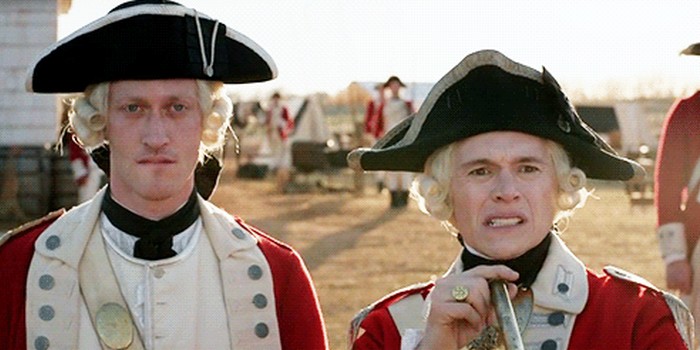
The United Kingdom has got themselves in a bit of a pickle over Brexit.
A close referendum result, a resigned Prime Minister, years of discussion and about 66 million people with confused emojis for faces. Welcome to Brexit.
It feels like the United Kingdom's exit from the European Union has been going on for a decade already, but in actual fact, it's just been dominating the daily news for about three years with no signs of slowing down.
So, how did they get to this point? To understand the mess the United Kingdom is in now, we've got to go back to the start...
The European Union.
The European Union (EU) was formed in its current state after the Maastricht Treaty was signed in 1993. However, its ideals can be traced back to the post-World War II period.
After the horrors of World War I, leaders of European nations saw the need for a unified continent to stem rising nationalism that threatened further peace.
Unfortunately, it wasn't concocted in time to stop a second world war, but by 1951, the Treaty of Paris was created. Due to the coal and steel trade agreements the deal forged, another war between Western European countries was unimaginable. Eight years later, the Treaty of Rome was established, making trade and movement between member states even easier.
The United Kingdom (UK) didn't become a member of the agreement (then called the European Economic Community) until 1973, and when it was donned the "European Union" in 1993, the UK followed suit (while resisting a currency change to the Euro).
It was all (mostly) fine and dandy until the 2010s, when a certain type of movement started rearing its head...
The Brexit Movement.
While the Brexit movement didn't just pop up out of nowhere, it certainly gained steam in the past decade. For instance, the United Kingdom Independence Party (UKIP for short) was formed in the '90s but started to receive considerable votes in 2000s.
Similar to President Donald Trump's campaign in the United States, UKIP and its leader at the time, Nigel Farage, argued (primarily) to the White British population that the EU was to be blamed for rising immigration and multiculturalism.
UKIP won the third highest amount of votes in the 2015 general election and paved the way for a referendum on whether the UK should leave the EU and forge their own way ahead.
In 2016, the UK's population decided whether they wanted to 'leave' or 'remain'. The 'leaves' won with 51.9 per cent of the vote (about 17.4 million) while the 'remains' only had 48.1 per cent (about 16.1 million).
London, most of Scotland and Northern Ireland were firmly in the 'remain' camp while the 'leaves' dominated much of rural England.
Having campaigned for 'remain', the Prime Minister at the time, David Cameron, stepped down from his role and paved the way for the current PM, Theresa May.
So, what's happening now?
Theresa May's government has until 29 March 2019 to negotiate the terms of the UK's withdrawal from the EU.
In January 2019, May took a deal to parliament. It negotiated the fee for the UK to leave the EU (£39 billion or about $AUD70 billion), how it would limit the trade and transport hassles concerning the border between Northern Ireland (part of the UK) and Ireland (part of the EU) as well as a bunch of other important logistical decisions. (The BBC has provided a more in-depth overview of the draft agreement, if you want to look into it further.)
Ultimately, however, the deal was overwhelmingly rejected by the British parliament, making it the largest defeat in modern history for a UK government.

On 13 March (12 March in the UK), May reintroduced an amended Brexit plan to British parliament, which was again rejected. Now, another two votes will take place as time dwindles ahead of the 29 March deadline.
The first will be on whether or not the UK should leave the EU without a plan, referred to as the 'No Deal' exit. While no one can really be certain what will happen if the UK leaves the EU without any deals in place, most people agree that this is not a good idea.
If that fails i.e. the majority vote against 'No Deal', another vote will occur asking MPs whether the Brexit cut-off date of 29 March should be delayed.
The real question, however, is this: Will the EU give them an extension on that 29 March deadline? Some, like spokesman for European Council president Donald Tusk, have suggested this might happen if the UK requests one (and soon!) but Tusk cautioned that EU countries would require "a credible justification" from the UK.
Given there are so many ways that Brexit can move forward (or be left behind), it's a bit tough to grasp without a few handy visualisations. Thankfully for you (and us), the BBC has broken it down into more digestible flow charts of all the potential outcomes and what they could result in.
What does it mean for Australia?
Like most countries around the world, Australia is sitting and waiting to see how this dumpster fire is finally extinguished.

While the UK government has shown they have intentions to overhaul the immigration system in new policy papers released in December 2018, it's still unclear how Australians will be affected.
DFAT has set up a page with the basic questions to tide you over, but until the UK government makes a decision, a lot of things are up in the air.
Only time will tell what the future holds for the UK and everyone affected by their decisions. Let's just hope it's not too much more time.

Update (13/3): This article was originally published on 16 January 2019 but has been updated to reflect the events of 13 March.
Header Image: AMC
Topics
Ref: e0cd476d-5ffa-493c-a5ab-a9d700184d75




Comments & Feedback
Share your opinion
Emoji cheatsheet Formatting Comment guidelines