Lost In The Eggs Aisle? Here’s What ‘Free-Range’ Actually Means
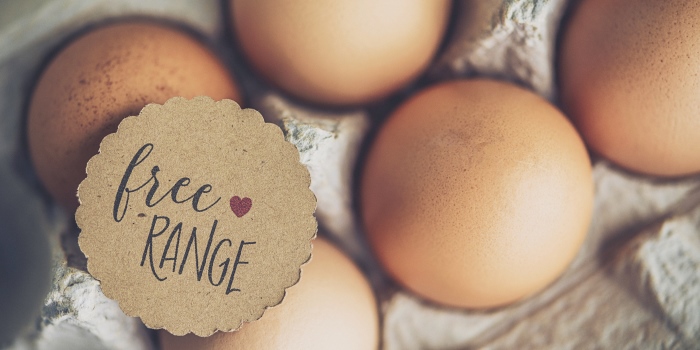
Wondering what ‘free range’ really means? Let’s break it down.
Snowdale Holdings is an Australian egg producer that has recently been found guilty of misleading the public after claiming ‘free-range status’ when it’s chooks were anything but. For a company that hosts multiple major brands such as Mega Free Range Eggs, Swan Valley Egg Co., and Free Range Eggs by Ella, you have to wonder how they got away with it for so long.
First, let’s talk eggs people. Now, everyone goes through the whole ‘what’s the difference’ issue when we’re standing, staring at the various kinds of eggs in the shops. We’ve got regular eggs, cage-free eggs, free-range, omega-3 rich… the list goes on.
While most of them are pretty straight-forward, the term ‘free-range’ isn’t as graceful as it sounds. The hens aren’t allowed to just roam free in grassy green fields and pop eggs out whenever they please. It just means they get some exposure to the outdoors. (If you're looking for those kinds of eggs, you need to keep an eye out for 'pasture-raised' labels.)
The chickens used for regular egg farming, on the other hand, are put in cages with their wings and legs clipped, and don’t get access to the outdoors – or, often, sunlight. So, even though free-range isn’t as wonderful as it looks on the packages, it’s honestly a lot kinder to chickens than the process for regular eggs.
However, as Snowdale Holdings have learned, smacking on a label saying ‘free-range’ doesn’t make it so. Derodi and Holland Farms were found to have similarly manipulated their customers by telling them to “taste freedom” even though their hens, in one instance, had been kept in cages for more than 200 days. (It seems to be a bit of trend, huh?)
Snowdale allegedly exceeded CSIRO’s animal welfare guidelines between 2011 and 2013, keeping more than 100 times the recommended 1,500 hens per hectare. The Model Code of Practice says that only farms adhering to that number should classify their eggs as 'free-range'.
The company is considering an appeal, but for now, consumers aren’t happy, particularly those who have unintentionally paid for and supported the company’s treatment of ‘free-range’ chickens.
Wondering what you can do to avoid being ripped off in the future?
Well, you can see if your eggs are actually free-range through Choice. There, you can see the price of the brand, where it’s stocked, and whether or not it is truly free-range, preventing you from potentially funding companies whose ethics may not match your own.
Bianca Welsh-Jayne is one of Student Edge’s student contributors. Learn more about the contributors program.Photo: iStock.
Topics
Ref: fd51c2ee-9188-43ab-94b9-a61300379622

Most Popular


Comments & Feedback
Share your opinion
Emoji cheatsheet Formatting Comment guidelines
Free range means the chickens only have 1 square metre each, it is still overcrowded.