Virgin Australia Has Gone Into Voluntary Administration, But What Does That Mean?
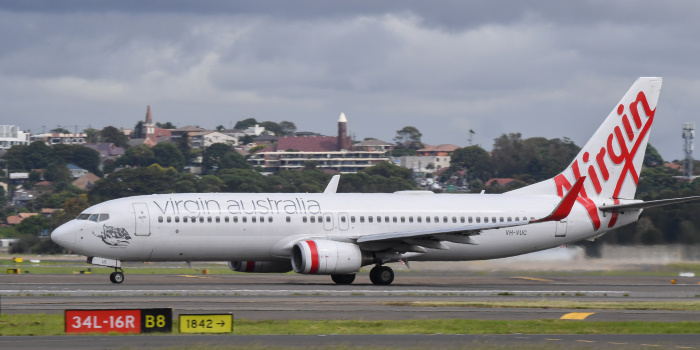
Here’s what you need to know.
The coronavirus pandemic has had a devastating impact on businesses in Australia, resulting in thousands of workers losing their jobs. With travel restrictions being implemented across the globe to prevent the spread of COVID-19, the aviation sector in particular has been badly affected.
Earlier today, it was announced that Virgin Australia has officially gone into voluntary administration, putting around 16,000 jobs in doubt. Additionally, it raises questions about whether Australia will have a domestic airline monopoly controlled by Qantas.
While you’ve probably heard about it in the news today, you might be wondering what voluntary administration actually means.
So, let’s break it down.

What is voluntary administration?
Basically, it’s a term that’s used when directors realise their company is in danger of going broke. In Australia, it’s against the law for company directors to keep trading when they know the company cannot meet its debts.
In this situation, Virgin Australia decided to go into voluntary administration after being $4.8 billion in debt and failing to secure a loan from the federal government to help them out.
Companies who go into voluntary administration can appoint insolvency practitioners to act as administrators, who will assess all the options available and generate the best outcome for the company's owner. In this case, that'd be the airline's shareholders.
Virgin Australia has appointed administrators at Deloitte to oversee the airline.
Why didn’t Virgin Australia sort their debt out?
As reported by the Sydney Morning Herald, the airline was struggling financially even before the coronavirus pandemic, with close to $5 billion in debts. The introduction of COVID-19 travel restrictions was simply the final straw.
Virgin tried to ask the government for help, pleading for a $1.4 billion loan. On Monday, Virgin’s chief executive Paul Scurrah revealed they’d reduced their request to $200 million. However, this was rejected.
Therefore, the airline had no choice but to go into voluntary administration. People on Twitter have been posting the hashtag #SaveVirgin to encourage the government to give Virgin the help it requires.
The government needs to #SaveVirgin and protect 16,000 people's jobs.
— Claire Boland (@ClaireLBoland) April 21, 2020
We can't allow 16,000 families to lose an income. We cant allow our aviation industry to be monopolized by just one company.
Do the right thing @ScottMorrisonMP. pic.twitter.com/M56S0p0FK3
Mr Scurrah said in a statement, "Our board made a very courageous decision last night to put the company into voluntary administration and do so quickly, with the intent of working with our administrator, Deloitte, to come through and be as strong as we possibly can on the other side of this crisis."
How will it impact employees?
While around 16,000 jobs are in limbo, Mr Scurrah has said there won’t be any redundancies and all employees will keep their jobs during the period of administration.
In saying that, Virgin had already stood down about 80 per cent of its direct workforce and announced 1,000 redundancies in the past few weeks. These employees will receive $1,500 per fortnight through the JobKeeper scheme, and employee entitlements such as holiday pay, long service leave and redundancy provisions have been preserved.
At this stage, it’s not clear what will happen to Virgin’s employees after the company has been recapitalised and has new owners.
Does this mean airfare prices will go up?
It’s definitely possible. Although, it largely depends on who buys the airline and how much they want to compete with Qantas.
For those who had already booked tickets, Mr Scurrah clarified that Virgin’s plan is to keep operating its scheduled international and domestic flights.
You also don’t need to worry about your frequent flyer points at the moment, as Velocity Frequent Flyer is a separate company. If you're a Velocity member, you'll be blocked from redeeming your points for at least four weeks, but you'll still be able to earn them. Instead, you will just have to wait to use them until the airline is back on track.
Virgin Group founder Sir Richard Branson has addressed the airline’s decision on social media.
"This is not the end of Virgin Australia, but I believe a new beginning. I promise that we will work day and night to turn this into reality," he said.
Header Image: James D. Morgan / Contributor / Getty Images News via Getty Images
Topics
Ref: 987147d0-b779-4329-afd6-aba4008335b9




Comments & Feedback
Share your opinion
Emoji cheatsheet Formatting Comment guidelines