Video Games Bring People Together: Here's How You Can Make a Career Out of Them

If it weren’t for technology, we’d all be feeling overwhelmingly isolated.
This post is presented in partnership with AIE.
With the coronavirus pandemic forcing people across the globe into self-isolation, we have found ourselves using technology more than ever. Seeing our family and friends in-person has been replaced by virtual catch-ups and playing video games with each other online. In fact, if it weren’t for technology, we’d all be feeling overwhelmingly isolated right about now.
It is pretty fascinating, especially considering the long-running belief that people who play video games are anti-social. However, the coronavirus pandemic has shown us that this stereotype is far from the truth. In reality, gaming really has the power to bring people together during unpredictable times.

If you’ve been spending your days in isolation smashing your opponents in Call of Duty: Warzone or downloading all the free PlayStation 4 games you can find, you might be interested in studying towards a career in video games or virtual reality (VR). Not only would that give you the chance to design your own epic games for people to play, but you’d also be helping others stay connected.
However, you might be wondering: What would working in the gaming world actually be like?
Well, it depends what area of the industry you’re entering into. Given the fast-paced nature of gaming, it’s likely you’ll never have a typical working day.
Generally speaking, the work of a game designer usually involves coming up with new and exciting game ideas, along with developing plots, storylines and characters. Game designers are also responsible for developing maps, scenarios and setting levels of difficulty. The Academy of Interactive Entertainment (AIE) offers a bunch of courses in game design and production. If you really want to get stuck into the nuts and bolts of the game, they also run a game programming course to give you the skills you need. You could even head along to AIE's Open Day to find out more about what studying gaming is like, and hear from past students who now work in the industry.
On the other hand, you might be more drawn towards becoming a game artist. Game artists design, create and implement characters and weapons along with game special effects like explosions, fires and weapon attacks. They work closely with programmers and designers to ensure the effects enhance the overall game experience. You could contemplate doing a course in game art and animation to get you started.
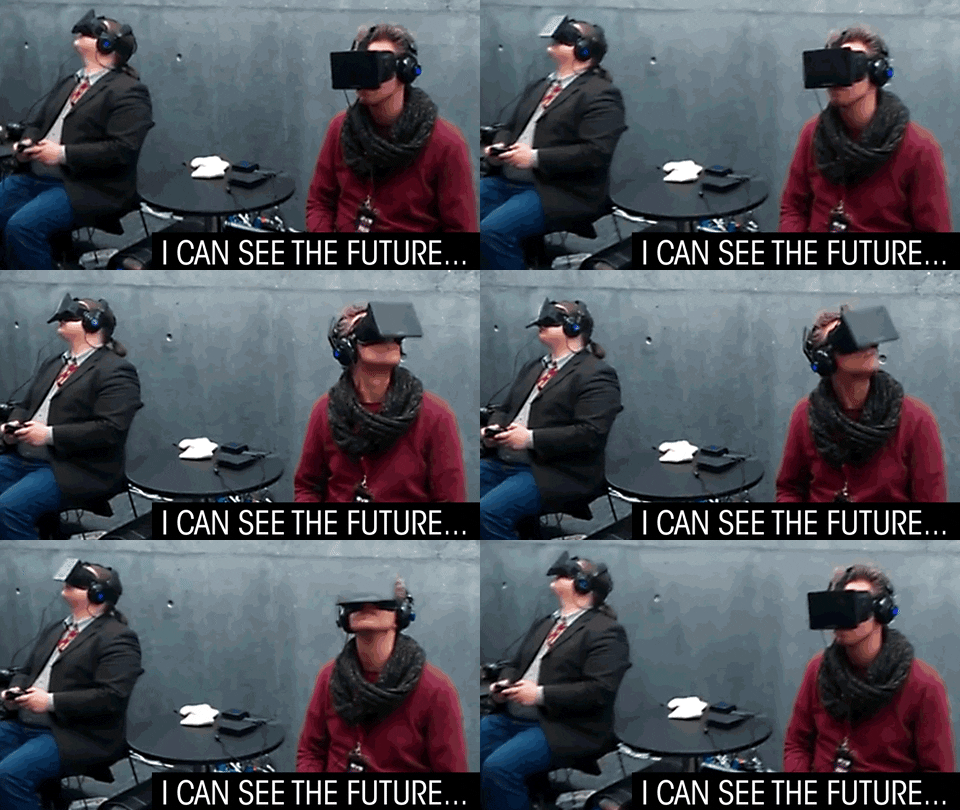
Otherwise, you could be keen to start a career in VR, enabling people to view artificial worlds through head-mounted displays or smartphone-based displays. Games like No Man's Sky have already incorporated VR by allowing players to use their PSVR headset to play the game. Considering it’s an industry that’s growing at a rapid pace, you could pave your way to becoming a user interface designer, 3D content creator or creative technologist.
Plus, perhaps VR will be used for socially-distant catch-ups in the near future. The possibilities are endless.
Any of these jobs in game development or VR would be both stimulating and challenging. Of course, you’d be spending a significant amount of time working on creating the next best game. But in saying that, these occupations go beyond simply designing Red Dead Redemption 2 (which AIE students have worked on) or developing the VFX for Crash Team Racing Nitro-Fueled (although, that would be very cool).
By undertaking a career in gaming, you’re providing a platform for players to feel more socially engaged. Since COVID-19 has disrupted life as we know it, video games that focus on connection and creating relationships have skyrocketed in popularity. For example, Nintendo’s Animal Crossing: New Horizons has become a pop culture sensation while people across the globe practice social distancing. Being able to visit your friend’s island without any stress or responsibility is exactly what some people need right now.
Additionally, many video games encourage people to use problem-solving skills by going on quests and solving mysteries. As a matter of fact, as The Conversation points out, the games you make could even inspire fellow young people to tackle careers in maths, science or gaming themselves.
So, the next time a family member tells you video games aren’t important, you know what to say.

Header Image: Milan_Jovic / E+ via Getty Images
Topics
Ref: 30983932-5d09-46a5-95d2-abae0019c71c






Comments & Feedback
Share your opinion
Emoji cheatsheet Formatting Comment guidelines