Why the Australian Government’s New Vaccine Ad Misses the Mark
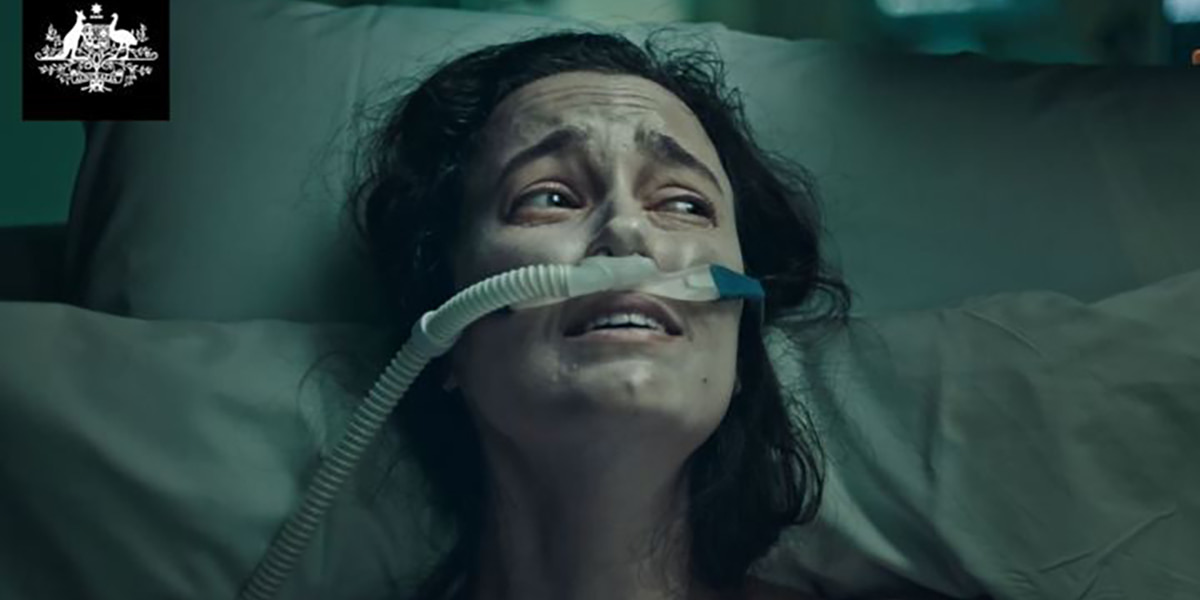
It’s aimed at young people, but most young Aussies can’t get vaccinated yet.
On Sunday, the federal government released a new confronting television advertisement to try and encourage people to get a COVID vaccine ASAP.
However, shortly after the ad was shared on Twitter, it received a lot of backlash for being too confronting, out of touch, and missing the point of the vaccine rollout problems that we have here in Australia.
To make a long story short, it’s targeted towards young Aussies—particularly people under 40. Except, most young people can’t get vaccinated yet or only have access to the AstraZeneca vaccine, which is not recommended for under 40s by major health bodies.
So, to help you understand why young Aussies are so miffed about this ad, we’re going to break it down.
Trigger Warning: this video contains images of illness and hyperventilation.
It puts the responsibility on young Aussies.
It would be an understatement to say that the Aussie government has had a rough time getting awareness and advocacy advertisements right (let’s not forget about the milkshake consent video).
The backlash from this latest advertisement flooded in quickly, with one of the major problems highlighted being its target audience: young people.
From watching the ad, it's fair to guess that the woman in the video is likely in her 20s or 30s.
At the end of the clip, the text “COVID-19 can affect anyone” takes centre screen, promoting the message that young people need to get vaccinated because the virus can impact them too.
However, the responsibility for vaccination shouldn’t just be put on young people, especially since they’re the group finding it the hardest to get vaccinated at all.
I’m a #jabseeker. I want one, but can’t get one. Retweet if you’re sick of the government’s blame game because you don’t need an advertising campaign, you need a vaccine.
— Dominic💧🌱💚 (@domnixon1984) July 11, 2021
In fact, it’s everyone’s responsibility to get vaccinated, and reports show that a lot of older Australians are the ones more likely to hold off on getting it.
It undermines the problems with Australia's vaccine rollout.
Due to the ad's target audience, it fails to acknowledge why so few Australians are vaccinated.
In fact, heaps of young Aussies got the AstraZeneca jab on day one of it being available to them.
Australia’s COVID vaccine rollout has been under major scrutiny over the last few weeks, not just on home soil, but by other countries noting that we’ve had one of the worst rollouts in the world.
As of writing this article, only 8.9 per cent of the country is vaccinated and many politicians, the media and the general public have criticised how chaotic the current rollout has been.
Essentially, the main reasons why we’re having such a hard time getting Aussies vaccinated is because the government didn't buy enough of the Pfizer vaccine, failed to buy and approve the Moderna vaccine early enough (it’s still pending TGA approval), and there have been major health concerns surrounding the AstraZeneca vaccine, causing widespread public apprehension.
On top of this, last month Prime Minister Scott Morrison announced that anyone under the age of 40 (and over 16) wanting to get the AstraZeneca vaccine can do so.
This came because late last month, half the states in Australia went into another series of lockdowns (or increased restrictions), so now more than ever, the need to get people vaccinated has never been so important.
However, most health advice recommends that people under 40 should not get the AstraZeneca vaccine unless they are in “pressing” circumstances. This is due to the link between recipients of the vaccine and rare blood clotting issues. Though it is a concern, Australia’s Chief Medical Officer Paul Kelly said the side-effect is rare.
On Tuesday morning, Lieutenant General John Frewen told reporters that Aussies under 40 (and over 16) could get access to both the Pfizer and the Moderna vaccines around “September to October.”
So, it begs a major question: why are young people being targeted in graphic messages when two out of the three vaccine options in Australia aren’t even available to them yet, and won’t be for months?
It’s graphic and potentially triggering.
Another of the problems with the ad surround its graphic images.
If you’re not keen on watching it yourself, the ad shows a close up shot of a young, dishevelled-looking woman, hooked up to a ventilator in hospital. The video is also edited to look bleak, dark and grey toned to reinforce a feeling of danger.
The woman in the video is seen struggling to breathe and hyperventilating, with a pained and fearful look on her face. The sound of her breathing continues even after the video cuts to a black screen and text.
While the video does start with a viewer discretionary warning, some young people online have pointed out that the video only causes anxiety and doesn’t help spread a message of urgency.
Mr Kelly said the advertisement was meant to be graphic and has been commissioned due to the ongoing outbreak in Sydney.
"We are only doing this because of the situation in Sydney and it will be running in Sydney," he told reporters on Sunday.
"It is quite graphic, and it is meant to be graphic—it is meant to really push that message home."
The fear-inducing style of the ad is being compared to similar advertisements during the fight against AIDS in the '80s and '90s. However, this comparison is also being met with controversy as the ads from this time also received large public backlash.
Before folks go around singing the praises of the 80s AIDS campaign (i.e. the Grim Reaper ad) remember that those scare tactics resulted in stigma against gay and bi men that continue today. #PublicHealth #DoBetter
— C Moore (they/them) (@mxcmoore) July 11, 2021
"We were the best in the world in the campaign against AIDS, we've done [campaigns against] drink-driving very well, but after 18 months if this is the best they can do, they need to go back to the drawing board," Labor leader Anthony Albanese said.
It’s being compared to other countries campaigns.
The reaction to the ad also pointed out the stark contrast between Australia’s vaccine advertisement style and other countries quirky campaigns like New Zealand and Singapore.
Both countries have gone for uplifting, fun and encouraging messages, imagery and sound, which many people praised when they were initially released.
It’s worth noting that along with the ventilator ad, the government also released a more PG campaign called “Arm yourself against COVID-19.”
This push is aimed to boost vax rates and remove concerns about hesitancy, complacency and confusion to larger and more diverse groups.
Lieutenant General Frewen, said the campaign will eventually be adapted to meet more language groups.
"The Arm Yourself campaign seeks to rally Australians to both arm themselves and to arm their friends, loved ones and communities against COVID-19 through vaccination," he said.
"The materials will be adapted for culturally diverse groups and for Indigenous communities and they will be translated into many languages, and we will continue to adapt the products as we go through the rollout through this year."
Though the current COVID-19 vaccine rollout and the campaigns encouraging them haven't gone exactly as planned, fingers crossed that soon all Aussies—young and old—will be on a faster track to full vaccination throughout communities and that we can return to normal life soon.
This is so messed up. Why would you use a young person in your scary ad warning them they could get seriously ill with COVID when young people currently can’t get vaccinated because your own government has monumentally botched the vaccine rollout? What an absolute shambles. https://t.co/rhUhCB5VeZ
— Jill Stark (@jillastark) July 11, 2021
Header Image: The Australian Government
Topics
Ref: 7ab84089-b9ad-47f9-87e9-ad630071eb15



Comments & Feedback
Share your opinion
Emoji cheatsheet Formatting Comment guidelines