TEDnesday Talks: "The Surprising Science Of Happiness"
When does our body's "psychological immune system" kick in?
At Student Edge, we like to keep ourselves up to date with all the latest innovative ideas in the world of technology, education and design. We also love puns. So, over Wednesday lunch, we watch TED talks. Thus: TEDnesday.
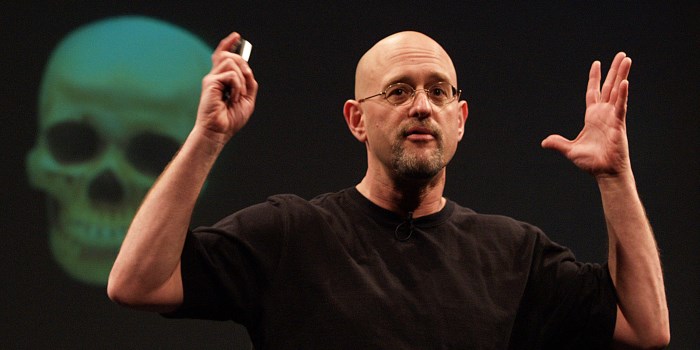
This week, we watched Harvard psychologist Dan Gilbert speak about how our brain has developed over evolutionary time to take care of itself. (This was recorded in February of 2004.)
Check it out!
Let's talk, TED.
Phew... okay, so, this one's a little more in-depth than when we looked at making tiny robots but let's see if we can break it down a bit.
Dan begins by explaining how our brains have evolved to be able to predict and simulate the outcomes of our decisions. However, our brains show bias and we often predict that consequences will be better/ worse than they actually are. This is because no matter the scale of the circumstance that befalls us, it is unlikely to increase or decrease our happiness levels in the long-term. This is because our body's "psychological immune system" kicks in and realigns our happiness levels.
He explains (citing some fancy experiments) that happiness can be synthesised and we can convince ourselves that we are happy even when things don't work out as we'd planned. What's important though is that this happiness is just as real as the happiness that we get as a result of success or luck.
There's a lot to digest there but Dan leaves us with an important lesson to understand:
The freedom to change our minds is the "enemy of synthetic happiness". If we make our decisions and stick with them, we will like our chosen path more than if we leave our options open and change our minds later. Once we make a decision and commit to it, we will become happier about that decision.
"It's the difference between dating and marriage," he argues. "You go out on a date with a guy and he picks his nose, you don't go out on another date. You're married to a guy and he picks his nose... welllllll, he has a heart of gold, don't touch the fruitcake." Our happiness levels will adjust to the circumstance.
This is an interesting insight because it's contradictory to what we are always told, especially when it comes to big life choices; whether its deciding on a study path, choosing a career, deciding whether or not to have kids... the lesson at the heart of this though is not to limit your options, but that happiness is not out there somewhere to be found; rather, it exists in any circumstance, waiting for you to create it.
When have you made the most out of bad situation and synthesised happiness for yourself? How might our education system look if we provided students with less choices and would people be happier?
(FYI, you can read Gilbert's 'ten years later' reflection on "The Surprising Science Of Happiness" here.)
Photo: TED.
Topics
Ref: 5a5b7fb8-ae50-47fc-b6a2-a61e00ffc615




Comments & Feedback
Share your opinion
Emoji cheatsheet Formatting Comment guidelines