TEDnesday Talks: "10 Myths About Psychology, Debunked"
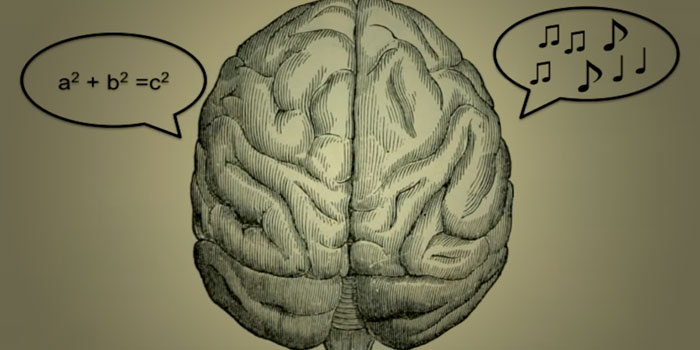
Ready to have your mind blown? Or perhaps, are you ready to have your understanding of the mind blown?
At Student Edge, we like to keep ourselves up to date with all the latest innovative ideas in the world of technology, education and design. We also love puns. So, over Wednesday lunch, we watch TED talks. Thus: TEDnesday. This week, we watched psychology lecturer Ben Ambridge speak about ten myths of psychology. (This video was published in February of 2015.)Check it out!
Let's talk, TED.
Ambridge runs through ten myths of psychology here quickly (and with the occasional bit of slightly awkward humour). Regarding each, he discusses some of the arguments for and against, how some of these myths may have come to be and what "grains of truth" may be found among the misinterpreted findings.
Ambridge concludes with what he sees as the overarching "myth of psychology"; or, at least, the myth in how most people perceive psychology as "just a collection of interesting theories, all of which say something useful and all of which have something to offer." His hope is that by debunking some of psychology's myths, he will show how progress can only be made by questioning existing knowledge and through rigorous experimental testing.
(Conversation in the Student Edge office around "all theories having something to offer" quickly went off on a tangent. If Mozart, a popular musical icon of his day, is played to children to increase their intelligence, will mothers in another 250 years be playing Justin Bieber to their children? A terrifying thought.)
Ambridge gives us all an entertaining reminder of one of the main tenets of science, particularly the fact that science is by no means infallible. At the forefront of scientific discovery, mistakes and inaccurate assumptions are bound to be made. The important takeaway is that science is constantly reassessing itself, always trying to disprove itself, using rigorous testing and peer-review to distil the truth. Psychology in particular is bound to have a few misses on its earlier attempts. It's one of our more recent scientific fields and is so complex that it often has to be researched through different and sometimes conflicting lenses; the psychoanalytical, the biological and evolutionary, the cognitive, the behavioural and the social. It is of course being tasked with understanding the most complex object in the known universe, the human brain. No small potatoes.
The notion of scientific truth will always be subject to further distillation and reanalysis and it's up to us as a society as to how we treat its findings. As a psychology student myself, the interpretation and communication of this knowledge - particularly as it relates to human thought and behaviour - is something that really excites me. Our understanding of how we think, feel and behave has huge implications for ethics and how we could or should treat each other as human beings.
How does your understanding of how people learn, think, feel and behave affect how you treat them? Share your thoughts below!
Photo: TED / YouTube.Topics
Ref: b7d7f4d1-7a1b-4668-bf34-a5e50024ea9a






Comments & Feedback
Share your opinion
Emoji cheatsheet Formatting Comment guidelines