TEDnesday Talks: "Inside The Mind Of A Master Procrastinator"
Quick, read this article now!
At Student Edge, we like to keep ourselves up to date with all the latest innovative ideas in the world of technology, education and design. We also love puns. So, over Wednesday lunch, we watch TED talks. Thus: TEDnesday.
This week, we watched the blogger behind Wait But Why, Tim Urban, speak about his journey to understand his issues with procrastination. (This was recorded in February of 2016.)
Check it out!
Let's talk, TED.
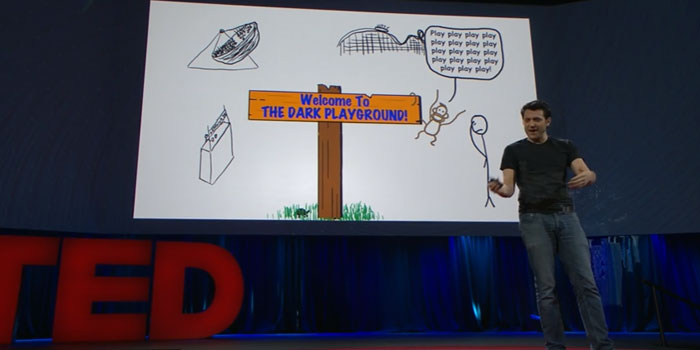
Urban takes us through his own experiences with procrastination, explaining his theories and his hypothesis around the procrastinator's different "neurological makeup". Fortunately, this difference in "neurological makeup" is only the presence (or absence) of a cute little "Instant Gratification Monkey". He goes on to explain how "the Panic Monster" is the procrastinator's mechanism for coping and "functioning" so long as deadlines are present.
His talk is hilarious and full of monkeys, but leaves us with a more serious question: If there are no deadlines, how do procrastinators cope?
(Full disclosure, I am a huge procrastinator. We watched this TED talk weeks ago and I only ended up completing this article late last night.)
When this talk was finished and we turned the lights back on in the office, the mood was one of silent excitement. Each of us had come to the realisation at some point during the presentation that not only were we all procrastinators but that the "Instant Gratification Monkey" and the "Panic Monster" were definitely a reality. Apart from finding the topic funny, it was a little confronting to have our annoying habits spoken and joked about with such insight.
However, Urban's solution ("try and stay aware of the Monkey") is something I'm not so sure about. From my psychology studies (midway through a psych degree), the closest parallel I can draw to procrastination is studies that have been conducted on grit. Grit is a measurement of your willpower, your passion, your determination and your ability to hold off on short term rewards for long term rewards. Even though the concept hasn't been around that long, grit has been shown to be a better predictor of academic performance than even IQ.
For a very cute look at how they test for grit in children, I would highly recommend the Stanford Marshmallow test:
The best idea I've come across as a means to increase your level of grit, is to build what's called a 'growth mindset'. This is the belief that your abilities and talents are not fixed and can be improved upon with effort. Here's another great TED talk on Growth Mindset by Carol Dweck.
After watching this talk, do you think you are a master procrastinator? What are your methods with coping with procrastination? Is the Instant Gratification Monkey real?
Photo: TED.
Topics
Ref: b8b60f06-4ba2-4f73-907b-a64300266e86



Most Popular



Comments & Feedback
Share your opinion
Emoji cheatsheet Formatting Comment guidelines
fascinating.
A great podcast episode about grit: http://freakonomics.com/podcast/grit/