TEDnesday Talks: "This Computer Will Grow Your Food In The Future"
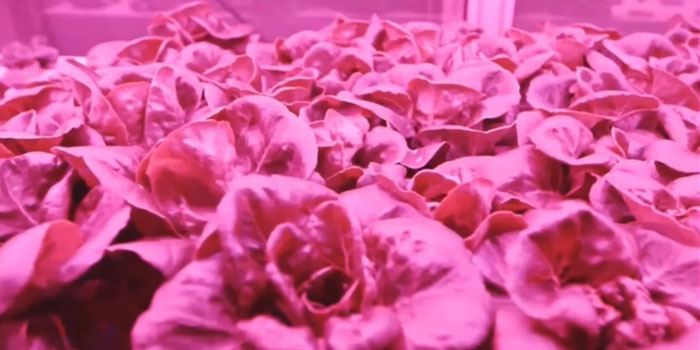
You have to see it 'tuber leaf' it.
At Student Edge, we like to keep ourselves up to date with all the latest innovative ideas in the world of technology, education and design. We also love puns. So, over Wednesday lunch, we watch TED talks. Thus: TEDnesday. This week, we watched Caleb Harper, director of the Open Agriculture Initiative at the MIT Media Lab, speak about his endeavour to create and optimise "food computers" to solve the world's food crises. (This was recorded in December of 2015).Check it out!
Lettuce talk, TED.
How can we solve the world's food problems? The list of issues is long: there's the declining nutritional quality of foods, the increasing cost of storage and transportation, the lack of youth interested in pursuing careers in agriculture, and the effects of climate change on food production, to name just a few.
Harper starts his presentation by explaining these problems that we face as a global population. He then jumps to how he created his own tiny little farm with a bunch of tech gurus; image-based processing experts, data scientists and roboticists. With this combined thinking power and a small team, Harper was able to build a shippable farm/ lab full of vegetables and sensors wherein he could control the internal climate (oxygen levels, humidity, light, et cetera). From there, with some of his undergraduate students, he was able to build smaller food computers that could be distributed to schools and allow students in biology classes to control the environment and grow their own vegetables.
This was not a presentation that we expected to be about data analysis or encouraging young people to become interested in agriculture but we were very glad that it was. What a conversation was had, and so much to cover. Is it wrong or dangerous to manipulate the environments of vegetables so closely? Possibly, but then, we've been selecting superior plants over inferior ones and breeding them in "unnatural" environments since the good old pre-agrarian days. The difference now is being able to fine-tune environmental conditions and then iterate quickly, making the process quicker and more accurate. As Harper says, we can "learn the language of plants" and help them to flourish.
The notion that all this technology and intellectual property is actually being made open source (it's free for anyone to take and use) is just amazing. I was aaaaaaalmost inspired to watch their instructions for 'how to build your own food computer' and then try and create one, but I've since convinced myself that my landlord wouldn't want me farming in my house. Regardless, this was a great talk which held some amazing potential for innovation in the field of agriculture.
Would this inspire you to get involved in agriculture? What would? Could this kind of technology have other applications? Share your thoughts!
Photo: TED / YouTube.Topics
Ref: 4904c894-4d23-442e-90f1-a5fe004248e5

Most Popular



Comments & Feedback
Share your opinion
Emoji cheatsheet Formatting Comment guidelines
We will soon be able to illegally download food
There is no food crisis. There is enough food on the Earth to feed everyone, it is the way we distribute it that is the problem.
Very true. In the rich countries people have (sometimes) more than they need!
Exactly! we jsut need to stop being selfish and be willing to not have everything we want. THEN we can go and help those in need