Susan Carland Tells Us Why It's Never Been More Important to Get a Global Studies Degree

"You can’t just be someone who spent all your life in the classroom anymore."
This post is presented in partnership with Monash University.
Dr Susan Carland knows what it takes to get into a career that’ll spark your curiosity, empower you to enact change and let you travel the world.
"I remember when I was growing up, Australia still had a bit of an insular attitude towards the world," she tells Student Edge.
"There was this expectation that everyone would learn English around the world so they could speak to us."
Things have definitely changed. That’s why organisations, employers and universities are adapting, with Monash University offering a Bachelor of Global Studies to help its students keep up.
"Global Studies wasn’t available when I was a student; it wasn’t conceptualised as a thing," she says.
"It exists because academics and experts in a range of fields say we need to be talking to each other more in coming up with more interdisciplinary, cross-disciplinary ways to solve the biggest problems facing the world. We can’t just keep doing this in our silos."
What do you actually learn in a Global Studies degree?
The Bachelor of Global Studies covers current topics on an international scale.
"Students have to do a subject every year of the degree called Leadership for Social Change, and in that subject we give the students different case studies for big global challenges the world is facing at the moment, from radicalisation and mass atrocities to the global refugee crisis," Dr. Carland says.
"How do you solve these incredibly complex issues? Like, how do we even conceptualise what solutions to these would look like? Because often students come in with pretty black and white ideas—palm oil is bad, for example—and then I’ll take my students on a two-week study tour of Borneo and we look at how incredibly complicated the palm oil issue is, and they often end up leaving saying, 'This is so much more complex than I thought,' and when they say that, I know I’ve done my job. That’s a good thing."
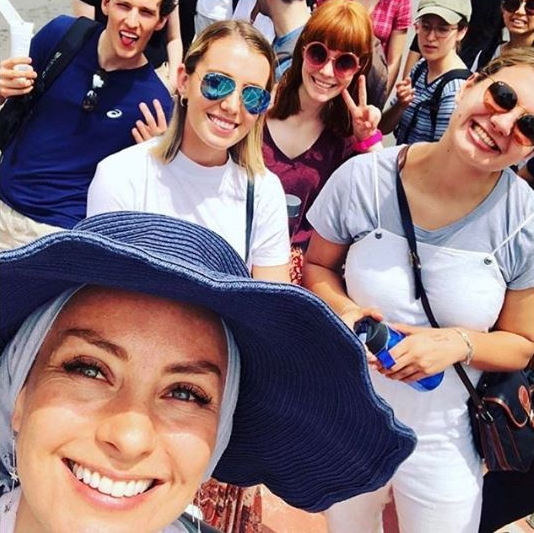
Dr Carland believes international exposure is essential for grads seeking jobs in the increasingly important fields of international relations, cultural competency and human rights issues, especially at big companies like Microsoft, Facebook and Ernst & Young.
"We do a lot of teamwork, because employers have told us one of the things they want the most from graduates and people who apply for their jobs is people who work well in a team," she says.
"We also know one of the things that employers really want is people with intercultural competence.
"You can’t just be someone who spent all your life in the classroom anymore. It’s not enough, and it’s especially not enough for curiosity either."
Why is a Global Studies degree relevant?
Let’s face it: 2020 has been one highly chaotic year. With that in mind, Global Studies has become even more relevant over the last 12 months because of the increasing threat of the coronavirus pandemic.
Just take a look at the way different countries handled COVID-19. Each country had their own way of tackling the pandemic, which certainly highlighted how complex and different countries and cultures truly are.
Countries including Australia, New Zealand, Taiwan, Singapore, South Korea, Canada, Iceland, and the UAE responded to the pandemic with science and led with fast and aggressive precautionary measures. Ultimately, this could help other countries consider their response to another potential pandemic in the future.
On top of that, the globe switched to pretty much virtual everything, reflecting the ongoing need to connect with and understand other nations and cultures.
Global cultural institutions began exhibiting in virtual formats and thought-leaders across the world started hosting huge amounts of free online webinars, leading to unprecedented access to other cultures, communities and knowledge even while we were physically prohibited from travelling.
This unabated enthusiasm for engaging with other countries shows us that throughout the coronavirus pandemic, our hunger to understand the world around us has remained the same.
Basically, it reaffirms the ongoing relevance of Global Studies in a post-COVID world!
Who’s suited for a Global Studies degree?
"These are students who are really eager to make a difference in the world," Dr Carland says.
"They’re not just interested in a standard career. They’re the people who go, 'I want to be part of fixing problems. Big global issues. I want to be part of the solution. How do I do that? I want to learn how to do that.”
"Half want to run the UN and half want to be diplomats," she adds, only semi-jokingly.
"They have different ways of wanting to solve problems and change the world. Some want to do it through the traditional NGO arm—whether that be the big things or the little independent ones; some even want to start their own—and others want to create change through the more traditional government, politics, policy wing, and they want to go in that direction, and we cater for both."
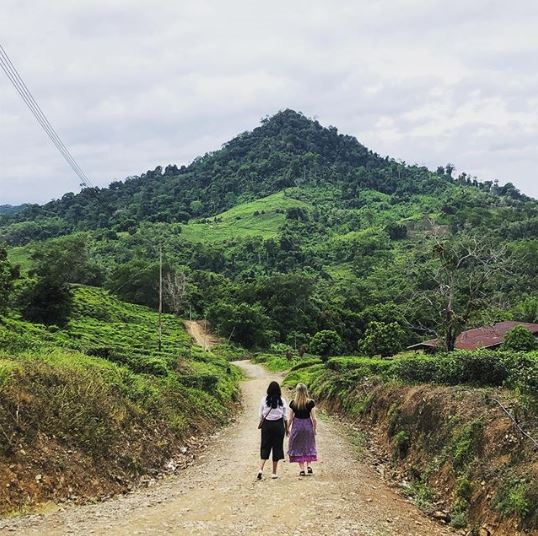
She also says anyone interested in this field needs to "focus on our Asian backyard", particularly the nations of India, China, Indonesia and Malaysia.
"These are the languages you want to be learning, these are the areas you want to be doing your work experience or internships in," she says.
"They’re so important to Australia going forward. The balance of the planet is interesting in terms of where the power lies, and Australia has a really exciting and unique opportunity to participate in that, as long as we’re looking at it in a forward thinking way."
For her part, Dr Carland says she would have studied Global Studies if it had been around when she was a student. ("I get to do the second best thing which is teach it now that I’m an adult.")
Instead, she chose a Bachelor of Arts and Science during her time at Monash University.
"That love of learning and real curiosity and fascination with learning new things started me up [at Monash] and that’s probably why I’m still there," she laughs.
Bachelor of Global Studies graduates create global change.
With a degree in Global Studies, you can pursue a huge range of diverse and interesting career pathways that’ll help you make a difference in the world.
Alumni from Monash University have gone on to study overseas, start businesses and establish fulfilling careers in ethics, finance, marketing and government policy.
Graduates can find themselves in exciting global roles, like Karla Elkington who pursued a career as an Ethical Sourcing Officer with MYER after graduating. Karla works to promote moral and sustainable conduct by businesses in the clothing and textile industries.
Monash alumni Samantha Howard has also worked to make waves in global industries. Now an international communications specialist, Samantha splits her time between her roles as a Senior Account Executive at YAP Global, a Global Content Curator for World Vision and a music and culture columnist for Beat Magazine.
One thing is for certain: By undertaking a degree in Global Studies, you’ll be able to get job-ready as you prepare to contribute to the world in a meaningful way.
Find out more about a Bachelor of Global Studies at Monash University. There’s never been a greater need to make change. Whether you want to change your life, your career, your community, or the future, it starts at Monash. Read more from Monash Arts.
Header Image: SBS
Topics
Ref: e24a06b5-3339-4c37-abb7-ab11007d0259






Comments & Feedback
Share your opinion
Emoji cheatsheet Formatting Comment guidelines