Check Out The Winners of Samsung’s Solve for Tomorrow 2024 Competition
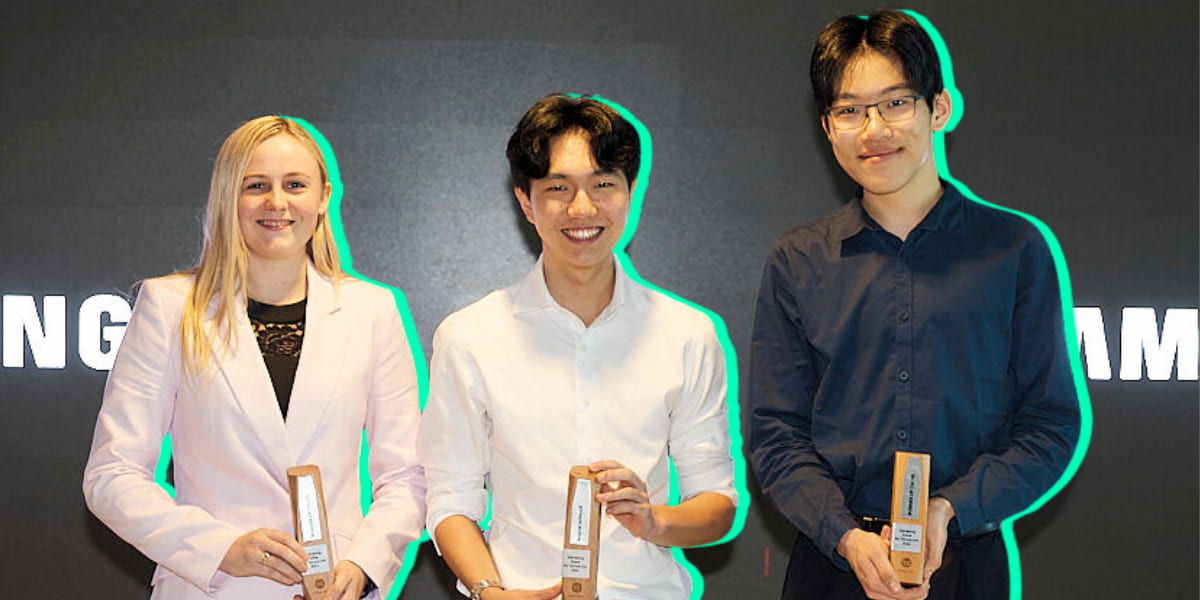
Bright ideas from bright minds 🙌
The article is in partnership with Samsung Solve for Tomorrow.
It’s the nationwide program which encourages young Australians aged 14-24 years to develop innovative solutions for real-world issues they’re passionate about.
Combining STEM skills, creativity, critical thinking and collaborative teamwork, Solve for Tomorrow is all about bringing brilliant ideas to life.
Here are the three winners of Samsung’s Solve for Tomorrow 2024 Competition.
Major Winner: Bradley Cox

Queensland-based 19-year-old Bradley took out the top prize with his start-up, Exam Insights. Created by Bradley and his co-founder Jason Zhong, they wanted to use tech to help students study for their Year 12 exams.
Combining evolving tech with education resources already available, their platform put past exam papers into easily accessible question banks, specifically for Year 12 QLD external exams.
Brad and Jason plan to expand nationally, employing state-specific teachers to provide guidance and they want to use the prize money to cover the costs of their AI that processes questions from other states.
Brad said what began as a tool to solve their own problem quickly grew into a platform designed to empower classrooms everywhere.
“Being selected as the winner of Samsung’s Solve for Tomorrow competition is an incredible honour and validation of our work and impact on students and educators alike,” he said.
“STEM is an incredible field where curiosity and creativity come together to create solutions that matter.
“To young Aussies interested in studying STEM, I say start small, learn as you go, and don’t be afraid to fail—it’s all part of the process.”
Minor Winner: Keziah Furnell

Often, women are significantly underrepresented in STEM fields across multiple areas and year levels, especially in regional and remote areas of Australia. 22-year-old Queenslander Keziah Furnell wants to help change that with her trailblazing business, STEM sisterhood.
Her mission? To make STEM more accessible and exciting for girls and women, especially those in regional areas. Thanks to her brilliant business, she’s snagged the Minor Prize in the 19-to-24 year old age bracket award.
Through interactive school holiday workshops that include building rollercoasters in engineering, making bathbobs in chemistry, solving a crime in forensics and many more - Keziah is all about diving into different STEM fields, problem solving and team collaboration, encouraging girls and women to learn more in STEM.
Her next steps are to develop a new range of workshops and expand to more regional towns while additionally connecting more female STEM experts in these areas to hold workshops where they can connect with students and share their stories.
Keziah said she wanted to tackle the issue of underrepresentation of regional and public-school female STEM students. This comes from her own experience of walking into her first engineering lecture at uni and discovered there were only 12 women out of 120 students.
“I am so grateful to be chosen as a recipient of the Samsung Solve for Tomorrow competition and would advise any young Australians interested in studying STEM to go for it – your ideas are valid and important, and anyone has the capacity to change the world.”
Minor Winner: Shuwei Guo
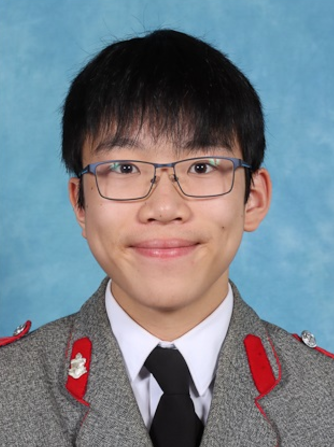
Ever wondered how AI can completely transform the way students learn?
Sydney-based 16-year-old Shuwei has thought exactly of that, coming up with a personalised education platform called Enlight. It’s a free, AI-powered short-form platform designed to make learning interesting and engaging by tailoring education to everyone’s knowledge level and learning type.
He plans to develop a mobile-first app featuring two main areas: a Discover Feed that continuously adapts to user interests and a Search/Generate tab for exploring specific subjects. The app will create personalised short-form video content through the power of AI.
His next steps are to focus on community impact and inclusivity by partnering with local schools, libraries and community centres to use the program and ensure everyone can have access.
Shuwei told Samsung “I was inspired to tackle educational inequality after seeing firsthand how limited access to quality learning resources can impact students from disadvantaged backgrounds.”
He explained how his experiences as a student taught him examples of how much personalised, engaging educational content can have a big impact in helping students reach their full potential.
Header Image: Image supplied.
Topics
Ref: be3b63c9-623e-42a8-a8ac-b24300834624






Comments & Feedback
Share your opinion
Emoji cheatsheet Formatting Comment guidelines