How Winning this STEM Competition Led to an Honours Program for Meg Phillips
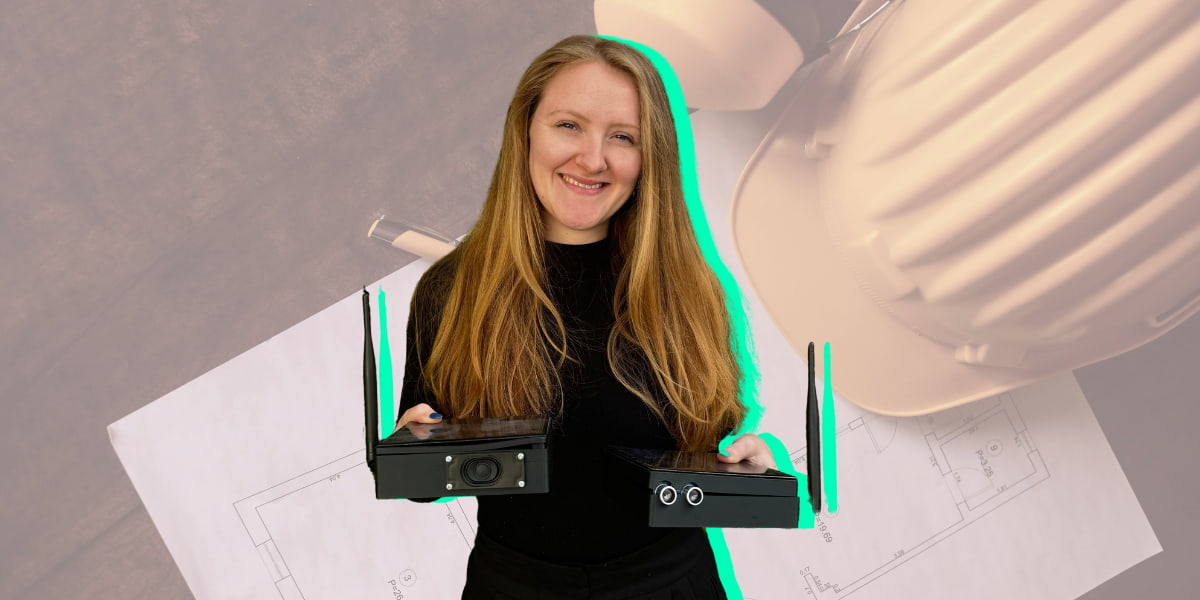
“I probably wouldn’t have ended up doing it if I hadn’t won the competition.”
This article is presented in partnership with Samsung Solve for Tomorrow.
When engineering student Meg Phillips won Samsung’s Solve for Tomorrow competition, all she had wanted was to find a way to save animals on Tassie roads.
Little did she know it would lead to her being invited to apply for Honours after her undergraduate degree.
And better yet, being offered the chance to turn her winning idea for a roadkill mitigation device, into a full-blown reality.
Since winning, she’s completed her Honours, continued testing her device and even worked on her idea with local Tasmanian councils.
She shares with us how her decision to enter the Solve for Tomorrow competition, has led her to where she is now.
Being approached to apply for Honours.

Already on cloud nine after winning Solve for Tomorrow in 2021, Meg was approached by a supervisor at the University of Tasmania who saw the potential in her idea.
“He saw an article that was written about the project and he said, ‘oh I have a very similar sort of Honours project on this topic if you want to do it’ and I was like ‘yes I do!’,” she told Student Edge.
“I spent two years on my Honours working on the idea and bringing to life the first prototype of it.
“I probably wouldn’t have ended up doing it if I hadn’t won the competition.”
She credits winning and receiving the grand prize as one of the reasons she felt inspired to take her idea to the next level.
“Winning the competition and getting the funding and some of the media attention, I was like, okay, this is actually something that I could do,” she said.
“That gave me maybe a bit more confidence to actually try.”
How has she developed her idea?
As a Tassie girl through-and-through, Meg admits she would love to see her device operating in Tasmania.
In the time since she’s completed her Honours and first prototype, she’s improved the device tenfold.
The alarm part of the device (to alert animals) is now much louder, and it’s able to communicate to animals up to a kilometre away. Which means more reaction time for animals to get off the road!
Her advice to future entrants on how to ideate.

If you are inspired to enter the Solve for Tomorrow competition but are stuck in the ideation phase, don’t fret – it’s usually one of the hardest parts.
Having been there and done that, Meg has some advice for students who are keen to enter but aren’t sure how.
If you have an idea, she suggests “just trying to poke holes” in it to see if it will hold up against the judging criteria.
“I had a few ideas before this one,” Meg admits.
“And I just tried to tear them all to shreds until I came up with an idea and I was like, you know this could be doable.”
What will Meg do next?
Now living in Melbourne, Meg is hoping to work across different sanctuaries across both states to develop her product.
“I think the good thing about kind of involving two states I suppose is I can go to different kinds of wildlife sanctuaries,” she said.
“I was talking to Bonorong [Wildlife Sanctuary] in Hobart, and they were quite keen to help with the stimuli testing.
“But I know that the Healesville Sanctuary in Victoria, they actually did a very similar study that I wrote about in my thesis…I might have to pay a visit to them and see if they'd be keen to do a bit more of a formal study with me.”

If Meg’s winning idea has inspired you, head here to find out more about Solve for Tomorrow, get your submission in here, and you could be in the running to win a grand prize of $10,000.
Find out more information on Solve for Tomorrow here.
Topics
Ref: 6cc2da27-7d58-4b5e-b409-b1d300715a0f





Comments & Feedback
Share your opinion
Emoji cheatsheet Formatting Comment guidelines